By John Madden
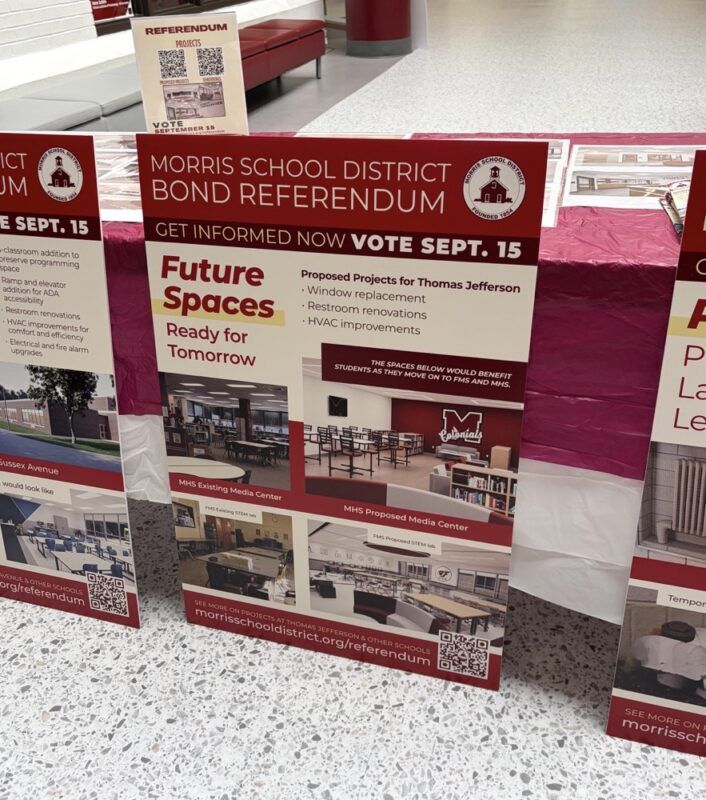
Voting on the Morris School District’s $158 million bond referendum is fast approaching.
The district deserves credit for how it has handled the promotion of this referendum, and getting you to the voting booths on Sept. 15, 2026. To be clear and fair, MSD has not advertised or campaigned for a “yes” vote; by law, it can’t.
Instead, it has mounted a thorough information-only campaign based on transparency, outreach, and communication. It has explained what will be built, as well as why, when, how, and where.
Since the spring, there have been continual information posts and invitations to Q&A sessions online and at public venues, allowing the community to engage and to draw its own conclusions. ** The final public information forum is scheduled for this Tuesday, Sept. 1, in the Frelinghuysen Middle School auditorium at 7 pm.**
The proposal itself is strong, well thought out, and well articulated. I believe Morristown residents should vote yes and will vote yes if they process the information with an ethical, civic and community based mindset, rather than one that’s strictly about what’s in the bank.
Whether all this outreach will change anyone’s mind from one position to another, is another question. But win or lose, the district deserves recognition for the effort, and it’s refreshing to see the use of an old school journalistic approach. Some, if not most, of us can remember a time when the news was presented in a more neutral, objective, and balanced way (or at least the effort was made to do so) and when political campaigns were at least based on a modicum of truth, trust and promise.
I’d be extremely naive to overstate this, as there has always been bias, propaganda, and blood thirsty competition involved in winning elections and breaking a news story, but the truth and the facts were at least aspirational. What’s refreshing about the referendum is being given a rare opportunity to listen, observe, process, draw our own conclusions, and vote our conscience.
And that’s precisely what makes me wish this same level of transparency, outreach and direct communication accompanied the annual school budget.
The budget is available to anyone willing to search for it, but it is rarely presented with the same detail, coherence, or transparency. You can follow the money, but it is much harder to follow the reasoning, justification, philosophy, and policy behind it. Ask questions and you may find yourself met with deflection or an unsatisfying answer that generates a dozen more questions. This isn’t an oversight; it’s by design, and it’s extremely problematic.
Not every budget item is interesting or relevant to every resident, and some information is legitimately confidential, if not completely irrelevant to public interest. But much of it is meaningful and revealing to the philosophy, policy, strategy and methodology of the district. The problem is that residents don’t (or feel they don’t) have the time, curiosity, confidence, and persistence to dig deeper. Even if they do, they often lack the insider context and don’t know where to start.
The district seems to count on the fact that most people won’t ask or complain. There’s an assumption that residents lack the background knowledge—or the confidence—to question the “expertise” of professional educators. Even when individual concerns or questions are raised they can easily be dismissed or placated with some mumbo jumbo. And when a parent or community member remains tenacious and persistent, the district will circle the wagons and demonize this lone voice as an isolated complainer or representative of a special interest.
The district doesn’t like difficult questions, and those asking may be characterized as entitled or self-interested. Meanwhile, district-endorsed committees and organized parent groups tend to be promotional rather than critical, and claims of the district’s greatness, success and uniqueness are often presented without enough context or evidence to meaningfully evaluate them.
Furthermore, the district feels it doesn’t have the time or energy to proactively get into the weeds of its intentions and direction. Why would it open that can of worms to dozens of conflicting opinions on how the schools should be run. Whether or not it trusts us to understand or have a valid opinion is another question.
To be clear, this is not unique to MSD, nor am I suggesting it is the worst offender of NJ districts. But, what makes it particularly striking here and now is the contrast of the budget process with the referendum: when the district needs our vote, communication is detailed, proactive, and transparent. When it doesn’t need our vote, that same level of engagement largely disappears.
The last district referendum was put to voters in the late 1900s. It’s a rarity—a big deal, like the nation’s 250th anniversary. Budgets,on the other hand, like Independence Day, happen every year and can seem to become routine.
That may explain why many residents don’t realize that the budget for the upcoming school year was approved on April 28. It is already being implemented, with administrators working throughout the summer to put its allocations into action. Teachers themselves may not even see the impact until September, but the decisions have already been made.
To be fair, the Morris School District has historically been fiscally responsible in the eyes of the state and its residents. There has never been a district budget voted down, and complaints about school taxes and spending are hardly the dominant sentiment.
Superintendent Thomas Ficarra famously went 10-for-10 on budget approvals during the first decade of the 21st century, a time when districts throughout New Jersey were seeing budgets rejected. In those days the district was much more transparent in how and why it was going to spend its money. It had to be. The votes counted.
WHEN THE PUBLIC STOPPED VOTING ON SCHOOL BUDGETS
What you may have forgotten, or never knew, is there hasn’t been a public vote on an MSD budget (or NJ school budgets in general) since 2011. Since then, state regulations have allowed districts to avoid a public vote as long as the proposed budget remains within the allowable 2% tax levy increase. This year’s MSD budget permitted a 3.5% increase because of extenuating circumstances.
There are good reasons for this change in budget procedures. It prevents short-sighted voters from rejecting reasonable budgets and gives districts a predictable fiscal target. But there is a significant downside: residents are largely removed from the process, other than electing Board of Education members as proxies.
Over time, that can make voters more apathetic and disengaged from decisions that affect their children every day of every school year. Questions and complaints become reactionary—raised after decisions have been made and programs or policies have already been implemented.
Removing the vote also changes the district’s incentive structure. When budgets had to be approved by the public, there was greater reason to understand community priorities, gauge needs, and ultimately sell the budget. Now the process can feel more like determining what the district can get away with and what residents will tolerate.
Nobody chooses government cheese when better options are available. But if it’s all you’re offered and you need to eat, what choice do you have?
In the past, the district had a reason to seek input from a broad range of stakeholders. Now, residents often have to experience a problem personally, complain individually, and become a squeaky wheel before they are heard. To be fair, the district does listen—but the loudest voices are not necessarily the most representative, persuasive, or correct.
That brings us back to the referendum.
The referendum grew out of the five-year strategic plan, which included community stakeholders in its development, even if some of that participation may have been performative, it was inclusive. That plan ultimately produced a proposal that is now being put before voters. This model of community engagement should be replicated in budget development and other major district decisions, all of which have far greater ongoing consequences for students than building projects.
SIMILAR PRICE TAGS, DIFFERENT PROCESSES
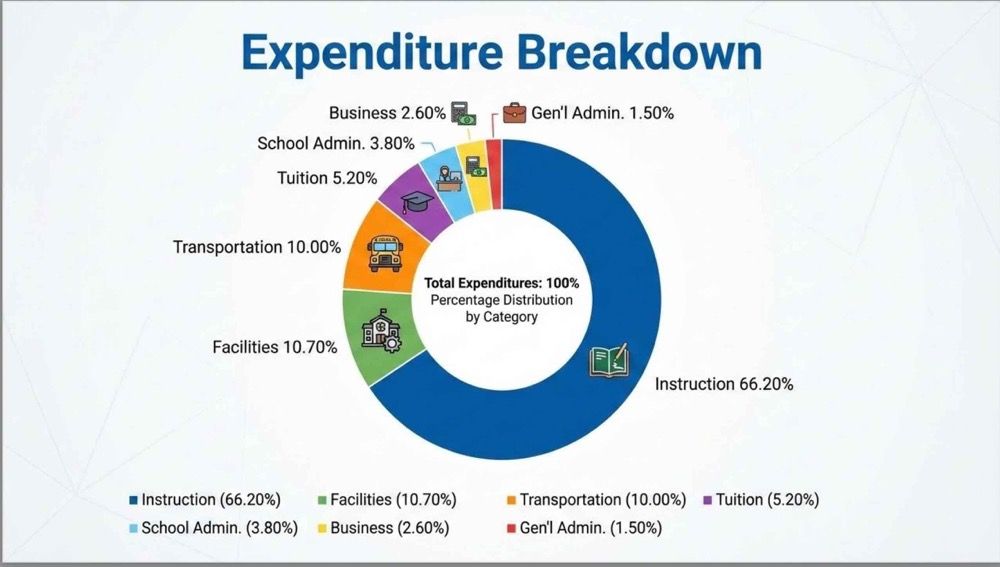
The approved school budget this year is $155.7 million. The referendum for a massive construction project is $158.4 million. This argument isn’t about the money. It’s about the striking disparity in how the district communicates about two endeavors of nearly identical monetary scale.
One is a clearly beneficial construction project that requires a deliberate, transparent effort to explain and sell to the community because our approval is required.
The other—education itself—is a far more complex undertaking with greater consequences for students, yet it receives considerably less public explanation because our approval is not required.
We may not have a choice, but we certainly have a voice. And the district will listen if we use it effectively, intelligently and intentionally. This is where you have to ask whether or not you care enough about your child’s education, if not the collective education of the community.
You might be thinking that of course you care, but that you don’t know where to begin or how to translate the hieroglyphics that are the budget. You might also question whether everything or even a majority of what is in a budget is grounds for controversy and questions, especially when the total cost may seem fixed by regulation. I’d argue that the fixed number makes it all the more important when it comes to how it’s being spent, especially when you don’t have an opportunity to vote on it.
It’s also true that the budget is not the only thing that indicates changes in philosophy, direction, and practice on a yearly basis. The district has done a great job with communicating the referendum and its timeline, and somewhat less of a good job with the rest of the five year strategic plan, its details and its timeline. Is there any of it that will be addressed in this year’s budget or plan, other than the referendum? It’s hard to tell.
Furthermore, the five year plan only covers five broad issues. What about changes in grading, teaching, curriculum, scheduling, attendance, security, leadership, oversight etc. What are the goals? Why are these the goals? How is the district intending on taking action toward these goals in lieu of other actions? What’s the timeline for success and how will you know if it’s been successful?
Like their approach to the referendum, the district should be more proactive with outreach, transparency, and detailed communication of its objectives, as though we did have a vote. This includes relevant and impactful budgetary information, but it should also include overarching goals, philosophies and strategies for “doing what’s best for all students” and “making sure all students succeed.” These aspirational goals can’t be achieved with proclamations, hopes and prayers.
These goals require detailed definitions, detailed sequenced strategies, detailed action plans, and accountability. These goals should also require respectful, transparent and articulate communication to the community before implementation. Ultimately it should also require our consent. Public schools may answer to the state, but they also answer to the community. Our voting power may have been reduced, but we still have a voice.
QUESTIONS THE DISTRICT SHOULD ANSWER
While the transparency of the district regarding the referendum should be applauded, it has also conveniently created a distraction from some significant budgetary changes. The laundry list of issues and details that should be scrutinized will have to wait for the next piece.
Until then here are some excerpts from the Morristown Green article covering the June 23rd Morristown town council meeting. It addresses only one of the items to scrutinize, but it provides a great example:
Council members heard a plea for restored funding from Positive Pathways Counseling, which has offered free mental health services to students at Morristown High School and the Frelinghuysen Middle School for more than 30 years.
(Reached Wednesday, Morris School District Superintendent Anne Mucci said she appreciates Positive Pathways’ work. “We reduced some of the funding for Positive Pathways in favor of in-district mental health professionals who can provide services to more students than Positive Pathways was able to reach,” she said via email.)
While it is completely the prerogative of the district to make this decision, the cost involved is significant. Perhaps more significant is that the dollar amount that was formerly given to Positive Pathways by both the town and township is no longer being given to the district in a different form, creating a shortfall.
If the district is handling it “in district”, then:
- How and why was this decision made?
- Who are these “in-district” mental health professionals? How are they more qualified, numerous, or effective than before?
- How will the district collectively provide better service to more students than was provided before?
- Who will be providing oversight and accountability to the counseling provided?
- Is the total cost to the district more than, less than or the same as what it was before?
I have dozens of other questions about the MSD budget and its direction. What questions do you have?
John Madden spent 27 years at Morristown High School teaching English and Life Design. He is a longtime Morristown resident with a daughter who just finished her first year at Hillcrest Elementary. His community involvement includes advocating for the Lake Pocahontas / Patriots Path restoration project.
Opinions in commentaries are the authors’, and do not necessarily reflect those of this publication.
MORE COMMENTARIES BY JOHN MADDEN
Morristown has a long history of people stepping forward in pivotal moments.
When you chip in to Morristown Green, you’re helping your neighbors stay informed, strengthening our civic backbone, and carrying on the spirit that’s defined this town since its earliest days.
Rally for local news.