

By Ellen S. Wilkowe
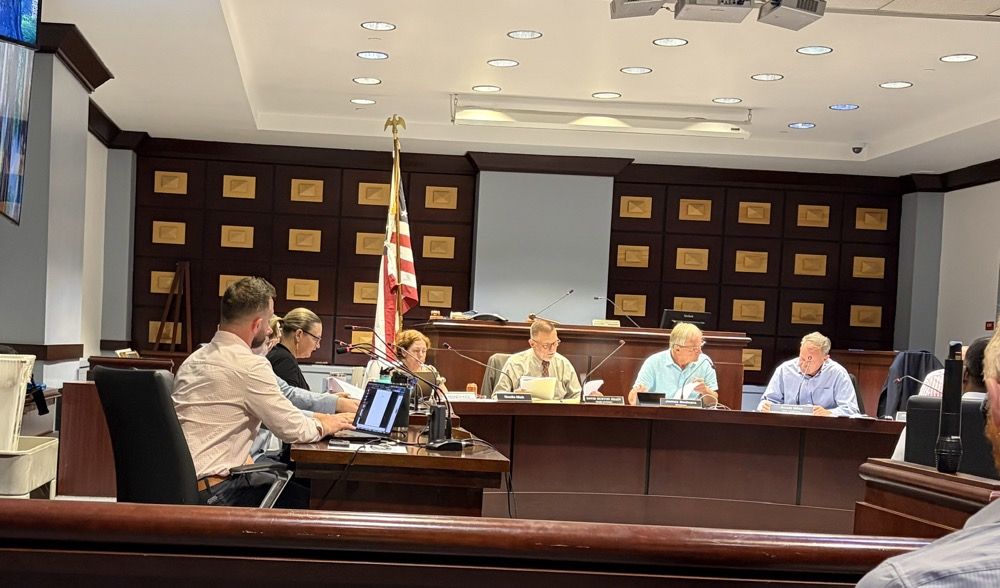
A 2019 ordinance defining historical buildings was put to the test last week, at a nearly three-hour Morristown zoning board meeting where expert witnesses from The Peck School attempted to appeal a demolition permit delay for 243 South St.
In the end, history prevailed — at least temporarily — as the board narrowly voted to deny the appeal, determining the structure meets the town’s criteria for being “preferably preserved.”
The vote essentially stalls demolition for nine months.
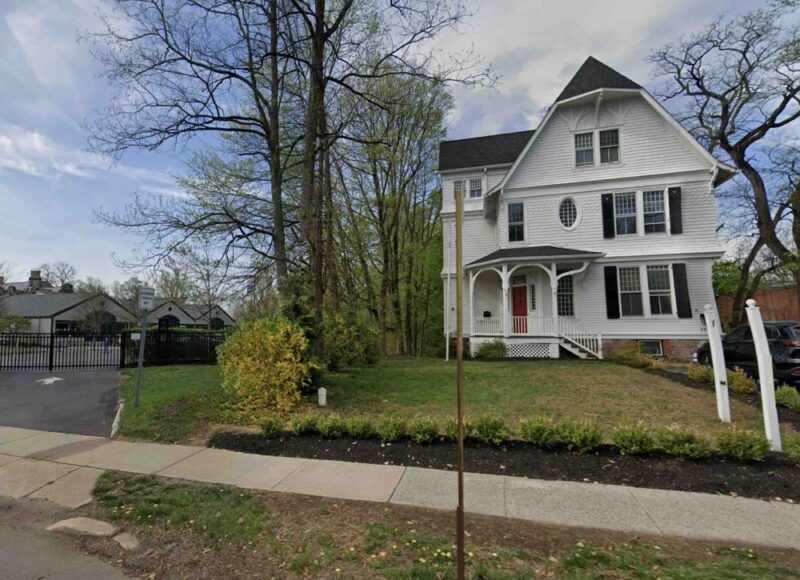
The private school purchased the parcel in 2024 with the intent of transforming the former residence, which dates to the late 1800s, into space for educational programming.
That is, until architect Walter Knies deemed the building unsuitable and
unsafe for educational use.
“There is no way to turn it into usable classroom space,” Knies said. “There
are coding issues to deal with and the overall safety that comes with
educational use.”
The building changed ownership multiple times until becoming a
commercial enterprise in the 1980s.
Peck’s attorney Frank Vitolo walked the board through additional testimony provided by Knies, and Peck Chief Financial Officer Kristen Rugal.
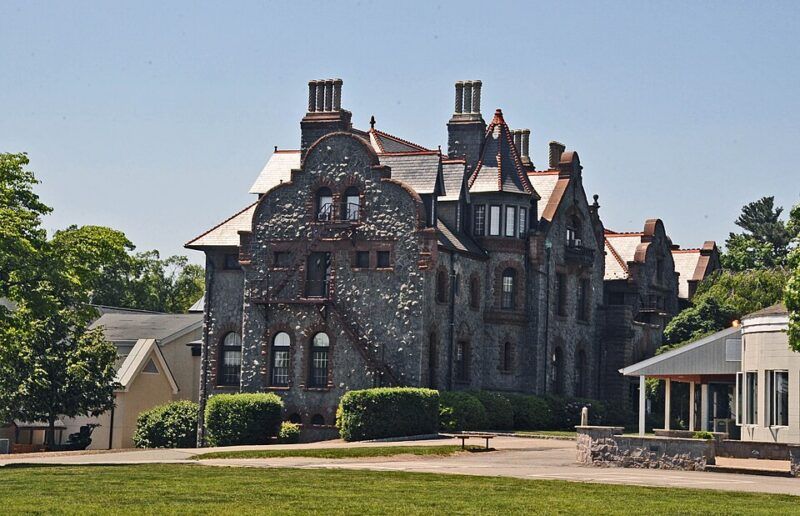
The school itself is steeped in history, Rugal said, pointing to the Lindenwold Mansion, centerpiece of Peck’s campus.
Lindenwold was added to the National Historic Register in 1986. That stone
mansion was built in 1886 by John Skidmore, who used it as a private
residence.
The building debated last week dates to the same era, but never received
formal historic designation.
It did, however, receive “preferably preserved” status from Historic Preservation Commission Chairman Kenneth Miller, who assessed the property with school officials and the architect.
No commission members attended the hearing, including Miller.
Knies told the board that Miller recommended that the school preserve the structure.
‘PREFERABLY PRESERVED’
Town planner Phil Abramson presented a treasure hunt’s worth of records
including old maps, tax records and deeds that documented the previous
owners, including the first family to take up residence: The Gessenhainers.
These records also showed that the building was identified as preferably
preserved, but never made it to designation status. That was in the mid
1980s, and no additional steps were taken to move the process
forward.
Vitolo pounced at this finding.
“So no efforts were made to designate his home as historic, correct?” he
said. “And there were no immediate plans to do so.”
After the architect deemed the building unsuitable for educational
purposes, Peck applied for a demolition permit, which the zoning board, heeding the Historic Preservation Commission recommendation, opposed.
That prompted scrutiny of the town’s historic preservation demolition
ordinance. Board members, with an assist from their attorney David Brady, tried to narrow down exactly what constitutes “preferably preserved.”
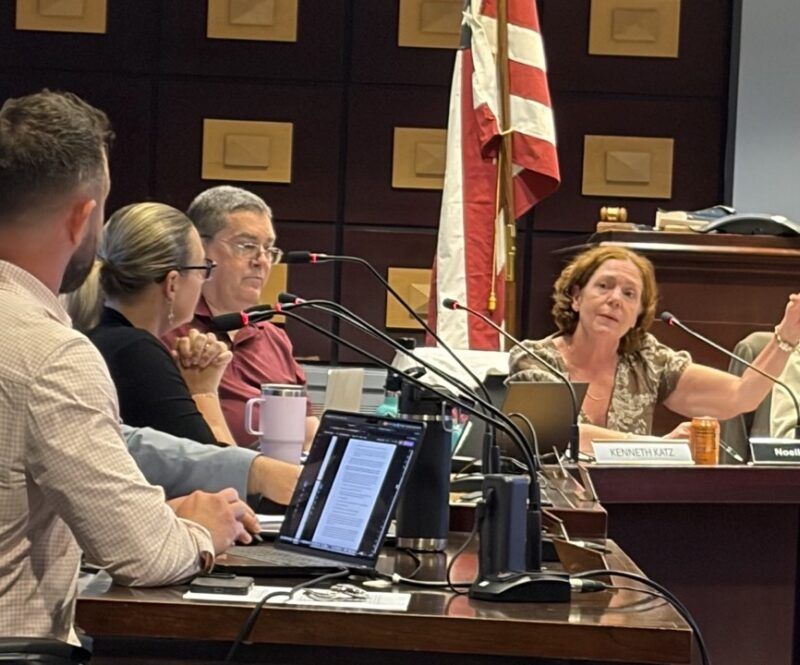
The 2019 measure imposes a nine-month delay on demolition permits for significant historic structures greater than 120 square feet and deemed “preferably preserved” by the Historic Preservation Commission. The delay would carve out time to explore alternatives to demolition, or at least to document a building for posterity.
Additionally, the applicant must show he or she worked with the
Historic Preservation Commission to evaluate “viable alternatives to
demolition,” made “good faith attempts” to sell or rent the property
at fair market value, and allowed the commission to photograph the
building inside and out and collect related historical records.
Advance notice of the demolition must be advertised.
The board pored over these additional criteria for historical structures:
● At least 100 years old;
● Mentioned as an Historic Resource in the town’s Master Plan;
● Listed or deemed eligible for the National Register of Historic Places,
which covers aesthetics/architecture, and connections to historic
events, movements or historical figures;
● Worthy of an archaeological investigation; or
● Located within a State or National Historic District.
This did not sit well with Vitolo, who claimed the school already
checked all the boxes baked into the ordinance, including coordinating with
the Historic Preservation Commission and volunteering to take
comprehensive photos of the building.
“We already performed the requirements of the ordinance and took a deep
dive into alternatives, and experts said that the only alternative that works
is demolition,” he said.
“The only reason for the delay ordinance is to see if there’s a way to save the house and lure potential buyers. Well, the house has already been bought and the HPC had their opportunity.”
‘THE BUILDING HAS BEEN DILUTED’
Miller, the HPC chairman, was not in attendance, but Vitolo and architect Knies both testified that they did collaborate with him, and that he urged them to take the preservation route.
Knies expanded on the demolition argument, citing the diminished integrity
of the building including “layers” of lead paint, dated mechanical systems,
fire safety issues, thermal inefficiencies and the overall challenges of
modifying a stick-frame building.
“The building has been diluted through years of use,” he said. “It is a stand-
alone remnant of a neighborhood where the majority of structures from that
era are gone.”
He further pointed to interior modifications that detract from the building’s
original glory.
Board Vice Chairman Scott Wild defended the beauty of the building and accused the school of purchasing the property with the intent of demolishing it.
Rugal, the chief financial officer, said the building’s owners first approached the school in 2024, and that the opportunity made sense given that it’s the only contiguous property to the school.
“We are strong stewards of historical property,” she said.“We went through
all the proper channels, walked through the property with the architect and
he determined that there was no path forward for safety reasons.”
She also affirmed Miller’s recommendation to preserve, and his suggestion
to find a means to connect the building to the rest of the campus.
“This was similar to what the school has done with Lindenwold,” she said.
Vitolo expressed doubt over the objectivity of the testimony provided
by Abramson, who “represents the board,” as well as the recommendation to oblige the HPC’s wishes to “preferably preserve” as advised by Zoning Officer Tyler Gronau.
“Why are there three pages dedicated to critiquing the applicant’s arguments but zero pages critiquing the historical preservation committee,” the lawyer said. “Phil represents the board and is not an independent expert.”
Gronau, who was in attendance as a possible witness, declined to testify.
“This is a back-to-the basics ordinance,” said Brady, the zoning board’s attorney. “Does the building meet one or more criteria to uphold the denial of the demolition permit and would age alone be sufficient being that the structure is 100 years old?”
It was a hard no from board member Noelle Nish.
“So, every building in Morristown that is 100 years old should be designated as preferably preserved, not including the other three criteria?” she asked.
Board Chairman James Bednarz was pretty much resigned to the
inevitability of the wrecking ball.
“The building will be torn down whether it’s tomorrow or nine months from
now,” he said. “The HPC did what it was required to do in a timely manner
and made the recommendation to the zoning officer.”
Bednarz took a further swipe at Peck for falling short on familiarizing itself with the particulars of the zoning board ordinances.
In the end, history prevailed, at least for the next nine months.
Morristown has a long history of people stepping forward in pivotal moments.
When you chip in to Morristown Green, you’re helping your neighbors stay informed, strengthening our civic backbone, and carrying on the spirit that’s defined this town since its earliest days.
Rally for local news.


Morristown has become a full-blown circus. For a town that uses the term “historic” in its title, it’s remarkable how nothing historic within its borders is safe from a wrecking ball.
The folks who did not support the efforts to potentially preserve the structure, due to “years of old paint”
And “most of the similar structures on South st have since been demolished”, should be ashamed of themselves. The majority serve themselves over serving the community.
And yes, all structures which fall into the historic designation area should be protected and treasured by the community. We have lost over 10 historic structures in the last 4 years and most are either replaced with projects that lack any type of character and charm or left as empty lots.
Our history is a fragile concept and once you remove it all, there will be nothing left to remind and educate future generations of the past from which we came.
We appreciate Phil Abramson’s effort here and implore him to show the same resolve when it comes to the second oldest property on green – 10 Washington st. (Which stands since the late 1800’s).
Morristown must strengthen its historic preservation efforts and finally provide teeth to the Historic preservation commission efforts to preserve the last few properties we have standing.