On Nov. 3, 2026, three seats are being contested for Morris Township’s governing body, presently composed of four Democrats and one Independent. Early voting runs from Oct. 24-Nov. 1. Vote-by-mail ballots must be postmarked or deposited in drop boxes by Nov. 3.
Recently appointed Democratic Committeewoman Samantha Rothman is being challenged by John Biehl, chair of the Township GOP, to complete an unexpired term.
Democrats Stephanie Lyon and Jeremy Godwin and Republicans George Talarico and Joscelin Grizzetti are vying for a pair of full three-year terms. It’s Talarico’s second bid for Township committee.
They debated earlier this month. Morristown Green reached out to them for additional insight into their views. Their questionnaire responses are below.
Democrat:

NAME: Samantha RothmanAGE: 50
OCCUPATION: Owner & Flower Farmer, Fairview Farm and Flowers
YEARS IN THE TOWNSHIP: Family has lived here since 1987; my husband and I bought our first house in the Town of Morristown where we lived for 10 years, just around the corner, and then moved back to the Township. So give or take about 39 years.
EDUCATION / RELEVANT EXPERIENCE / ORGANIZATIONS:
EDUCATION
- Morristown High School, Graduate Class of 1994
- Smith College, B.A. in Plant Biology
- Yale University, School of the Environment; Master of Forestry Science (M.F.S.)
- Yale University, Graduate School of Arts & Sciences; Master of Science (M.S.)
- Rutgers University, Wetlands Delineation Certificate
RELEVANT EXPERIENCE
- Morris Township Committeewoman (March 2026–present)
- Small Business Owner, Fairview Farm and Flowers
- Co-Founder, Grow It Green Morristown
- Former Vice Chair, Morris Township Board of Adjustment
- More than 20 years of experience in environmental advocacy, open space preservation, nonprofit leadership, and community service
ORGANIZATIONS & COMMUNITY SERVICE
-
- Morris Township Board of Adjustment — Former Vice Chair
- Grow It Green Morristown — Co-Founder and Former Board President
- New Jersey Conservation Foundation — Former Board Member
- Preschool Advantage — Former Board Member
- Temple B’nai Or — Longtime Member
- Women’s Association for Morristown Medical Center — Member
- Town of Morristown Environmental Commission — 9 years of service, Former Co-Chair and Chair
- Longtime advocate for open space preservation, environmental protection, and community improvement
MG: What, if anything, would you have done differently to meet the Township’s Fourth Round Affordable Housing obligation?
The Fourth Round affordable housing process presented difficult choices. Before I joined the Township Committee, Morris Township negotiated its obligation from 571 to 375 affordable housing credits: A 34% reduction. By extending affordability controls and using other credits and bonuses, the number of new units needed fell to 172.
Meanwhile, 27 municipalities challenged the law. Their lawsuits were dismissed in state and federal courts, leaving them with legal bills, housing obligations, and the risk of builder’s-remedy litigation.
My opponents point to Randolph’s lower requirement, giving residents false hope we could have achieved the same result. But Randolph received a Vacant Land Adjustment based on its land-use constraints. Morris Township has different circumstances, including commercial properties suitable for redevelopment. It’s not an apples-to-apples comparison.
Republicans also suggested on a podcast, using the Mennen fields for housing because they’re “on the outside of town.” I disagree. We need more recreational fields and preserved land, not less.
We could have followed Harding’s approach of entirely affordable developments. But developers don’t build housing for free. Without market-rate units helping finance construction, taxpayers may have to foot the bill. I don’t want to make Morris Township less affordable for existing residents, especially seniors on fixed incomes who can’t absorb a tax increase. Mixed-income developments leverage private investment instead.
I’m not interested in Monday-morning quarterbacking. The Township chose a practical path that preserved local control. My focus now is protecting neighborhoods and addressing traffic, stormwater, and infrastructure.
MG: What should be done about the stalled Abbey redevelopment?
The Abbey is one of Morris Township’s most important historic landmarks, and I’m committed to its preservation.
The Abbey is privately owned. The bipartisan 2020 redevelopment agreement with Restoration Hardware was made in good faith. RH had a proven record of restoring historic properties, offering hope for a building needing substantial investment.
Unfortunately, RH’s circumstances changed and the project stalled. But regardless of those challenges, the Township must ensure the building is properly maintained and the redevelopment agreement enforced. Since joining the Committee in March, I’ve reviewed the agreement, pressed for cleanups and inspections, and worked with our legal team to hold RH accountable. Protecting the roof, mechanical systems, and structural integrity is essential.
Importantly, the redevelopment overlay zoning is one of our strongest tools for protecting the Abbey. Historic designation alone doesn’t prevent demolition, and we must be careful not to jeopardize those protections. As a former Board of Adjustment vice chair who personally restored an 1899 historic home, I understand the complexities of historic preservation.
Our immediate responsibility is to prevent further deterioration and enforce RH’s obligations while pursuing a viable path toward restoration.
MG: Should the 2022 ordinance requiring large new apartment complexes to be all-electric be defended in court, or repealed — and why?
I support defending Morris Township’s all-electric ordinance. Adopted in 2022, it applies only to new apartment buildings of 12 or more units, not existing homes. It reflects our commitment to environmental responsibility and firefighter safety.
My Republican opponents cite the Berkeley, California, ruling as settling the issue. But that ordinance was broader, and the ruling isn’t binding in New Jersey. More importantly, courts have UPHELD similar requirements elsewhere, including New York, Washington, D.C., and Maryland. Our opponents would immediately repeal the ordinance rather than defend it — surrendering local authority before the courts resolve the question.
The Township has experienced attorneys representing us pro bono. Yet Mr. Talarico suggested on a podcast that “you get what you pay for.” The idea that someone’s expertise is worth less because they choose to volunteer it reflects a troubling attitude toward public service. By that logic, the countless residents who volunteer their time and professional skills to our Township are somehow worth less, too.
Morris Township should make its own decisions, not capitulate to political pressure from Washington.
MG: What is your stance regarding the Township’s new sewer agreement supporting Harding’s affordable housing project on Kitchell Road?
First, the question is misleading. Morris Township did not approve a sewer connection for Harding’s development. The Committee approved a sewer service area amendment to the NJDEP Water Quality Management Plan — one step in a much larger regulatory process. NJDEP explicitly states: “Sewer service is not guaranteed should this amendment be adopted.” Additional permits and approvals are required, and opportunities remain to protect Morris Township residents. I’ve personally reviewed the agreement, NJDEP documents, environmental constraints, and Woodland treatment plant capacity.
I’m particularly concerned about the property’s hydrology. Harding has characterized the pond on the property as man-made, but the NJDEP Letter of Interpretation I’ve reviewed makes no such distinction. Regardless of its origin, the pond and surrounding wetlands serve important hydrological functions. What happens to neighboring Morris Township properties when those conditions change? With my background in environmental science, Rutgers wetlands delineation training, and years of experience standing up to developers, I’m pressing for an independent hydrological review.
I’ll also be attending Harding’s public meetings to represent my Morris Township constituents and ask questions directly of their officials and professionals. I’m focused on doing the detailed work: Reviewing documents, questioning assumptions, and identifying the legal and environmental protections available to residents.
MG: What is your vision for the new Township seniors bus? When will it start, where will it go, and how will you fund it?
This is a great question, and one I’ve been thinking about! First, credit where it’s due. Former Mayor Mark Gyorfy did tremendous work securing this bus at no cost to Township taxpayers. I was thrilled to celebrate its delivery alongside the seniors who advocated for it.
Qualified applicants are now being considered, and hiring is moving forward. As for where the bus will go, let’s ask the people it’s intended to serve! I’ve reviewed the Senior Citizens Advisory Committee’s annual reports. Their priorities include dial-a-ride service for medical appointments, shopping, and essential trips, transportation for residents of The Mews, and access to senior activities.
I also see an opportunity to think beyond transportation. What if the Township had a dedicated senior services coordinator; maybe this person also is the bus driver? Someone who gets to know our seniors, coordinates activities, and connects residents with available services.
I’d also pursue state transportation grants and other funding opportunities to support ongoing operations. The bus is here. Now we need to get it on the road, listen to the people it serves, and build a program that improves seniors’ independence and quality of life.
MG: What is your plan for the community center? Your timeline, funding and potential uses?
The Jean Street Community Center is an exciting opportunity for Morris Township, particularly our seniors, who have long needed dedicated space for programs and activities. The Township acquired the former school through bipartisan cooperation and has advanced architectural planning. We’ve secured a $100,000 state grant and, most recently, an $850,000 federal grant sponsored by former Rep. Mikie Sherrill.
The Senior Citizens Advisory Committee’s thoughtful recommendations should help guide our plans. Through co-founding Grow It Green Morristown, I’ve seen how nonprofit partnerships can expand services. I envision senior organizations offering programs and resources, along with intergenerational activities involving nearby Frelinghuysen Middle School.
My priorities are a realistic budget, additional funding, and clear construction milestones. I want a welcoming, active center that serves seniors and brings our community together.
MG: For many years, the Township had one-party rule—Republicans. In recent years, it’s been Democrats. Make your case — how do you feel about one-party governance?
I don’t believe good government is defined by which party holds the majority. It’s defined by whether residents have a voice, different perspectives are welcomed, and decisions are made in the community’s best interests.
At the September debate, Mr. Talarico suggested that Democrats exclusively occupy our volunteer boards. Rather than trade accusations, I examined the appointments. My analysis found that in 2017, under Republican control, almost all appointees were Republicans, with numerous vacancies. Today, the boards I reviewed are fully occupied, with approximately 60% Democrats and 40% residents of other political affiliations or unaffiliated. We even have Republican chairs! His statements were either uninformed or deliberately misleading.
When voters go to the polls, they should look at who has actually served this community. I’ve volunteered to make Morris Township better. I co-founded Grow It Green Morristown, served on the board for the New Jersey Conservation Foundation and Township’s Board of Adjustment, and worked to protect open space. None of that began with party politics.
My direct opponent, John Biehl, has publicly described himself as “not a politician.” Yet he has served for years as chair of the Morris Township Republican Committee. And while there’s nothing inherently wrong with party leadership, voters should understand the distinction between serving a political organization and serving the broader community. My question is simple: What has each candidate done for Morris Township beyond party politics? That’s the record I want voters to consider.
MG: If you had been on the Township committee when the cannabis ordinance came up, how would you have voted, and why?
This isn’t entirely hypothetical, because I’ve already had the opportunity to vote on a cannabis license and I voted no. I wasn’t on the Township Committee when the original cannabis ordinance and overlay zoning were adopted in 2025. Had I been, I would have voted no.
The ordinance established an overlay zone creating the potential for a concentration of cannabis-related businesses in one area of the Township, which I don’t believe is appropriate land-use planning. We should have been more selective about which uses to permit, where to locate them, and how they might affect surrounding neighborhoods.
When the first retail license came before the Committee in September, I voted against it. I explained publicly that my objection was not to the applicant, but to the framework established by the ordinance. I respect that my colleagues reached a different conclusion. But I wasn’t comfortable supporting a license under an ordinance I fundamentally disagreed with.
That vote reflects how I approach public service. I examine the details, consider the consequences, and make my own decisions. I’m willing to disagree with colleagues when I believe an issue warrants a different approach.
MG: How do you feel about Morris Township being a Fair & Welcoming Community — and what should be the role of Township police vis a vis ICE?
My relatives fled persecution in Russia and Ukraine seeking safety in America. That history shapes my belief that everyone deserves dignity, respect, and freedom from fear.
Morris Township follows New Jersey’s Immigrant Trust Directive, which limits local police involvement in federal civil immigration enforcement. I’ve corresponded directly with our police chief, who confirmed that residents should report threatening or unsafe behavior, including incidents involving federal agents, to our Police Department. We can uphold the law while demanding accountability and protecting civil rights. Every Morris Township resident should feel safe seeking help from our police, regardless of immigration status.
MG: Some people say national issues don’t belong in local politics. Do you agree or disagree — and why?
I wish national politics didn’t intrude so deeply into local government, but we can’t ignore what’s happening in Morris Township. Recent ICE operations have frightened families, been witnessed by children on school buses, and required local police attention. These aren’t abstract debates in Washington. They’re happening on our streets.
Federal decisions also affect our municipal budget. Rising petroleum prices increase costs for police vehicles, fire trucks, road paving, and even plastic trash containers. Meanwhile, skyrocketing employee healthcare costs put additional pressure on taxpayers.
I’m equally concerned about the hostile tone of national politics finding its way into our local discourse. The personal attacks directed at my running mate, Dr. Stephanie Lyon, are deeply troubling. We should be able to disagree about taxes, development, and municipal priorities without attacking one another personally.
Our job is to deliver services, protect residents, and manage taxpayer dollars responsibly. When national policies affect our streets, our budget, and our neighbors’ sense of safety, local officials have a responsibility to respond.
MG: For the Democratic candidates: How do you answer Republicans’ concerns about Democratic Socialists?
My family’s story is quintessentially American: The opportunity to work hard, build something, contribute to your community, and create a better future for the next generation. My father’s grandmother fled the pogroms in Russia and salvaged bruised produce from dumpsters. My mother was one of six children raised in a two-bedroom Kansas farmhouse, where she sewed clothes from feed sacks.
My parents built a business from the ground up, with grandparents, aunts, uncles, my siblings, and eventually my husband all pitching in. I know what hard work and entrepreneurship look like. I also believe opportunity comes with a responsibility to help others.
In 2009, I spoke at a Town meeting opposing the relocation of Morristown’s garbage truck depot to Martin Luther King Avenue. It wasn’t my neighborhood, but I recognized an environmental injustice and stood up for residents I didn’t know. That commitment led me to help protect Willow Hall, co-found Grow It Green Morristown, and champion Kleitman Woods Park and the Early Street Community Garden. My work has always been about improving life for residents throughout our community.
When I began advocating for the environment, some Republicans called me a “tree hugger.” Today’s catch phrase is “socialist.” Apparently, labels are easier than debating someone’s actual record.
And while opponents invoke “Trump Derangement Syndrome” online or call me a “trust fund baby” because of my family’s success, I’d rather discuss the issues facing Morris Township. Personal attacks are beneath the dignity of public office. After November, we’ll still be neighbors. We may disagree politically, but we owe one another respect. That’s not just good manners. It’s a fundamental responsibility of leadership.
MG: Why should Independents vote for you?
I’ve always had an independent streak. Even at Morristown High School, I wasn’t afraid to stand apart from the crowd, as former classmates would surely confirm! That independence is reflected in my decisions. On the Board of Adjustment, I cast dissenting votes when I believed applications weren’t right for our community. More recently, I was the lone no vote on a cannabis license, despite my colleagues’ support.
Since joining the Township Committee, I’ve pushed for repairs to the Normandy Parkway bridge, pressed for action at the Abbey, and spent time walking neighborhoods with residents, looking at deteriorating sidewalks, discussing traffic concerns, and listening to their ideas. I believe public service means showing up, understanding the everyday issues that affect people’s lives, and working to find solutions.
That’s also why I’m running with Stephanie Lyon and Jeremy Godwin. We bring different backgrounds, experiences, and perspectives, but share a commitment to thoughtful, responsible government. We’re three independent thinkers who know how to work together. Morris Township needs all three of us working as a team – not for one party or neighborhood, but for the entire community.
***
Republican:

NAME: John D. Biehl
AGE: 60
OCCUPATION: Small Business Owner – Construction Management
YEARS IN THE TOWNSHIP: Seven years
EDUCATION / RELEVANT EXPERIENCE / ORGANIZATIONS:
- 4 yrs Carpentry Apprentice Training Local 2250
• Served on multiple HOA’s between the 1990’s – 2000’s
• New York University, Professional Certificate Construction
Management
• 42 yrs Commercial Construction Experience 15 yrs as Principal
MG: What, if anything, would you have done differently to meet the Township’s Fourth Round Affordable Housing obligation?
I would have advocated more strongly for affordable senior housing, particularly given the current waiting list. New Jersey’s Fourth Round rules permit age-restricted units to account for up to 30% of a municipality’s affordable housing obligation. Using that option could have addressed an immediate need among seniors who are being priced out of the market while reducing the number of non-senior affordable units required under the Township’s plan. It also could have reduced vehicular traffic and placed less strain on our schools.
MG: What should be done about the stalled Abbey redevelopment?
The details matter. Based on my experience as a construction professional, I would not have supported the agreement with Restoration Hardware without stronger financial and performance safeguards, such as a restoration bond and appropriate payment and performance bonds.
The Abbey is a Gilded Age landmark on Millionaires’ Row, and allowing it to deteriorate further is unacceptable. The Township should promptly review the redevelopment agreement, determine what enforcement remedies and protections are available, and evaluate all viable options to stabilize, preserve, and complete the restoration of the property.
MG: Should the 2022 ordinance requiring large new apartment complexes to be all-electric be defended in court, or repealed — and why?
This is a perfect case of Township Committee “overreach.” I am a believer in the open marketplace. If people want all-electric housing and the technology and grid delivery are there, then the market will make the decision. Not some bureaucratic ideology.
To put it differently, the horse and buggy were not outlawed when the automobile was invented. When the automobile became an economic advantage, it took over from the horse and buggy. Let the marketplace work.
I would move to repeal.
MG: What is your stance regarding the Township’s new sewer agreement supporting Harding’s affordable housing project on Kitchell Road?
I have met with our residents at Moore Estates and it is unimaginable that the Township Committee is not advocating for them.
As a construction professional, I can see that there is still much in the way of groundwork that needs to be accomplished regarding sewer flows calculations and environmental studies before anything can be approved. It is not clear to me what the existing service agreements look like between Harding and Morris Township. But we would advocate on behalf of our residents of Morris Township.
MG: What is your vision for the new Township seniors’ bus? When will it start, where will it go, and how will you fund it?
Our seniors are the people that helped build Morris Township. Why the Township Committee did not secure a driver when it procured the bus is certainly questionable. It is my understanding that they are actively recruiting a driver for this bus. (I saw the advertisement.)
As for the routes, we will engage the senior community for their input first. There are obvious routes such as shopping and recreational activities that should be considered.
MG: What is your plan for the community center? Your timeline, funding and potential uses?
I have seen the photos of the building, and it is going to need a significant amount of work. Budgeting and funding options need to be worked out. There will be hundreds of decisions that need to be made to make this a workable and inviting location for our seniors. I feel it best to include our seniors for this vital planning.
MG: For many years, the Township had one-party rule—Republicans. In recent years, it’s been Democrats. Make your case — how do you feel about one-party governance?
We hear regularly that the Township Committee doesn’t listen to them. They speak at meetings and the Committee has already made up their minds. We strongly believe there needs to be a mix of opposing voices on ALL our sub-committees. This will ensure diverse discussion points and healthy debate can take place. It is the Township Committee’s obligation to serve ALL Morris Township residents, not just a single group.
MG: If you had been on the Township committee when the cannabis ordinance came up, how would you have voted, and why?
The people overwhelmingly voted to legalize cannabis in 2020. I have no judgment in that regard. I do question the number of licenses (12) that the Township Committee has approved for sales and cultivation. It is important to note that there has only been one dispensary license (Class 5 license) that has been approved thus far.
Interestingly, the Township Committee has stated on record at the Sept. 16, 2026 meeting under questioning from the public that this establishment (ERB’N Dispensary, LLC) will not have a consumption lounge. As it turns out, a Class 5 license only needs to apply to the state for a lounge. Since the agreement was not made public at that meeting, I believe it will require more scrutiny.
I also question the revenues the Township Committee is anticipating. Particularly due to the fact, Morristown has a dispensary just 7/10 of a mile from this proposed site. Again, this is a supply and demand case that will obviously have to play its way out.
Based on all the above, I don’t believe the benefits outweigh the risk, and I would not have voted for it.
MG: How do you feel about Morris Township being a Fair & Welcoming Community — and what should be the role of Township police vis a vis ICE?
The federal government clearly has jurisdiction over immigration and customs enforcement. I support our law enforcement officers. I want them to have all the tools and equipment they need to protect both our community as well as themselves. In as such, they should continue to follow the Immigrant trust initiative and the Morris County Prosecutors’ Office Directive.
MG: Some people say national issues don’t belong in local politics. Do you agree or disagree — and why?
I agree that national politics do not belong in local politics. I do take exception when candidates align themselves with political ideologies that are in opposition to our form of government. When someone is telling you they are in opposition to our Republic, you should probably take their word for it.
MG: For the GOP candidates: How do you answer Democrats’ concerns about President Trump/ MAGA?
At the time of writing this letter, I personally have knocked on over 2,100 doors of Republican, Undeclared, and in many cases Democrats. Washington has been discussed in detail no more than a dozen cases. The electorate is smart and understands those things that affect them the most are right here at home.
MG: Why should Independents vote for you?
George Talarico, Joscelin Grizzetti, and I are all proven leaders with real-life experiences and wisdom. We are the obvious choice if you want real change and action. We offer the Undeclared voter a seat at the table as well as, the disenfranchised Democrats. Again, we will represent ALL the residents of Morris Township not just the party affiliations.
Democrats:
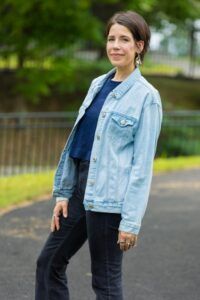
NAME: Stephanie Lyon
AGE: 42
OCCUPATION: Clinical Psychologist / Faculty member at Rutgers University
YEARS IN THE TOWNSHIP: I’ve lived in Morris Township for 3.5 years, but I’ve called Northern New Jersey home for 30 of my 42 years, having lived in Morris, Sussex, and Essex counties. My experience living in several different municipalities has given me a unique perspective on how local governments operate, what works well in different communities, and which successful approaches we might bring to Morris Township.
EDUCATION / RELEVANT EXPERIENCE / ORGANIZATIONS:
EDUCATION
- Ithaca College — BA, Environmental Studies
- New York University — MA, Elementary/Special Education
- Adelphi University — MA, Clinical Psychology
- Adelphi University — PhD, Clinical Psychology
- Cornell University — Certificate in Executive Leadership
PROFESSIONAL EXPERIENCE
- Assistant Teaching Professor, Rutgers University (2018–present) — Faculty member in the Graduate School of Applied and Professional Psychology, teaching and mentoring doctoral students in clinical psychology.
- Director, Answer (Rutgers University) (2023-present) — Lead a youth-focused sexual health education center, overseeing staff, budgets, programs, grants, and community partnerships. Established a new initiative providing affirming mental health care for teens and young adults.
- Small Business Owner, Lyon Psychological LLC (2018–present) — Own and operate a private psychology practice
- Former Director, Rutgers Cultivating Compassion ADHD Clinic (2018-2024) — Led clinical services and training for graduate student clinicians.
- Educator — Experience teaching in public schools, private schools, and educational nonprofits.
COMMUNITY INVOLVEMENT & VOLUNTEER EXPERIENCE
- Creator, Speedwell Avenue Restaurant Crawl (January 2026) — Organized a community initiative supporting local restaurants.
- Founder, Morris Area Community Support Supper Club — Organized a monthly initiative supporting local restaurants and community connections.
- Former Volunteer, Ali Forney Center — Supported LGBTQ+ youth experiencing homelessness.
- Former Volunteer, New York-Presbyterian Hospital Rape Crisis Team — Supported survivors of sexual violence.
MG: What, if anything, would you have done differently to meet the Township’s Fourth Round Affordable Housing obligation?
I support Morris Township’s efforts to prioritize affordability, and meeting the Fourth Round Affordable Housing obligation is one step in this process. Affordable housing makes our community more accessible to young professionals, families, seniors, and people from diverse backgrounds. The chosen development sites minimize the impact on green space and focus on revitalizing underutilized spaces, which I think is a smart move. Failing to comply could also expose the Township to costly litigation and Builder’s Remedy development that doesn’t reflect our priorities.
That said, I believe the process could have been more transparent and collaborative. Many residents are justifiably frustrated that their voices were not meaningfully incorporated into the plans. While recognizing the Township’s legal and logistical constraints, I would have prioritized earlier, more frequent neighborhood engagement through in-person and virtual listening sessions, multiple modes for receiving feedback, and clearer communication about proposed sites and available options. I would also have encouraged greater collaboration around traffic, infrastructure, and environmental impacts.
Ultimately, I believe we can continue expanding affordable housing while working collaboratively with residents to preserve the qualities that make Morris Township special.
MG: What should be done about the stalled Abbey redevelopment?
The Abbey is a beautiful, landmark property that deserves to be preserved, cared for, and transformed into a space that benefits our community. It’s disappointing to see a property with such potential sitting unused.
I believe we need to take a more proactive approach to moving the project forward, and I’m grateful for the effort my running mate, Samantha Rothman, has put into this. We’ve been working with her to better understand the details of the redevelopment agreement and the options available to the Township. I support continuing these efforts, including identifying the developer’s obligations under the agreement and what steps the Township can legally take to discourage further stagnation.
In the meantime, we should ensure that the property owner is appropriately maintaining both the interior and exterior of the Abbey. We’ve already seen improvements after some pressure was applied, and our responsibility now is to build on that progress so the Abbey can ultimately be revitalized in a way that preserves its charm and creates a space Morris Township residents can enjoy.
MG: Should the 2022 ordinance requiring large new apartment complexes to be all-electric be defended in court, or repealed — and why?
I unequivocally support the environmental, public health, and public safety goals behind Morris Township’s 2022 all-electric ordinance. Reducing our reliance on fossil fuels helps create a healthier, more sustainable community, while eliminating natural gas infrastructure reduces risks to residents and first responders associated with gas leaks and fires. With fossil fuel prices subject to unpredictable fluctuations, transitioning toward efficient electric buildings also supports our community’s long-term economic resilience.
It is important to remember that this ordinance applies only to new apartment buildings with 12 or more units, not existing homes. Therefore, it will primarily impact property developers, not families building or purchasing single-family homes. I find the Trump administration’s decision to target our Township over this narrowly focused policy to be an unnecessary and troubling use of federal resources.
I presently support defending the ordinance in court, particularly because the Township has secured pro bono legal representation. As long as the legal fight continues to have minimal financial impact on taxpayers, I believe we should defend our community’s ability to pursue reasonable environmental, public health, and safety protections.
MG: What is your stance regarding the Township’s new sewer agreement supporting Harding’s affordable housing project on Kitchell Road?
I support expanding access to affordable housing in general, but development must also protect neighboring residents and natural resources. Harding’s Kitchell Road proposal raises concerns about Morris Township residents potentially bearing disproportionate impacts from decisions over which we’ve had too little input.
Importantly, Morris Township has approved a sewer service area amendment, which is not a guarantee for a final sewer connection. Further reviews and approvals are still required before the project can move forward.
My concerns about the proposal include potential flooding, drainage impacts, and inadequate consultation with affected residents. I would encourage the Township to seek independent environmental assessments, provide transparent information about infrastructure costs, and ensure meaningful public participation as additional approvals are sought.
This project also raises a broader question about where affordable housing belongs. During a recent podcast, our opponents asked why we couldn’t, like Harding, simply push affordable housing to the outskirts of town. I disagree with that approach. Housing location affects access to transportation, services, and the social and civic life of a community. Affordable housing should be thoughtfully integrated into our neighborhoods, not treated as something to be pushed out of sight and into our neighbor’s backyard.
MG: What is your vision for the new Township seniors bus? When will it start, where will it go, and how will you fund it?
With the Township’s recent purchase of its senior bus and efforts to hire a driver underway, I hope to see the service launched as soon as staffing is secured.
My vision is for a transportation service designed from the ground up, with seniors as active collaborators. I’ve used human-centered design methods in my professional work to co-create solutions with the people they’re intended to serve, and I’d bring that same approach to this initiative. Our first step should be conducting an updated needs assessment to better understand seniors’ transportation needs, preferences, and priorities, then developing routes and schedules based on what we learn. I would seek a diverse stream of funding sources to support ongoing operations including grants and collaborative partnerships, to minimize any burden to taxpayers.
Destinations might include medical facilities, shopping centers, recreational activities, and connections to NJ Transit. I’m particularly excited about integrating the bus with the Township’s forthcoming community center, which will house the senior center. The ability to get around our community, pursue hobbies, visit friends and family, and attend medical appointments supports independence, social connection, and overall well-being. This aligns closely with my public health approach to strengthening our community.
MG: What is your plan for the community center? Your timeline, funding and potential uses?
I see tremendous potential for a community center to make Morris Township an even more vibrant and welcoming community for residents of all ages. With thoughtful programming for youth, families, and seniors, it could become an important investment in our community’s health and well-being.
Public health research shows that “third spaces,” like community centers, can foster meaningful social connections, reduce loneliness, and support mental health, particularly among teens and older adults. A thoughtfully designed center could offer meaningful opportunities for recreation, learning, creative expression, and connection for residents of all ages.
Realizing this vision, however, will require careful planning, transparency, and collaboration with residents. Our community deserves regular updates about the project’s status, anticipated costs, and next steps, as well as genuine opportunities to help shape its future. For this project to succeed, the needs of our residents must be at the center of its design. A realistic timeline should follow once the scope and costs are clearer.
While some funding has been secured for preliminary planning, significant expenses remain. I would pursue additional state and federal grants, philanthropic contributions, and community partnerships to minimize the burden on taxpayers and maximize the benefit this resource can provide.
MG: For many years, the Township had one-party rule—Republicans. In recent years, it’s been Democrats. Make your case — how do you feel about one-party governance?
One-party governance runs the risk of groupthink and complacency, regardless of which party is in power. However, I believe diversity of thought, complementary strengths, and a willingness to disagree respectfully matter far more than party affiliation.
Samantha Rothman, Jeremy Godwin, and I bring different professional experiences, identities, and priorities to the table. We share a vision for Morris Township, but that doesn’t mean we agree on everything. Throughout our months of campaigning together, we’ve had ample opportunities to challenge one another, learn from each other, and practice the art of compromise. I’m confident that spirit of collaboration would continue on the Township Committee.
Governing alongside people with diverse perspectives requires curiosity, compassion, and mutual respect. That’s why I’ve been troubled by the increasingly personal and divisive rhetoric coming from Republicans during this campaign. It raises questions for me about their willingness to collaborate respectfully with those who disagree with them. When political differences become personal battles, the community can suffer.
Meaningful collaboration requires putting ego aside and centering the needs of the community. Governance is an act of service, after all, and that’s a responsibility I’m eager to embrace.
MG: If you had been on the Township committee when the cannabis ordinance came up, how would you have voted, and why?
I would have voted in favor of the cannabis ordinance, primarily because of the potential to create new economic opportunities and generate additional tax revenue for the Township. At the time of the vote, I was particularly interested in the possibilities for cultivation and manufacturing operations, which could bring economic benefits beyond retail sales and create more diverse local employment opportunities.
My primary reservation relates to the location of the cannabis overlay zone. With an existing dispensary just down the road in Morristown, I worry that concentrating retail operations in such a small area could oversaturate the market and limit potential tax revenue. I would have liked to see a broader exploration of possible locations before settling on the current zone.
Despite that reservation, the recently approved retail facility on East Hanover Ave presents an opportunity to revitalize an underutilized property while providing adult consumers with access to regulated, tested cannabis products. I see both as potential benefits to our community.
MG: How do you feel about Morris Township being a Fair & Welcoming Community — and what should be the role of Township police vis a vis ICE?
I wholeheartedly support Morris Township’s designation as a Fair, Safe, and Welcoming Community. My advocacy has always centered on protecting marginalized people, and I see the dehumanization of undocumented immigrants as one of the greatest threats to our community’s well-being. These are our neighbors, friends, and coworkers, and they deserve dignity and due process.
As a psychologist, I see this as a critical public health issue. Children should never have to return home from school to discover that a parent has been taken, or witness violent immigration enforcement actions in their neighborhoods. Fear of indiscriminate enforcement can also keep families from seeking healthcare, participating in civic life, and supporting local businesses, which harms our local economy. That’s why I organized the Speedwell Avenue Restaurant Crawl and Morris Area Community Support Supper Club in response to inhumane immigration enforcement activity in neighboring Morristown.
Our Township police should focus on protecting ALL residents and building community trust, not serving as an extension of ICE. I support full adherence to New Jersey’s Immigrant Trust Directive, which limits local police involvement in federal immigration enforcement. Our diversity strengthens this community, and ALL Morris Township residents deserve the opportunity to thrive.
MG: Some people say national issues don’t belong in local politics. Do you agree or disagree — and why?
I disagree with the notion that national issues have no place in local politics, but I also believe we need to recognize the real limits of municipal government. Local, state, and federal policies are deeply interconnected, and understanding how decisions at one level affect another is essential to governing effectively.
I see some value in discussing important national issues during local elections. We are all citizens of a larger democracy, and a candidate’s positions on key issues can reveal important things about their values, priorities, and approach to leadership. Those values don’t suddenly become irrelevant at the municipal level.
At the same time, national political debates can become a distraction when they overshadow the issues local officials actually have the authority to address. As a private citizen, I’ve spoken publicly about national issues affecting me, my family, my clients, my profession, and my community. Those issues will remain important to me regardless of whether I’m elected.
However, serving on the Township Committee would require a more focused approach. My responsibility would be to translate my values into meaningful local action, prioritizing the issues where municipal government can make a tangible difference in residents’ everyday lives.
MG: For the Democratic candidates: How do you answer Republicans’ concerns about Democratic Socialists?
So far, I haven’t heard a substantive explanation of what Republicans actually fear about democratic socialism in Morris Township. Instead, I’ve watched the word wielded like a political weapon, with me as the target. They seem to believe that invoking the word “socialism” is enough to make their case, without ever having to actually make one.
So what might democratic socialist values look like at the municipal level? Frankly, it’s pretty boring.
It looks like strong public services: Well-maintained roads, beautiful green spaces, reliable infrastructure, and responsive local government. It means keeping taxes in check while maintaining the quality and accessibility of the services that make Morris Township a wonderful place to live.
Just as importantly, it means a government that works for ALL people, not just the wealthy or politically connected. It means a government that listens to residents, protects vulnerable neighbors, and recognizes that everyone deserves a voice in decisions affecting their community.
I welcome legitimate questions about my beliefs, but fearmongering is not a substitute for facts. I simply believe that government should serve everyone, and I’m not sure what’s so scary about that.
MG: Why should Independents vote for you?
I’ve lived in several Northern New Jersey communities throughout my life, and I can say with confidence that Morris Township is a very special place. I’m raising my children here, and I hope to grow old here. I want to help ensure our township remains an exceptional place to live for people at every stage of life.
Throughout my career and in my advocacy work, I’ve dedicated myself to helping people and strengthening communities. Serving on the Township Committee would be an extension of that commitment.
To me, public service means serving every member of our community, regardless of political affiliation, background, income, or beliefs. It means listening to people I agree with and people I don’t, and making decisions based on what’s best for Morris Township as a whole.
I want excellent public services, beautiful parks and natural spaces, responsible financial management, and a local government that genuinely listens to residents. I want those things for my family, and I want them for yours.
We don’t have to agree on everything to want what’s best for Morris Township. If elected, I won’t just represent the people who voted for me. I’ll represent us all.
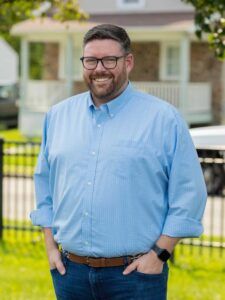
NAME: Jeremy Godwin
AGE: 43
OCCUPATION: Head of Employee Communications
YEARS IN THE TOWNSHIP: Nearly 10
EDUCATION / RELEVANT EXPERIENCE / ORGANIZATIONS:
-
- ● UNC Wilmington – English
- ● 20+ years leading corporate communications in varied organizations from
Fortune 30 to nonprofits - ● Eagle Scout
- ● Executive Board, Patriots’ Path Council – Scouting America
- ● Morris Township Citizens Police Academy Participant
- ● Morris Township Democratic Committee Member
MG: What, if anything, would you have done differently to meet the Township’s Fourth Round Affordable Housing obligation?
Here’s what I’d do differently: Bring neighbors in earlier, with the sites and tradeoffs in plain language and updates at every step. That’s where we have a real opportunity. This obligation is court-mandated, and every town in New Jersey has to meet it. The Township negotiated its number down while avoiding litigation that was unnecessary, risky and ultimately didn’t win out in court. It also counted existing affordable homes, so far fewer new units need to be built. Some want to audit everything and spend money on costly detours. Our taxpayers deserve better. That’s how we meet our obligations while also avoiding builder’s-remedy lawsuits, where we don’t get a say at all.
MG: What should be done about the stalled Abbey redevelopment?
The Abbey is a place so many of us drive past and wish we could see open and thriving, and neighbors tell me so constantly. Here’s what I’d do. First, the basics: The roof, the systems, the structure and keeping the grass cut without needing a reminder from the Township. Be a good neighbor. Second, find a way for the project to meet its requirements so the Abbey is protected and opened again for business. Third, show residents what’s been delivered and what comes next, with dates. The 2020 agreement with Restoration Hardware was bipartisan, but good intentions aren’t a plan. It has sat stalled too long, and Restoration Hardware needs to be held accountable for its part of the deal.
MG: Should the 2022 ordinance requiring large new apartment complexes to be all-electric be defended in court, or repealed — and why?
Defend it. The Township Committee passed this ordinance unanimously, with Democratic and Republican votes, and it only covers new buildings with 12 or more apartment-style units, not existing homes. It protects firefighters and our environment. It sat on the books for years without a challenge, and lawyers are working pro bono to defend it. Repealing it now would mean handing a local decision to Washington before a court has even ruled. My opponents say they’d do that. I’d rather stand up for Morris Township’s right to decide what gets built here, because the people who live here should have the say.
MG: What is your stance regarding the Township’s new sewer agreement supporting Harding’s affordable housing project on Kitchell Road?
I’ve heard from residents worried about flooding and environmental issues, and they deserve to be heard. The Township approved a sewer service area amendment, one step in a longer NJDEP process, not a final connection. But according to recent reports, nearby Morris Township neighbors weren’t notified when Harding first rezoned the site, and that’s backwards. Neighbors who share a border should treat one another fairly, and that starts with being told before decisions are made. I support a review of those impacts and clear public answers on cost and capacity. If the agreement and the law allow it, I’d support a pause. I’ll ask the questions and push back for residents.
MG: What is your vision for the new Township seniors bus? When will it start, where will it go, and how will you fund it?
Let’s get this bus on the road! It was secured through a state NJDOT grant, and the seniors who advocated for it have waited long enough. Filling the driver position is the next step, and I’m glad hiring is moving. But a grant is only the beginning. I’d want a published launch date, routes shaped by seniors through the Senior Citizens Advisory Committee, with medical appointments, shopping and the activities they care about in mind. And I’d want public updates until it’s running.
MG: What is your plan for the community center? Your timeline, funding and potential uses?
This center could be the place where our whole community comes together: Seniors playing cards, teens after school, families at a weekend program. It should belong to everyone. The funding is a real challenge, so I’d keep pursuing state, county and federal grants so taxpayers aren’t carrying it alone. But the heart of this is people. Seniors and neighbors have already shared what they want, and I’d renew that conversation with a public session that builds on the feedback we’ve already heard. Then a phased plan, a clear timeline and regular updates, so everyone can watch it come to life.
MG: For many years, the Township had one-party rule—Republicans. In recent years, it’s been Democrats. Make your case — how do you feel about one-party governance?
Look at what Democratic leadership has delivered: An AAA bond rating, high-quality services and taxes kept in check. I’ll protect that record and make it work even better for you. Meetings are now open, recorded and online, thanks to Democrats, and a review of board appointments found that under Republican control, nearly all appointees were Republicans, with many vacancies.
Today those boards are full, with about 40% unaffiliated or from other parties. Some even have wait lists. So when I hear “take back the Township,” my question is: Back to what? Samantha, Stephanie and I are focused on the future, with real solutions, not just pointing at problems.
MG: If you had been on the Township committee when the cannabis ordinance came up, how would you have voted, and why?
I would have voted yes. Nearly 70% of Township voters supported legalization, and the Cannabis Advisory Board, made up of residents, town staff, the police chief and other experts, studied the issue and found that manufacturing and wholesaling could put vacant commercial space back to use. I’d honor their work.
Retail is the harder question given our zoning and our neighbors’ concerns, and it deserved its own careful conversation with residents. I respect others who see the overlay differently. That’s how a healthy committee works. Hear from neighbors, do the homework and trust the people who took the time to study it.
MG: How do you feel about Morris Township being a Fair & Welcoming Community — and what should be the role of Township police vis a vis ICE?
I’m proud that Morris Township is a fair and welcoming community, and I want to be honest about why it matters right now. Our neighbors are scared. Families have watched masked men take people off our streets, and children have seen it happen right in front of them. Kids are asking whether a parent will be home tonight, and parents are wondering if it’s safe to call for help. Nobody should live like that. Our police follow New Jersey’s Immigrant Trust Directive, which limits their role in civil immigration enforcement. They’re here to protect every resident, period. I’d push for a clear, published protocol so neighbors and officers know what to expect, and so every family feels safe calling 911 in an emergency.
MG: Some people say national issues don’t belong in local politics. Do you agree or disagree — and why?
Potholes, drainage and speeding aren’t partisan, and I want the Township focused on what we control. But decisions made by the Trump administration land at our kitchen tables and in our personal budgets. Tariffs and inflation mean groceries, gas and everyday basics cost all of us more, and the Township pays too, from asphalt to trash cans. The war with Iran has pushed up diesel, which runs our plows, garbage trucks and fire engines. And when President Trump froze funding for the Gateway tunnel, neighbors who commute for work were told their livelihoods and their way of getting there don’t matter. We’re all feeling it. Those national issues become our issues.
MG: For the Democratic candidates: How do you answer Republicans’ concerns about Democratic Socialists?
I support diversity of thought, because it makes us a better community and a better society. I’m proud to stand with my running mates, and I want to say it plainly: I support Stephanie Lyon. She’s been upfront about her values, and I’ve watched her explain what they mean for our town with facts and with heart. The values we share guide what we’d bring as a team: Compassion, humanity and the belief that everyone deserves a fair shot at a healthy, meaningful life. At the Township level, that means safe streets, well-kept parks and a budget where you can see where every dollar goes.
MG: Why should Independents vote for you?
I’m a dad and a neighbor, and I’ve spent 20 years making complicated things clear. I don’t think in labels, and I don’t think most of us do. When I talk with neighbors, what they want doesn’t change with party: Safe streets, well-kept parks, a budget that works like theirs at home and a town that tells them what’s happening before it’s decided.
They also want us building for our future, not just reacting to whatever comes next. The Master Plan is where that happens, setting the course for what Morris Township looks like for years to come. I’ll ask the questions, do the work and represent everyone who calls this town home.
***
Republicans:
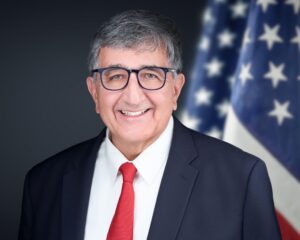
Name: George Talarico
Occupation: Attorney, Civil Engineer, Chief Compliance Officer and Chief Risk Officer
Years in the Township: 27 years
Education / Relevant Experience / Organizations:
I hold a Bachelor of Science in Civil Engineering from Lehigh University, a Master of Science in Civil Engineering from the New Jersey Institute of Technology, and a Juris Doctor from Fordham University School of Law, where I served on the Law Review.
My professional career has included construction management, private legal practice as a litigation partner and managing partner of major law firms, and senior corporate legal, compliance, and risk management positions.
I have also served our community as a youth soccer coach, a church lector, and a member of Atlantic Health System’s Institutional Review Board and Institutional Biosafety Committee.
MG: What, if anything, would you have done differently to meet the Township’s Fourth Round Affordable Housing obligation?
I would have started by remembering that our first obligation is to the taxpayers and the people who already live in Morris Township.
New Jersey’s affordable housing framework has been on a long and tortuous journey spanning more than 50 years. Whether the Mount Laurel decisions and the policies that followed have actually made housing more affordable is a legitimate question, and one deserving of serious examination. But whatever one’s views on their effectiveness, we are obligated to comply with it. What we are not obligated to do is abandon common sense, sound planning, or the interests of our residents in the process.
As an engineer, I understand that development has consequences. Roads have capacities, sewer systems have limitations, and schools have finite space. Police, fire, and emergency services cannot simply absorb unlimited growth without additional resources. These are not theoretical concerns. They are real costs and consequences that our residents will live with long after the developers have moved on.
I would have demanded a comprehensive assessment of those impacts before committing the Township to high-density development. I also would have aggressively pursued every legally available alternative to satisfy our obligations with less disruption to existing neighborhoods, including rehabilitation, appropriate redevelopment, and permissible credits for senior and veterans housing.
Most importantly, I would have involved residents before decisions were effectively made, not after. Public participation should help shape decisions, not merely provide residents an opportunity to complain about decisions already reached.
Trenton may dictate our affordable housing obligation, but it does not relieve our elected officials of their obligation to exercise independent judgment and fight for the best interests of Morris Township. Compliance with the law is mandatory. Blind acquiescence is not acceptable. That is the distinction our current Committee seems to have forgotten.
MG: What should be done about the stalled Abbey redevelopment?
The Abbey has become a monument to municipal indecision. Residents deserve better than watching an important property deteriorate while years pass and little seems to happen. The Morris Township Committee promised that the project would be completed by 2025. Mounds of dirt and a historic building left to decay are testaments to that broken promise.
I would begin with a complete public accounting of the project’s status. What approvals remain in effect? What contractual obligations exist? What is preventing progress? What authority the Township has to compel action?
Then, if feasible, I would bring the relevant parties together, establish realistic milestones, and insist upon accountability. If that fails, I would pursue the full range of legal remedies available to Morris Township.
My legal background has taught me that complicated projects do not move forward simply because people wish they would. Someone has to take responsibility, identify the obstacles, and work toward a resolution.
Preserving the Abbey’s historic character should remain a priority. But preservation cannot become an excuse for perpetual deterioration.
It is time for leadership that produces results, not another round of explanations.
MG: Should the 2022 ordinance requiring large new apartment complexes to be all- electric be defended in court, or repealed, and why?
Repeal it.
I support responsible environmental stewardship, but I do not support municipal government imposing costly mandates that may exceed its legal authority.
The federal government has challenged the ordinance. Continuing to defend it could expose Township taxpayers to substantial legal expenses, with no guarantee of success.
As an attorney, I would ask two straightforward questions. Is the ordinance legally defensible? And even if it is, does defending it serve the best interests of our residents?
I do not believe the Township should spend taxpayer money defending a questionable mandate when a sensible resolution is available.
I would favor repeal and seek a negotiated dismissal of the federal litigation. Residents and developers should have reasonable energy choices, consistent with applicable law.
Environmental policy should be thoughtful, lawful and economically responsible. Political symbolism is no substitute for sound government.
MG: What is your stance regarding the Township’s new sewer agreement supporting Harding’s affordable housing project on Kitchell Road?
I am deeply troubled by the manner in which Harding’s proposed 54-unit Kitchell Road development has been handled, both by Harding and by our own Township Committee.
Harding’s affordable housing settlement identified the Kitchell property in June 2025. Yet neighboring Morris Township residents have raised serious questions about whether they received the notice required for the subsequent zoning change. Under New Jersey law, required notice to owners within 200 feet does not stop at a municipal boundary. If Harding failed to provide that notice, it was not a minor technicality.
But I have an equally important question: What did our own Committee know, when did it know it, and what did it do to protect Morris Township residents?
When did Morris officials first learn of the Kitchell proposal? When did negotiations over sewer service begin? What did Morris Township receive in exchange, and how do those terms compare with the protections sought in the Frederick Place matter in 2020?
As a civil engineer, I want to see the capacity studies and the analysis of downstream sewer, drainage, traffic and infrastructure impacts. Who pays if additional improvements are needed? As an attorney, I want to examine the agreement, the notice and approval record, and the legal options available to Morris Township. I would not promise a remedy before reviewing the full agreement.
Harding has obligations under state law. Morris Township has obligations to its residents. Our Committee should have been asking these questions from the outset, not after neighbors demanded answers.
Being a good neighbor does not mean being a doormat. Our responsibility to Morris Township residents does not disappear at the municipal boundary.
MG: What is your vision for the new Township seniors bus? When will it start, where will it go, and how will you fund it?
Reliable transportation helps seniors maintain their independence, whether getting to medical appointments, shopping or participating in community activities. I strongly support that goal.
But here is the problem. The Township was publicly celebrating plans to purchase a senior shuttle in 2024. Nearly two years later, we are still talking about finding a driver. How do you plan for a transportation service without first determining who will operate it?
This is a failure of planning and execution, not of good intentions.
I would establish a realistic start date, determine routes based on seniors’ actual needs, and identify the staffing, insurance and operating costs. I would also pursue available grants and coordinate with existing county transportation services to avoid unnecessary expense.
Our seniors deserve more than announcements and promises. They deserve a bus that actually runs, and taxpayers deserve a government that knows how to deliver it.
MG: What is your plan for the community center? Your timeline, funding and potential uses?
A community center could be a wonderful asset for Morris Township. It could provide space for seniors, youth programs, recreation, educational activities, community meetings and other services that bring residents together.
But I would not support a project without first understanding its full cost and the need it is intended to serve.
How much will construction or renovation cost? What will it cost to operate and maintain? Is there an existing municipal property that could be adapted? Are grants, partnerships or other funding sources available?
These questions must be answered before committing taxpayer dollars.
I would favor a transparent feasibility study, public participation and a realistic financial plan. I would also consider a phased approach if that would allow us to provide useful services sooner without overburdening taxpayers.
My experience in construction management has taught me that the easiest part of a project is announcing it. The difficult part is delivering it on time, within budget and for the purpose intended.
That is the standard I would apply.
MG: For many years, the Township had one-party rule, Republicans. In recent years, it’s been Democrats. Make your case. How do you feel about one-party governance?
I oppose one-party government regardless of which party controls it.
When the same political organization controls every seat, there is a natural tendency toward complacency. Difficult questions go unasked. Decisions become predictable. Debate becomes an inconvenience rather than an essential part of good government.
Morris Township has experienced years of Democratic control of all five Committee seats. Look at the results. Residents are increasingly concerned about high-density development, taxes, infrastructure, and decisions made without meaningful public involvement.
Where has the independent voice been? Who has challenged the majority when a proposal does not make sense?
I am not suggesting Republicans have a monopoly on good ideas. We certainly do not. I am saying that no political party has a monopoly on wisdom, and no governing body should have a monopoly on power.
My running mates, Joscelin Grizzetti and John Biehl, and I would bring different perspectives, professional experience and a willingness to ask questions that deserve answers.
Good government requires debate, accountability and the courage to say no.
A Committee that votes together on virtually everything may be politically convenient. That does not necessarily make it good government.
MG: If you had been on the Township Committee when the cannabis ordinance came up, how would you have voted, and why?
I would have voted against permitting recreational cannabis dispensaries and cultivation facilities in Morris Township.
My position is not based on a desire to tell adults how to live their lives. It is based on what I believe is appropriate land-use policy for our community.
The Township should carefully consider the potential effects on surrounding neighborhoods, traffic, public safety and the character of commercial areas. I am not persuaded that the potential municipal revenue justifies those concerns.
There is also a fundamental distinction between something being legal under state law and a municipality deciding that it should be encouraged through local zoning.
Our responsibility is to exercise independent judgment about what is best for Morris Township.
I would have voted no.
MG: How do you feel about Morris Township being a Fair & Welcoming Community, and what should be the role of Township police vis a vis ICE?
Morris Township should be a welcoming community. Every person deserves to be treated with dignity, fairness and respect. But compassion and respect for the rule of law are not mutually exclusive.
Our Constitution establishes an important division of responsibility. The Naturalization Clause, the Supremacy Clause and longstanding Supreme Court precedent recognize the federal government’s paramount authority over immigration law and enforcement. Immigration policy is a national responsibility, not something individual municipalities are free to rewrite according to their political preferences.
That does not mean our local police should become federal immigration agents. Their primary responsibility is to protect our residents, prevent crime and maintain public safety. Nor does federal supremacy require municipalities to devote their police resources to enforcing federal immigration laws.
What it does mean is that Morris Township must respect the constitutional boundaries of its authority, comply with applicable law and refrain from interfering with lawful federal enforcement.
As an attorney, I believe strongly in both the rule of law and the constitutional limits on government power. We should respect the responsibilities of federal authorities while ensuring that our police remain focused on protecting our community.
We can be welcoming, compassionate and respectful of everyone without placing ourselves above the law.
MG: Some people say national issues don’t belong in local politics. Do you agree or disagree, and why?
For the most part, I agree.
I am running for Morris Township Committee, not Congress. Residents are concerned about their property taxes, the development going up near their homes, traffic on their streets, the quality of municipal services and whether their elected officials are listening.
Those are the issues this election should be about.
Of course, federal and state policies can affect local government. When they do, we have a responsibility to understand their consequences and advocate for our residents.
But I have little interest in importing Washington’s political theater into Morris Township.
Our residents deserve a serious discussion about the future of their community, not another partisan shouting match over issues that the Township Committee has no authority to resolve.
My guiding principle is straightforward. Your tax dollars. Your neighborhood. Your voice.
That is where our attention belongs.
MG: For the GOP candidates: How do you answer Democrats’ concerns about President Trump/MAGA?
President Trump is not on the ballot in Morris Township. I am. So are my running mates, Joscelin Grizzetti and John Biehl.
We are running for local office to address local problems. President Trump will not be voting on Morris Township’s budget, approving development applications, negotiating sewer agreements or deciding how our municipal tax dollars are spent.
But since the question raises political party loyalty, I would suggest a far more relevant question.
Will the Democrats who control the Morris Township Committee ever stand up to the Democrats in Trenton?
Democrats have controlled the New Jersey Legislature for decades. Their affordable housing policies have imposed enormous development pressures on communities like ours. We are now confronting the prospect of extensive high-density construction, increased traffic, greater demands on infrastructure and additional pressure on our schools.
And what has our all-Democratic Township Committee done to challenge those policies? Where has been the forceful, sustained opposition on behalf of Morris Township residents? Instead, the Committee has largely accepted the state’s framework and advanced the resulting development plans.
Trenton also continues to increase state spending and impose a substantial tax burden on New Jersey residents. Its school funding formula has created serious financial pressures and uncertainty for many school districts.
Again, where is the independent advocacy from our Township Committee? Where are the public objections, the demands for reform, the willingness to challenge their own party’s leadership?
I am not running to defend everything a Republican president says or does. I am running to defend the interests of Morris Township residents.
The real question is not whether I agree with Donald Trump. It is whether our current Committee has the independence and backbone to disagree with Trenton when Morris Township is paying the price.
I will answer the residents of Morris Township. Not Washington. Not Trenton. Not a political party.
MG: Why should Independents vote for you?
Independents should vote for me because I intend to represent them, not recruit them into a political party.
Democrats make up less than 40% of registered voters in Morris Township, yet they currently control 100% of the Township Committee and several other governing bodies. If elected, I intend to represent 100% of my constituents, Independents, Democrats, and Republicans alike.
I have lived in Morris Township for more than 25 years. My wife and I raised our family here, and I care deeply about this community and what we leave for the next generation.
As an engineer and an attorney, I have spent my professional life solving complex problems, managing risks, challenging assumptions, and making decisions where the consequences matter. I did not spend decades building that experience simply to become another automatic vote on a five-member Committee.
Independent voters understand that a good idea does not become a bad idea because a Republican proposed it, nor does a bad idea become a good one because it came from a Democrat. I will support proposals that make sense and oppose those that do not regardless of who sponsors them.
We need to protect our neighborhoods from reckless overdevelopment, respect every tax dollar, strengthen transparency, and restore genuine accountability to local government.
This election is not about national politics. It is about whether Morris Township continues down the same path or chooses a different direction.
You do not have to be a Republican to believe our Township deserves better. You only have to care about its future.
People before politics. That is not merely our campaign slogan, it is the standard by which I intend to govern.

NAME: Joscelin Grizzetti
AGE:57
OCCUPATION: Doctor of Physical Therapy, Clinical Mentor on the Training and Development Team for LHC Group/Optum
YEARS IN THE TOWNSHIP: 23 years
EDUCATION / RELEVANT EXPERIENCE / ORGANIZATIONS:
BS from Springfield College 1991
Masters in Physical Therapy Temple University 1994
Doctorate in Physical Therapy 2004
Morris Township Republican Committee Member 2024 to present
Morristown/Morris Township Republicans Club Board Member 2025 to present
MAALL Board member 2 years
Adjunct professor Seton Hall University-Doctor of Physical Therapy Program
Community Youth Soccer Coach
Founder Blackberry Lane Striders-kids running club
Founder and CEO-Gotta Keep Moving, LLC. MOVEMENT FOR LIFE
MG: What, if anything, would you have done differently to meet the Township’s Fourth Round Affordable Housing obligation?
I believe we should have pursued every reasonable legal and planning avenue to reduce our obligation before committing to a development plan that will permanently change our community.
The state initially assigned Morris Township a prospective need of 571 units. Our Township challenged that number and negotiated it down to 375. That was a meaningful reduction, but I believe we should have continued examining every available option, including joining the broader lawsuit challenging the state’s new affordable housing framework.
I recognize that the 29-town coalition lost its state-court challenge and that the U.S. Supreme Court declined to halt the law. But other municipalities continued pursuing their own options. West Windsor, for example, reported reducing its obligation by more than 200 units through its own compliance process.
We cannot know whether joining the broader lawsuit would have changed Morris Township’s outcome. What I do know is that residents deserve elected officials who thoroughly investigate every reasonable opportunity before accepting decisions that will affect our community for decades.
We also should have given greater consideration to accessible senior housing near Convent Station and essential services. Our seniors deserve more choices than a limited supply of housing with long waiting lists.
My position is simple: Comply with the law, challenge assumptions where legally justified, and plan responsibly for the people who already call Morris Township home.
MG: What should be done about the stalled Abbey redevelopment?
The Abbey is another example of why residents deserve accountability and follow-through. I would review the existing redevelopment agreement, determine what obligations remain outstanding, and insist on clear communication about the property’s condition and the developer’s plans. Where the Township has legal authority to act, it should enforce its agreements and protect the surrounding neighborhood.
My concern is not simply whether a project moves forward. It is whether our Township has negotiated responsibly, established realistic expectations, and protected residents from being left with years of uncertainty. We need a clear plan, measurable milestones, and accountability—not more promises without results.
MG: Should the 2022 ordinance requiring large new apartment complexes to be all-electric be defended in court, or repealed — and why?
I would vote to repeal the all-electric mandate and end the Township’s defense of it in the Department of Justice lawsuit. The current Township Committee adopted this ordinance in 2022, requiring new apartment-style developments of 12 or more units to be all-electric, with limited exceptions. The DOJ filed suit in March 2026, arguing that the ordinance conflicts with federal law. The case remains pending.
My concern is affordability and practicality. There is nothing affordable about imposing additional restrictions on how new housing can be powered when energy costs are already a concern and our energy infrastructure faces growing demands. Residents and developers should have reasonable choices based on cost, safety, efficiency, and available energy sources—not a blanket mandate imposed by local government.
I support energy efficiency and responsible environmental policies, but those goals must be balanced against affordability and reliability. I would rather repeal this mandate than continue spending taxpayer dollars defending it in court. Morris Township should focus on policies that make housing more attainable, not add requirements that could increase costs.
MG: What is your stance regarding the Township’s new sewer agreement supporting Harding’s affordable housing project on Kitchell Road?
I have serious concerns about how the Kitchell Road project and its sewer agreement were handled.
Harding is proposing 54 affordable housing units on its municipal property at the corner of Woodland Avenue and Kitchell Road, directly on our border. The project will affect the Morris Township residents who live nearby, yet many of them learned about it only after our Township had already signed the sewer agreement on July 28.
I understand there may be legal requirements governing sewer access for affordable housing. But I want residents to know the truth: Was Morris Township legally required to approve this specific connection, or did our Committee have discretion to negotiate conditions and protect our residents? The existing sewer agreement and applicable state regulations need to be examined carefully before anyone claims our hands were tied.
I am also concerned about the location. Harding selected a site on its border, where the consequences will be felt by our residents, rather than simply treating this as a question of how many units it must accommodate. We need to consider wetlands, traffic, sewer capacity, and neighborhood impacts before assuming this is the best solution.
If elected, I would seek an independent legal review of the agreement and every available option to protect our residents. I would insist on full transparency, a clear explanation of our legal obligations, and every lawful safeguard available.
Affordable housing is a statewide responsibility, but that does not mean neighboring communities should be left without a voice. Our residents deserve to know what was legally required, what was a local choice, and whether their interests were adequately protected before this agreement was signed.
MG: What is your vision for the new Township seniors bus? When will it start, where will it go, and how will you fund it?
Our seniors deserve reliable transportation to medical appointments, grocery stores, shopping, the library, the community center, and other essential destinations. I support a practical, accessible senior shuttle with a published schedule, clear eligibility rules, and service designed around residents’ actual needs.
The Township’s discussion of a senior bus gained momentum after we raised the lack of senior services at the League of Women Voters debate. I want to see that momentum translate into a real service, not another promise. I would ask staff to publish a launch date, identify priority routes and operating costs, and explore a combination of the municipal budget, county transportation resources, and partnerships. I will not invent a start date or promise funding that has not been approved; I will insist on a transparent implementation plan.
MG: What is your plan for the community center? Your timeline, funding and potential uses?
A community center should be a place where residents can connect, stay active, and access services throughout their lives. Seniors in particular need accessible programs that reduce isolation, encourage social engagement, and support healthy aging.
Like the senior bus, the community center became a more prominent issue after we raised concerns during the League of Women Voters debate, helping bring renewed attention to previously neglected services. I would begin with an assessment of the building, current programs, accessibility, staffing, and operating costs. Then I would establish a public plan with measurable milestones and a realistic budget.
Potential uses include senior activities, exercise and wellness programs, educational workshops, and intergenerational events. We should build on existing facilities and partnerships before committing taxpayers to expensive new construction.
MG: For many years, the Township had one-party rule—Republicans. In recent years, it’s been Democrats. Make your case — how do you feel about one-party governance?
I believe one-party governance can lead to complacency, regardless of which party is in control. Morris Township needs independent thinking, transparency, and elected officials who are willing to challenge decisions rather than simply defend their own party.
New Jersey’s affordable housing framework was enacted under Democratic state leadership, and our current Township Committee is entirely Democratic. Our local officials must explain how they are implementing those requirements, what alternatives they considered, and how they are protecting residents from unnecessary impacts.
Morris Township did challenge its initial housing calculation and negotiated a reduction from 571 to 375 units. But I believe we should have continued examining every available legal and planning option, including the broader lawsuit challenging the state framework.
I will work with anyone who has a good idea, regardless of party, and challenge anyone whose decisions are not in the Township’s best interest.
This is not about replacing one party with another. It is about ensuring that residents have a government that listens, asks hard questions, and holds itself accountable.
MG : If you had been on the Township committee when the cannabis ordinance came up, how would you have voted, and why?
I would not have supported approving 12 cannabis licenses. I attended the cannabis meeting, and my concern was whether the Township had adequately evaluated the demand, available space, infrastructure, and cumulative impact before expanding these uses.
The Township subsequently created an industrial-zone overlay allowing cannabis cultivation, manufacturing, retail, and other businesses. I would have preferred a much more cautious approach, potentially approving none until a suitable location and a clear need were established. Any future approvals should be based on demonstrated demand, careful site review, public safety, and neighborhood impacts—not simply on how many licenses we can issue. Economic development should serve the Township, not outpace thoughtful planning.
MG: How do you feel about Morris Township being a Fair & Welcoming Community, and what should be the role of Township police vis a vis ICE?
I support Morris Township being a fair and welcoming community where residents are treated with dignity and respect. Public safety and the rule of law matter, and so does maintaining trust between residents and our police.
Township police should focus on local public safety, respond to crime, and enforce the law within their authority. They should not be diverted from their core responsibilities into federal immigration enforcement beyond what the law requires or authorizes. I would work with our police leadership and township attorney to ensure our policies are lawful, clearly communicated, and protect both public safety and residents’ rights. People should feel safe reporting crimes and cooperating with local law enforcement.
MG: Some people say national issues don’t belong in local politics. Do you agree or disagree — and why?
I believe local government must focus on local responsibilities: Taxes, development, traffic, infrastructure, public safety, and services for our seniors. But state and national policies have real consequences for our community. New Jersey’s affordable housing mandates are a perfect example. They affect where we build, how we use land, what infrastructure we need, and how our neighborhoods change.
Residents deserve to understand which decisions are driven by state law and which are choices made by their local elected officials. We cannot control every mandate from Trenton, but we can demand better planning, transparency, and advocacy on behalf of our residents.
My priority is not partisan debate. It is making sure Morris Township has a strong voice and that every decision is made with our community’s long-term interests in mind.
MG: For the GOP candidates: How do you answer Democrats’ concerns about President Trump/ MAGA?
I understand that voters have strong feelings about national politics, and I respect their right to those views. I am a Republican, but my responsibility as a Township Committee member would be to the residents of Morris Township, not to any national political figure.
My background as a physical therapist, mentor, longtime resident, and community volunteer has taught me to listen, evaluate the facts, and solve problems. I will work with people across the political spectrum, protect residents’ rights, and make decisions based on local needs. This election is about who will provide thoughtful, accountable leadership for our Township.
MG: Why should Independents vote for you?
Because I will put Morris Township residents ahead of party politics. I have spent my career as a physical therapist and clinical mentor listening to people, assessing problems, and developing practical solutions. I will bring that same approach to local government.
I believe in responsible development, protecting our neighborhoods, supporting our seniors, and demanding transparency before major decisions are made. I want more accessible senior housing, reliable transportation, and a community center that genuinely serves our residents.
The Kitchell Road controversy demonstrates why we need elected officials who ask questions, scrutinize agreements, and ensure residents have a voice. I will work across party lines, challenge decisions when necessary, and hold myself accountable.
You don’t have to agree with me on every political issue to expect honest, thoughtful, responsible leadership. I am running to serve Morris Township—not a party.
Morristown has a long history of people stepping forward in pivotal moments.
When you chip in to Morristown Green, you’re helping your neighbors stay informed, strengthening our civic backbone, and carrying on the spirit that’s defined this town since its earliest days.
Rally for local news.