


Malcolm Gladwell has made a career of challenging conventional wisdom. In his latest book, he takes aim at arguably his most controversial subject yet: America’s obsession with guns.
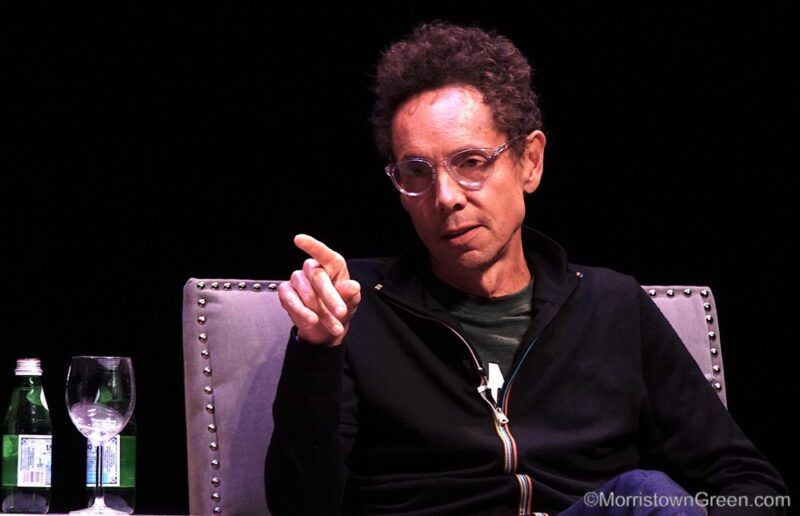
At Friday’s keynote for the 13th annual Morristown Festival of Books, he shared prescriptions from The American Way of Killing, The Invention of an Epidemic.
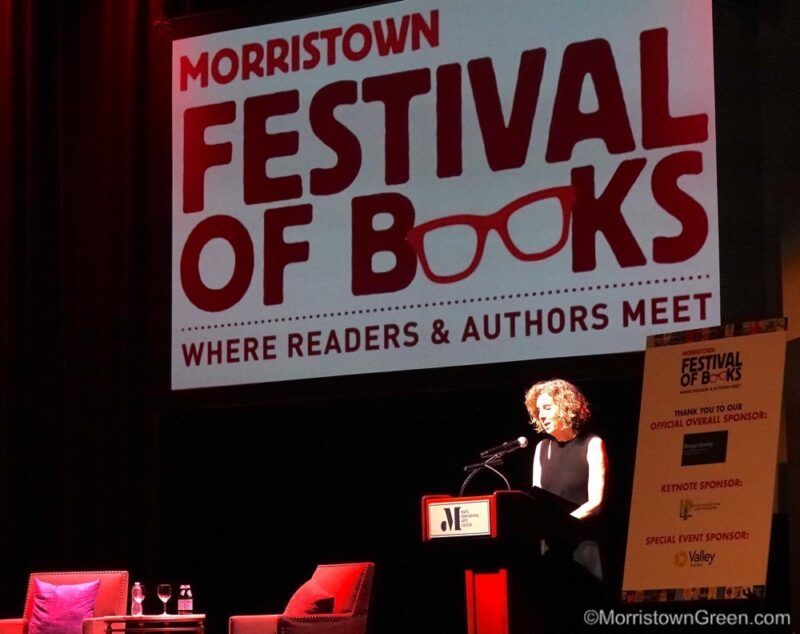
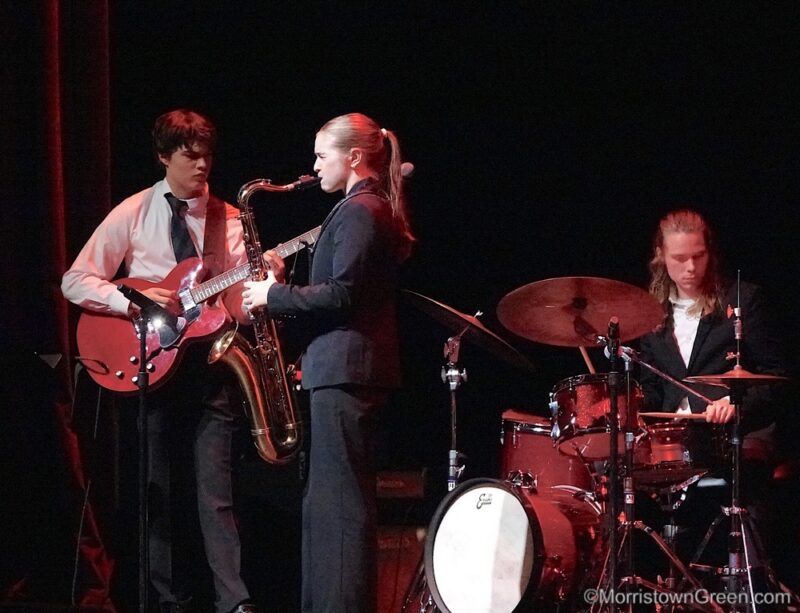
 Moderated by Drew University political science professor Patrick McGuinn, the 90-minute session at the Mayo Performing Arts Center was like Gladwell’s writing — lively, engaging and provocative — and primed the packed house for a full Saturday of free talks by dozens of top fiction, nonfiction and children’s authors in five downtown venues.
Gladwell, a Canadian, said he has been mystified since childhood by glaring gun violence in the United States, where guns outnumber people. Every day, nearly 130 people in the U.S. are killed with guns and more than 200 are shot and wounded; the homicide-by-guns rate is 26 times that of other high-income countries, while the gun suicide rate is nearly 12 times as high, according to Every Town for Gun Safety.
If there is a theme to The American Way of Killing, it is: We should be more honest about gun violence — starting with the Second Amendment’s right to bear arms. Gladwell deconstructed its language and context and concluded the amendment was James Madison’s sop to fellow plantation owners fearful of slave rebellions.
Delegates “just wanted Virginia to say yes to the Constitution,” Gladwell, 63, told the crowd.
Based on his research, which included shooting an AR-15, interviews with inner city trauma center surgeons, and deep dives into centuries-old English common law and check-your-gun-at-the-door measures in the not-so-Wild West, Gladwell further concluded:
- Banning assault weapons is “gun control theater.” The expired Clinton-era ban was riddled with loopholes. Mass shootings with military-style rifles are horrible, and dominate headlines and national discourse. But many more Americans are killed and wounded with handguns. The issue is gun violence.
- Our criminal justice system assumes most shootings are premeditated, in connection with crimes. Gladwell said statistics suggest otherwise: Guns are fired more often in the heat of the moment, in anger, in passion, to settle scores. “Get tough” gun laws and stiffer sentences won’t deter this kind of violence.
- We need more police, not less. Advanced countries with more cops walking the beat have vastly fewer shootings; Gladwell theorizes a high visible presence of officers who know their communities means trouble gets defused before it turns violent. “What we are is overprisoned, dramatically and egregiously overprisoned… the slogan should have been to defund the prisons.”
- Declining homicide rates in U.S. cities mask the true extent of gun violence. Improved trauma care has saved gunshot victims who would have died in prior generations. Police records fail to reflect this discrepancy.
 Gladwell deems gun violence America’s most pressing social problem and ascribes it to a “deficiency in the national character…a weakness for pedantry.”
He had particularly harsh words Friday for conservative Supreme Court Justices who have suggested armed teachers and subway riders might thwart gun violence.
“If you’ve ever ridden a New York City subway, which (Justice Samuel) Alito clearly has not… you realize this is the single worst idea in history…
“You really want gunfights in a closed subway car, 20 yards underground, under the East River with the lights going out? I mean, it’s just lunacy.”
Instead of “hyper-intellectualized” Yale law grads, he added, “why can’t we just get a couple of people who went to an ordinary law school…I just want an ordinary Joe who just says, you know, this is sort of nonsense.” The audience cheered.

In the new book, Gladwell contrasts American dithering with Australia. After the devastating 1996 Port Arthur mass shooting, the Australian Parliament swiftly passed tough gun regulations.
Americans, Gladwell writes, “have gotten so good at treating gunshot wounds that they have become blind to how serious their gun problem really is.”
TIPPING POINTS
This is the eighth book from Gladwell, a staff writer for The New Yorker and producer of the podcast Revisionist History. A podcast episode evolved into The American Way of Killing.
Over the years, critics alternately have praised Gladwell for clarity and originality, and accused him of oversimplification and shaky research in pursuit of the next “Big Idea.”
Kirkus Book Reviews calls The American Way of Killing “a characteristically wide-ranging exploration of why the U.S. is such a deadly place.” The Guardian says Gladwell overlooks the influence of America’s powerful gun lobby, and “manages to skillfully depict the odd trunk, tusk and leg but somehow misses several elephants in the room.”
A sudden drop in New York City crime inspired Gladwell’s first book, The Tipping Point: How Little Things Can Make a Big Difference (2000). It sought, in his words, to explore how “ideas and products and messages and behaviors spread like viruses do.”
That best-seller was followed by another: Blink: The Power of Thinking Without Thinking (2005), which posited that intuitive decisions often are superior to exhaustively researched ones.
Other Gladwell books, sometimes expanded from his New Yorker articles, have examined predictive factors for success (Outliers), underdogs (David and Goliath), the implications of misunderstandings (Talking to Stangers), aerial combat in World War II (The Bomber Mafia) and COVID and the opioid crisis (Revenge of the Tipping Point).
GLIMMERS OF HOPE
Gun violence is not limited to civilians, of course.
During audience questions Friday, a man asked Gladwell about the shootings of two U.S. citizens in Minneapolis by ICE agents earlier this year. The author responded that police there, struggling to regain public trust since a “psychopath” cop murdered George Floyd in 2020, were “mortified” by the federal actions.
Gladwell condemned U.S. immigration officials who have “the arrogance and audacity to think you can hire a bunch of thugs off the street and expect them to make sense of incredibly complicated interactions with ordinary citizens. It is an insult to every working police officer in the country. ICE is an insult to them.”
Yet he offered some glimmers of hope amidst all the carnage.
Baltimore has lowered its homicide rate with “focus deterrence,” an approach pioneered in Boston in the 1990s. Police shift from enforcers to social workers, connecting troubled individuals with resources before they spiral into violence, Gladwell said. Paradoxically, he said, fewer arrests have equaled fewer fatal shootings.
He also suggested law-abiding gun owners might support reforms that focus on safe storage, not elimination, of firearms.
“If you own a gun in this country, you have to behave responsibly, and you’ve got to lock it up in your home. If you don’t lock it up in your home properly, there’ll be consequences.”
That, Gladwell suspects, would be a good “first step.”
MORE FROM THE 2026 MORRISTOWN FESTIVAL OF BOOKS
Morristown has a long history of people stepping forward in pivotal moments.
When you chip in to Morristown Green, you’re helping your neighbors stay informed, strengthening our civic backbone, and carrying on the spirit that’s defined this town since its earliest days.
Rally for local news.



At first this guy was making sense. But then he went off the rails with his subway rider and teacher rant. Sane, sober, responsible people should always be armed. And would you rather be stuck unarmed in a subway car with some crazy guy who is threatening everyone with a knife, or would you like to be able to defend yourself?
Also, I have never heard of a gun killing someone.
Great summary of an important book within 10 hours after the conclusion of the author’s presentation. Thank you.