By Jeffrey V. Moy, North Jersey History and Genealogy Center
As the first global war of the modern era, World War I presented unique technological, logistical, and financial challenges, and the stakes were so high that the United States deployed the concept of Total War, in which each and every aspect of society was called on to contribute to the war effort.
This included convincing individual citizens – on a mass scale – to coordinate food production for America’s troops and allies, persuading banks to market and sell the government bonds that funded rapid militarization, and fostering efficient cooperation between workers and management to keep factories running smoothly.
Complex government and privately-sponsored mass media campaigns set out to convince Americans to temporarily sacrifice individual comforts and wants for the common good, while presenting a clear plan of action for patriotic citizens to contribute to the war effort.
In the early 20th century, publicity was primarily a tool for education and social uplift; for instance, it was used to encourage efficient workplace methods, assist in the assimilation of immigrants, and to raise public awareness of slum conditions and create policies for targeting poverty.
The federal government utilized publicity at the outset of World War I with the goal of presenting facts and information to convince individuals to support the war effort, which differed from the European method of controlling the flow of information by filtering news through the restrictive lens of censorship.
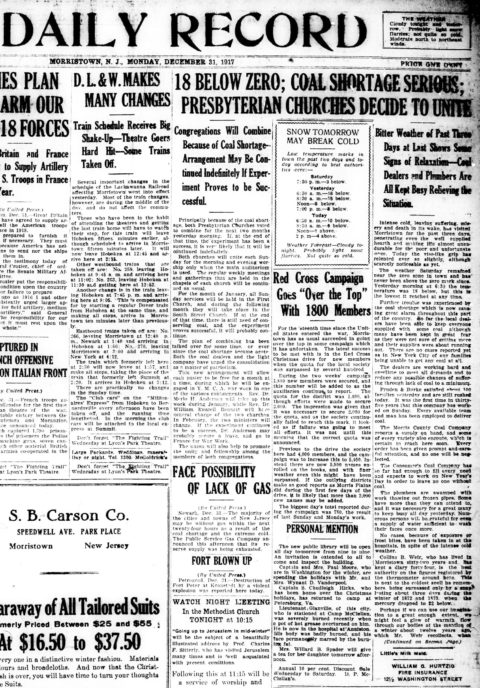
President Woodrow Wilson created the Committee for Public Information (CPI) under the philosophy of “Faith in democracy… faith in the fact.”
Built upon the belief that an informed public would unite around the common goal of defeating autocratic aggressors, the CPI masterfully harnessed America’s state-of-the-art communications methods to motivate business leaders, politicians, and ordinary citizens.


CPI staff reached out to local communities and recruited 75,000 respected citizens to give rapid succession speeches lasting four minutes or less on the merits of the war effort to fellow citizens and how everyday people could contribute.
These “Four Minute Men” were trained to present facts and arguments quickly and concisely (in order to maximize attention spans) during movie intermissions, at public events, and on the street.

Inspired and driven to demonstrate their love of country, privately owned newspapers, houses of worship, and relief organizations encouraged followers and members to contribute to the war effort in any way they could, and often published patriotic stories and held rallies in support of the war effort.
The CPI also distributed 75 million copies of over 30 pamphlets in several languages, developed school curriculum on the causes and justification for America’s involvement in the war, and issued over 6,000 press releases to newspapers, while also flooding foreign countries with U.S. news releases, motion pictures, and air-dropped leaflets.


With a long history of relying on the National Guard for defense, Americans traditionally opposed maintaining large peacetime armies. Thus, when the United States entered the war in 1917, organizing and financing the massive military buildup required a considerable infusion of money.
While Progressives called for a combination of taxes and war bonds to fund the war, businesses and the wealthy balked against creating war taxes; thus, the lives of troops were quite literally in the hands of the families and communities who lent their savings to purchase the war loans that fed and supplied the military.
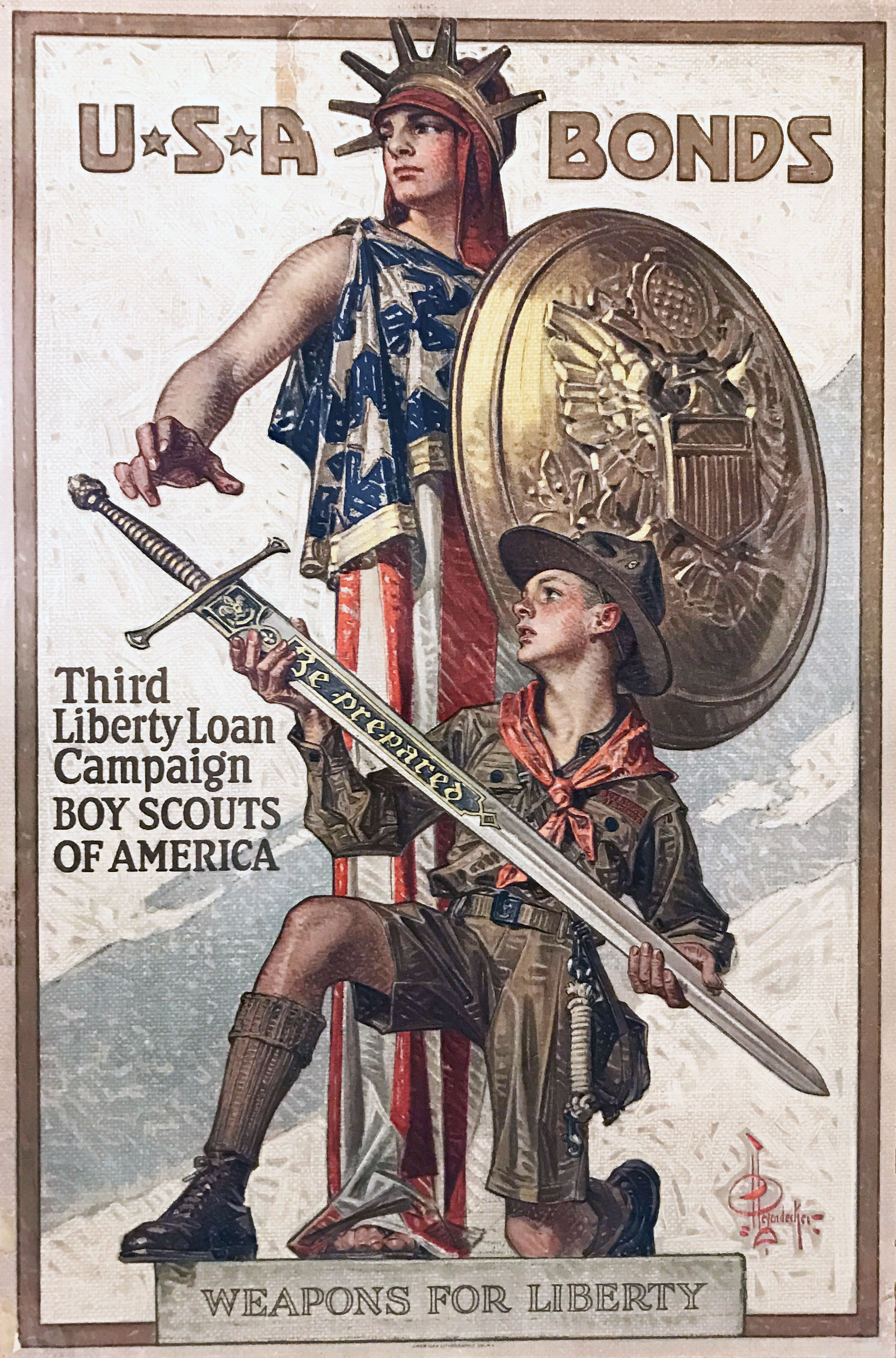
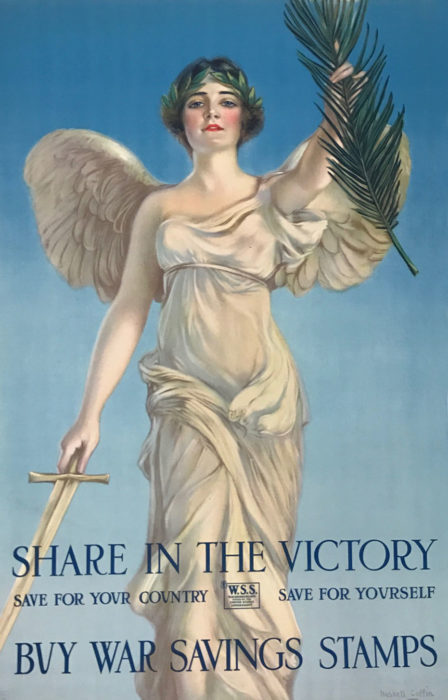
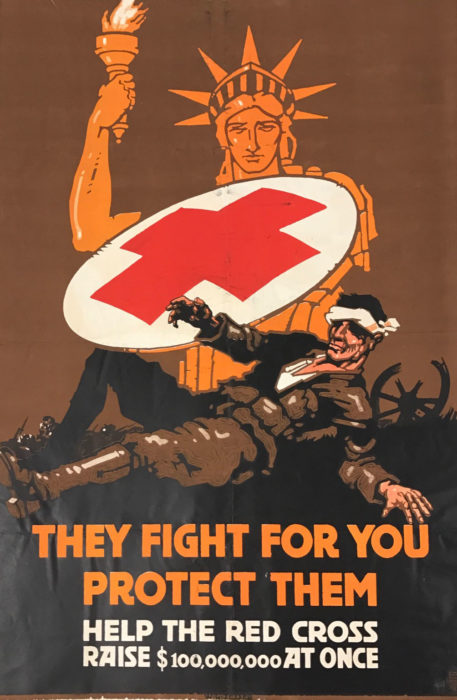
In order to promote these war bonds, the Wilson administration enlisted prominent artists, including Howard Chandler Christy, Charles Dana Gibson, and James Montgomery Flagg, to create stark and iconic posters that tugged at Americans’ sense of patriotism, nostalgia, duty, as well as their fears.

In one of the War’s iconic propaganda posters, a German soldier, hands and bayonet coated with fresh blood, gazes threateningly towards the viewer while crawling over the ruins of a small town.
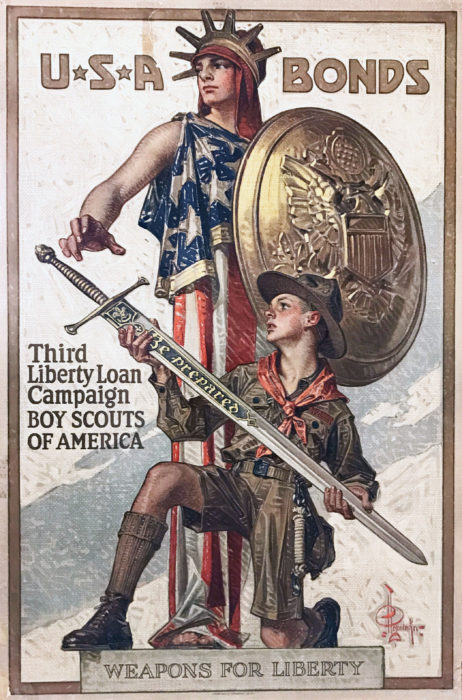


Motion picture and radio celebrities including Douglas Fairbanks and Mary Pickford headlined massive rallies where they urged patriotic citizens to support the heroic efforts of their brothers, sons, and husbands, and coworkers fighting abroad, amidst music and speeches from those who had served and witnessed the horrors of war firsthand.
At one bond rally, Treasury Secretary William Gibbs McAdoo avowed that “Every person who refuses to subscribe or who takes the attitude of let the other fellow do it, is a friend of Germany and I would like nothing better than to tell it to him to his face!”
Prominent Morris Township and Morristown residents led several bond drives that well exceeded target goals for the area.

U.S. Food Administration poster reminding citizens to conserve food for the sake of their husbands, sons, and brothers fighting overseas. Without today’s modern farming technologies, pesticides, and transportation networks that guard against poor harvests, erratic weather and crop disease in 1916 and 1917 caused wheat shortages.


Convincing families to sacrifice food from their tables for a distant overseas conflict was no easy task at a time when food was less abundant than today. The U.S. Food Administration rejected coercive price fixing and mandatory rationing, preferring to stabilize prices through commercial pressure.
It asked Americans to voluntarily supplement agricultural production by planting War Gardens and U.S. School Gardens, while voluntarily observing “Meatless Mondays” and “Wheatless Wednesdays” and eating more fish, fruit, vegetables, and potatoes.
To drive the point home, the administration hired illustrators to urge all patriotic citizens to sacrifice at home for the sake of our troops and allies fighting “over there”, which they did to great effect.

Winning the war relied upon a robust manufacturing sector operating at full capacity in spite of the often volatile relationship between companies and their workers.
At one end of the labor-management dynamic were the socialist branch of the labor movement that had sought to keep America out of the European conflict and viewed Woodrow Wilson’s “war for Democracy” as a cover for Wall Street to recoup the loans that it had made to our European allies.

Pulling at the other end of this tension was a group of business leaders eager to wear the flag of patriotism while labeling all labor activists as dangerous agitators in an attempt to drive down wages and extract maximum profit.
Ultimately, the philosophy of those aligned with American Federation of Labor (AFL) founder, Samuel Gompers prevailed. Gompers sought to focus on the concept of “abundant jobs, better working conditions, more pay” by working with owners and rejecting socialism.
In encouraging cooperation among labor, government, and business, crippling strikes were averted while workers earned improved working conditions.

Publicity was a tremendously effective tool for engendering national unity, greater workplace efficiency, encouraging patriotic service and volunteerism, and in raising much-needed war funds.
However, as the War progressed it was increasingly employed by nativist politicians and newspapers to magnify concerns over the loyalty of immigrant communities and to raise questions over what it meant to be an American, particularly among neighbors whose families originated from belligerent nations.
For instance, anti-German sentiment, while common through the 19th century, greatly intensified as some communities required bilingual teachers to sign loyalty oaths and others banned German language instruction.
Periodic vigilantism against German-Americans was also accompanied by a few cases of lynch mobs who were later absolved by juries. These incidents, while rare, pointed to a larger wave of anti-immigrant sentiment that eventually led Congress to pass quotas aimed at stopping southern and eastern European immigration.


Despite its idealistic beginnings, the CPI ultimately adopted aspects of a propaganda mill as it placed ads encouraging Americans to report on each other for spreading negative stories or disloyal opinions.
Considering how opposed most Americans were to entering the European conflict prior to 1917, publicity and mass media proved an effective tool for both unifying a nation around shared ideals and a sense of common purpose, and was also exceedingly useful to those who sought to isolate cultural differences and create stricter standards for what it meant to become American.
With the war over, the role of publicity fell largely to the domain of the private sector, as the tools of mass communication and persuasion took on an even more powerful form that remains with us today: Advertising.
Sources:
Kennedy, David M., Over Here: The First World War and American Society, New York, NY; Oxford University Press, 1980.
Vaughn, Stephen, “Arthur Bullard and the Creation of the Committee on Public Information”, New Jersey History, Spring 1979, pp 45-53.
The collections of the North Jersey History & Genealogy Center, Morristown & Morris Township Library.
“Called to Serve: Morristown & Morris Township in World War I”, which commemorates the 100th anniversary of the United States of America’s entry into the Great War is on view through August 14th in the F.M. Kirby Gallery on the second floor of the Morristown & Morris Township Library.
For a behind the scenes look at our collections and additional information on New Jersey history, follow us on Twitter @NJHistoryCenter and on Tumblr at njhgc.tumblr.com.
Morristown has a long history of people stepping forward in pivotal moments.
When you chip in to Morristown Green, you’re helping your neighbors stay informed, strengthening our civic backbone, and carrying on the spirit that’s defined this town since its earliest days.
Rally for local news.