

BY BILL SWAYZE and KEVIN COUGHLIN
Richard Kreimer often boasted about being the most famous person in Morristown. For a time, that was an understatement.
In the early ’90s, Rutgers professor Michael Aaron Rockland gave a lecture in Budapest, Hungary. A professor there asked where Rockland was from. The answer elicited instant recognition–and not for Morristown’s Revolutionary ties to George Washington.
“The guy knew about Richard Kreimer. Richard Kreimer had become world-famous,” recounted the still-incredulous Rockland.
Kreimer, the self-styled “Ralph Nader of the homeless” and “the most famous homeless man since Jesus,” died at Morristown Medical Center on March 11, 2024, friendless and all but forgotten.
The gaunt, bedraggled 75-year-old had been killing time since last summer on a bench in the Morristown town hall lobby, awaiting the final chapter that cancer, Type II diabetes, and heart trouble were co-authoring.
Defiantly malodorous, Kreimer (pronounced “Kramer”) used his pungency as a calling card. His career was suing, and threatening to sue, people and places he claimed had trampled his First Amendment- or civil rights because of his homelessness.
It started in 1990 with the Morristown police and the Morristown & Township Library. The list swelled to include several North Jersey municipalities; restaurants; a pharmacy; doctors; lawyers who had helped him; and NJ Transit officials, train conductors and transit police.
Musing about retirement, Kreimer once told The Star-Ledger he looked forward someday to closing his “law practice.”
“Unfortunately, I have a lot of work out there. Business is booming.”
Defendants and their insurance companies usually caved to Kreimer’s demands, calculating it was cheaper to pay up front than to wage courtroom combat. He scored, and squandered, some big paydays.
Hefty settlements–starting with $230,000 from Morristown and the library–never got parlayed into permanent housing or a stable life. Instead, Kreimer fed fistfuls of change into a payphone outside the old town hall, where he summoned reporters for press conferences and entertained offers, real or imagined, for rights to his life story.
Eventually, a mobile phone replaced the coin model. But Kreimer’s business model remained the same. As recently as 2019, he was vowing to see NJ Transit in court over its two-hour limit for passengers in station waiting areas.
Kreimer’s supporters in the legal world say he raised important questions about fairness, access to libraries and train and bus stations, and voting rights for citizens whose street address is the street. He ran as a homeless candidate for mayor in 1993.
“Whatever people might think about Richard Kreimer, he at the very least shined a light on issues affecting homeless individuals,” said Ed Barocas, former legal director of the New Jersey chapter of the American Civil Liberties Union.
Issues raised by Kreimer prompted the ACLU to work with NJ Transit to establish rules enabling basic station access for everyone, Barocas said. Kreimer also spurred the state Attorney General’s office to affirm homeless individuals’ right to vote, placing the onus on election boards to assist them.
Yet as Kreimer made headlines from coast to coast, at home his fame was more like infamy, his name an epithet. Locals who for years tried to help him saw an extortionist, aided and abetted by attorneys out to prove legal points at taxpayers’ expense.
“Richard was unquestionably the most hated man in the Morristown area,” reflected one of his court-appointed lawyers, the late ACLU General Counsel Frank Askin, in his memoir, Defending Rights, A Life in Law and Politics.
“Not only did most of the public officials have it in for Richard, but their affluent constituents did not want a penny of tax money paid over to this pariah, whose unkempt likeness showed up regularly on the front pages of the local papers.”
G. David Scott sees it differently. He is executive director of the Market Street Mission, which opened its doors to Kreimer decades ago, as it has done for countless downtrodden men for more than a century. There were no public vendettas against Kreimer.
“It’s sad,” Scott said. “I think he took advantage of everybody.”
HOOP DREAMS
Growing up in Morristown, Richard R. Kreimer dreamed of playing for the New York Knicks.
By most accounts, he possessed hardwood skills — though passing the ball was rare for “Richie,” a former teammate once recounted to New Jersey Monthly.
Adopted as an infant, Kreimer was raised in a comfortable middle class neighborhood. His parents, Victor and Katy Kreimer, owned an industrial paper supply company and were prominent in the town’s Jewish community.
Victor died in 1967, the year Kreimer graduated from Morristown High School. After a year of community college, he reportedly worked as a landscaper and auto mechanic. At some point, he may have done some telemarketing in Colorado. Longtime acquaintances question if Kreimer ever held a job.
Katy was good to him. Kreimer lived with his mother until she died in 1973.
She left savings and her $340,000 house to Kreimer and his older brother. They would become estranged, and remain so.
“The family has tried everything to help Richard; nothing works,” his brother, Kenneth, and a cousin, the late Karl Greengos, wrote in support of Morristown police as that case was gaining notoriety. The letter painted Kreimer as lazy slacker with mental problems in need of attention.
Crestwood Road neighbors complained about Kreimer shouting at them. The house got rundown. Taxes went unpaid. In 1979, the house went into foreclosure.
Kreimer was homeless the next year, by his reckoning. It appears he stayed that way, except for short stints in a Colorado apartment and in the Morristown home of the late Marge and Wendell Brady.
He burned through his share of proceeds from the sale of his parents’ house. Off-and-on, he received Social Security disability payments. Medications for his diabetes and neuropathy affecting his leg cost upwards of $2,000 a month, he told interviewers.
Life was a financial tug of war. Attorneys took their cut of his settlements, Kreimer said, while the remaining funds were enough to disqualify him for government assistance for his steep medical bills.
‘WE SHOULD REVOKE THEIR CONDITION, NOT THEIR LIBRARY CARDS’
Kreimer slept in woods and on church steps and in New York subway cars.
One night in 1989, while dozing in the boiler room at town hall, he was awakened by two police officers. He said one put a gun to his head. The cop said he suspected an intruder, and holstered his weapon upon recognizing Kreimer.
The incident triggered the first of two handwritten Morristown lawsuits that would launch Kreimer’s “career.” Accusing cops and town officials of violating his civil rights, he demanded $1 million.
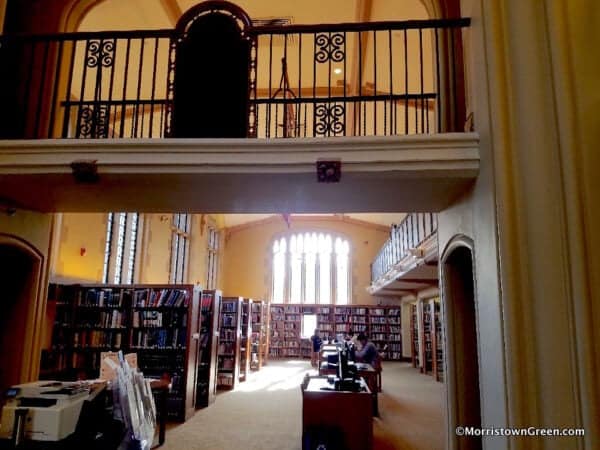
In the other case, it was the public library in Kreimer’s crosshairs.
He had been asked to leave several times in the late ’80s. Library policy required patrons to use library materials during their visits, and he purportedly failed to comply.
Employees also suffered from Kreimer’s hygiene, a body odor “so foul it gives one the sensation of being garroted in the underarm of a caveman,” the Tampa Bay Times reported in 1992.
And librarians asserted patrons were intimidated by Kreimer’s staring — an effect that may have been compounded by the bearded man’s “lazy eye” condition.
One of the unsettled patrons was Cynthia Muszala.
“I’d be making a copy, and all of a sudden, he’d be standing behind you,” related Muszala, now a Morristown librarian. “He’d be, like, six inches behind. I think he was trying to be antagonistic. It made me uncomfortable, wary.”
Bruce Rosen, Kreimer’s court-appointed lawyer in the library case, suggested the staring went both ways.
“I know people would stare at him, and he would stare back,” Rosen said. “He was not passive. When he thought he was being aggrieved, he would take some action. I’m sure he stared back at people and made them feel uncomfortable after they stared at him.”
Kreimer contended the library violated his First Amendment right of free speech and access to information because he was homeless without access to a shower.
“You can’t punish someone because of their poverty,” Kreimer said at the time. Library officials countered that their policy was reasonable to ensure everyone’s enjoyment of the space.
The cases landed before one of the era’s most liberal federal jurists, the late Judge Lee Sarokin. He assigned pro bono attorneys to represent Kreimer. They persuaded the judge to strike down the library policy.
“If we wish to shield our eyes and noses from the homeless,” Sarokin wrote, “we should revoke their condition, not their library cards.”
Kreimer had named so many municipal defendants, who in turn had so many expensive defense lawyers, that town officials held their noses and allowed their insurance company to settle the police case for $150,000.
Contrary to the library’s wishes, its insurer also settled with Kreimer, for $80,000. Soon after, a federal appellate panel overturned Sarokin’s decision and upheld the library’s policy.
Sarokin had “unduly” restricted the library’s authority to regulate access, and had given “short shrift to its significant interest in achieving the optimum and safest use of its facilities,” ruled the Third Circuit U.S. Court of Appeals in Philadelphia.
The library sued Traveler’s insurance to recoup legal fees of more than $200,000.
WHY DO THEY DISLIKE ME?
There was a window when life seemed good for Richard Kreimer.
In January 1998, while living in Lakewood, Colo., he wrote to Marge and Wendell Brady, a Morristown couple who previously took him in for awhile.
Kreimer liked Colorado’s dry, sunny summer weather. He boasted of an “award-winning job” and a clean apartment facing the mountains; of a library where “they treat me good,” and even of going to a movie with friends.
Even so, he said he anticipated returning soon to Morristown. Rattling off a litany of financial woes and serious ailments, Kreimer wrote that he had sued a New Jersey doctor for misdiagnosing him, and planned to sue his “lawyer medical expert.”
Fast forward to August 2002. The Bradys were having lunch on their porch when Kreimer suddenly appeared, took a seat, and started chatting.
“He kept asking why everyone acted so afraid of him or disliked him so much,” recollected Marge Brady, a diligent note-taker, in her account of the conversation, “and we said that most people would fear a lawsuit if they had anything to do with him.”
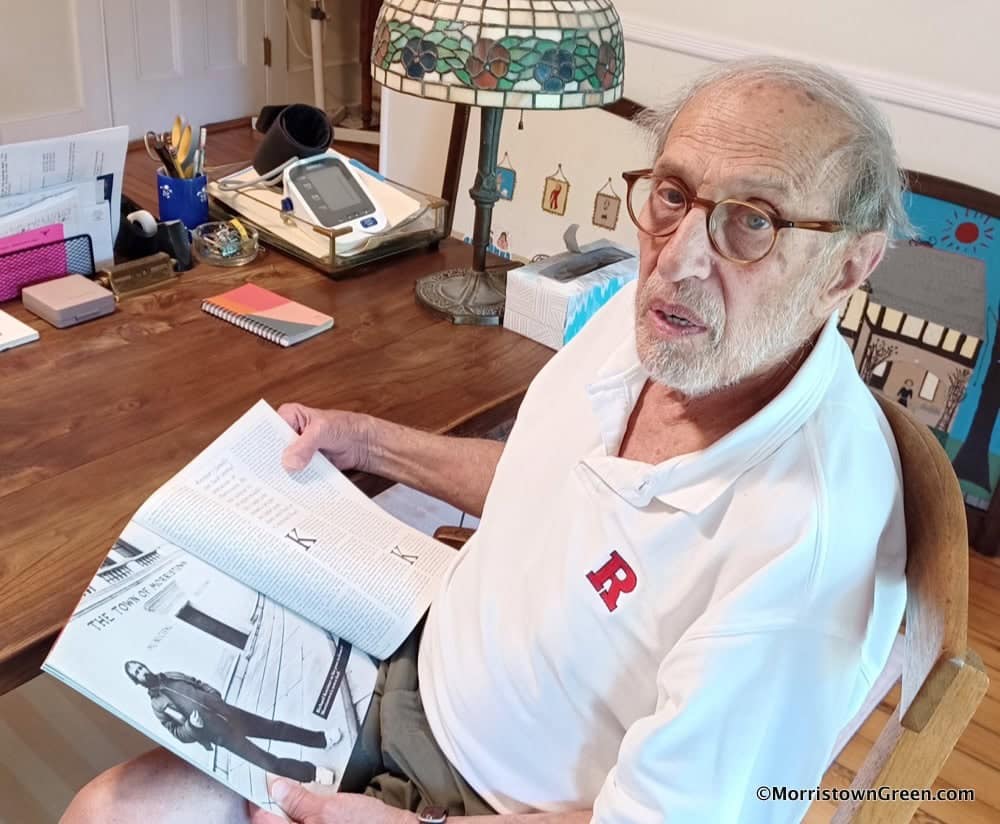
Michael Rockland experienced that side of Richard Kreimer when profiling him for a magazine 32 years ago.
“He was always nasty,” the writer said. “I was never nasty to him. But he was always very threatening: ‘If you say anything about me, I’ll sue you.'”
Kreimer agreed with the Bradys’ observation, “but explained that he was basically decent and honest and only sued those who tried to take advantage of him or violated his rights,” Marge Brady recorded.
As they sat on the porch, Kreimer kept counting a folded pack of bills. After being broke for so long, he told the Bradys, he resolved always to carry $1,000 in cash.
Many others extended a hand to Kreimer over the years.
“Like they say, no good deed goes unpunished,” said one such person, who, like a couple of others contacted for this story, requested anonymity. They almost seemed to fear Kreimer’s ghost might appear, complaint in hand.
(By contrast, when Marianne Boulard — Morristown’s other well known homeless person — vanished last year, people gathered outside town hall to celebrate her tragic life.)
Every Christmas, a now-deceased mayor quietly gave Kreimer $50, Kreimer told the Bradys. Residents on Dogwood Road let him sleep in their car. Friendly cops gave him clothes, and invited him over for dinner. He spoke fondly of a former library director.
The Morristown Jewish Center tried its best, according to news accounts. So did the Market Street Mission, offering meals, shelter and showers. Kreimer quickly wore out his welcome.
“How do you help somebody who doesn’t want help?” said G. David Scott, the Mission director.
Kreimer’s standard line was that he could not square the Mission’s Christian ideology with his Jewish faith. Scott said Kreimer urinated in a pew, and filed outrageous accusations against a prior director. Kreimer never followed through on that one, Scott said.
Bruce Rosen, Kreimer’s attorney in the library case, said Kreimer turned against another lawyer who happened to be Rosen’s friend. While Kreimer’s malpractice suit eventually got tossed, Rosen said, the lawyer died not long afterward.
“It was sad he had to go through that,” Rosen said.
Kreimer was annoying, obnoxious, and insistent, Rosen acknowledged. Kreimer labeled his voicemails URGENT and ramrodded them to the top of Rosen’s inbox.
Yet his former client also could be likable, charming and witty, with a mind sharpened by voracious reading, Rosen said.
“He remembered everything,” echoed Police Lt. Michael Molnar, who conversed with Kreimer in his waning days at town hall, talking baseball and reminiscing about retired officers. “He was a sharp guy.”
Viewed by critics as an advocate only for himself, Kreimer was keen on promoting his “brand,” Rosen said. But the former editor of the New Jersey Law Journal insisted Kreimer leaves an important legacy.
Before the internet gave everyone a soapbox, the plight of homeless people was just coming into focus when Kreimer turned litigious.
“At the time it created an awareness that there needs to be rules that apply to everybody, and not just homeless people, and that there shouldn’t be discrimination against homeless people just because they use the library,” Rosen said.
The last time he heard from Kreimer was in October. Kreimer inquired about a memorial service for Judge Sarokin.
Calling from the hospital, Kreimer spoke of cancer and how he was nearing death — things he had been saying for years. “But this time I heard it in his voice that he was very sick,” Rosen said.
Back when the whole world beat a path to his payphone, Kreimer had proclaimed himself “the greatest story ever,” declaring: “The saga of Richard Kreimer will never end.”
His body laid in a morgue for more than three months, unclaimed.
A Jewish charitable organization buried him a few days ago on Staten Island.
Morristown has a long history of people stepping forward in pivotal moments.
When you chip in to Morristown Green, you’re helping your neighbors stay informed, strengthening our civic backbone, and carrying on the spirit that’s defined this town since its earliest days.
Rally for local news.


To the editor, could you please tell me where Richard is laid to rest cause I would like to visite his gravesite. Thank you.
So sad, but he sounds like an amazing, if troubled, person. Nobody likes to be reminded of the homeless (especially in “up and coming” towns), but this is our system, we made it, he and many like him just live in it as best they can. Glad he fought.
Death is certainly hard, lost my wife recently, was sad we didn’t live in a town with more of a community spirit that embraces the oddballs, loners and agitators. People are weird, what can I say…
Rich was my “friend” from 1998 to recently, where I paid for his phone that whole time, cancelling it in June since I did not hear from him for the 3 prior months. Rich was not mentally ill. He was as smart as anything and his memory was so good. You could talk to him about sports or politics and he was up to date about both. A lot of people disliked him because he did not let people treat him bad. He stood up for himself. He sued because he was DISCRIMINATED against, plain and simple!! Rich was no begger.
In November 2023, I reached out to the office of Congresswoman #MikieSherrill. I told them I have a friend who was a senior citizen with cancer, heart and kidney problems and he needed a place to live. Her office did nothing to help me or Rich. I told her office, if his name was Diego or Pedro, he would have a roof over his head and three meals. Truly homeless people who are sick, do not get help in America. Rich wanted to live as much as anyone I know. I would not have wanted to live like that, but he had a will for life. People, who should have been close to him never helped Rich. They thought he had a lot of money and that is the only reason they tried reaching out and calling hotels to see if he was there. He changed his phone number and NEVER gave it to so many people who thought they were getting money from him! He was angry that America did not help him!!!
He once told me, he had two choices, pay for rent or pay for his medical expenses, which were alot. He chose the medical expenses. The Government FAILED HIM. They help the lazy who do nothing but collect checks. I will always call Rich Kreimer, my friend. He wanted to be buried with his Mom and Dad. I know why that did not happen. May God look over my friend as he is now in eternal life.
Very sad end to a colorful life that could have been. But was doomed for so many unknown reasons.
Richard Kreimer was certainly a presence and he had an impact that few are likely to see in positive terms, despite some of the legal challenges that had merit far beyond his circumstances (although I doubt he thought he was advancing justice and yielding benefits for anyone else but himself.) I knew him from in-town interactions and also from when he stood on the steps of Rutgers Law School in Newark as members of our clinic faculties made his case for him….. It’s such a shame that mental illness derailed this man who, I suspect, might have otherwise had the capacity to contribute to, and benefit from, a full life. I think that he always returned to Morristown because, despite those who had legitimate reasons to be “bothered” by him, this was also the place where he experienced kindness, generosity, and constant assistance. That he died as he did, with no one to mourn, or at least to note his passing, is genuinely sad. Your account, Kevin, presents a fair and complete picture, one he is unlikely to get anywhere else. That you did such an extensive column provides a final chapter, I think, one that is an example of what I mean when I say many people in this town act in humane and considerate ways. Others of us, as Richard experienced, found it too difficult to do, ill-equipped to do, and looked away.