Eighty years after a white mob gunned down two Black couples at Georgia’s Moore’s Ford Bridge, there is new hope for answers in a case believed to be America’s last mass lynching.
A federal cold case board has made public nearly 10,000 pages of government records on the unsolved 1946 killings. And the board, along with Rockaway attorney Joe Bell, is now pressing the U.S. Justice Department to seek release of the one set of records still sealed: The grand jury transcripts.

The Civil Rights Cold Case Records Review Board released 9,907 pages from the holdings of the National Archives and Records Administration on Thursday, the board’s chief of staff, Stephannie Oriabure, told Bell in an email.
Liked this story? Get the next one first.
Free, 3x a week. Unsubscribe anytime.
The federal grand jury records “are withheld in full right now,” Oriabure wrote. But the board has officially asked U.S. Attorney General Todd Blanche to petition the court to unseal them, under a provision of the Civil Rights Cold Case Records Collection Act of 2018, she wrote.
Bell, a former Morris County Clerk who has pursued the transcripts for more than a decade, followed up on Friday with his own letter to Blanche.
“The doctrine of grand jury secrecy was never intended to become a mechanism for permanent concealment,” Bell wrote. “The witnesses are deceased. The investigators are deceased. The prosecutors are deceased. The suspects are deceased.”
“Justice delayed has long since become justice denied in the Moore’s Ford case,” he added, urging Blanche to file the petition “without delay.”
Bell told Morristown Green he was “delighted about this news,” and was keeping his fingers crossed about finally obtaining the grand jury transcripts.
Disclosure: Bell’s firm, Bell, Shivas & Bell, is a supporter of Morristown Green.
DEADLINE PRESSURE
Time is short. By law, the review board must finish its work and shut down no later than January 2027.
The Senate has passed a bill extending the board through 2031, according to documentary filmmaker Stephanie Calabrese, who has followed the case. That measure, S. 1510, was introduced by Sens. Jon Ossoff (D-Ga.) and Ted Cruz (R-Texas) and passed by unanimous consent.
The House companion bill, H.R. 3087, sponsored by U.S. Rep. Bonnie Watson Coleman of New Jersey (D-12th Dist.), cleared committee on a 36-4 vote and awaits a floor vote, Calabrese wrote.
If the House does not act before it adjourns next month, the board must sunset on Jan. 8, 2027, Oriabure wrote, “and will not have the chance to expedite the review and release of these records.” The board is still awaiting more records from the Justice Department and the FBI, she wrote.
Bell raised the same concern in his letter. “If these records are not released now, there is a substantial risk that history will be lost forever,” he wrote.
A CRIME THAT SHOCKED THE NATION
On July 25, 1946, a mob ambushed a car near the Moore’s Ford Bridge over the Apalachee River in Walton County, Ga.
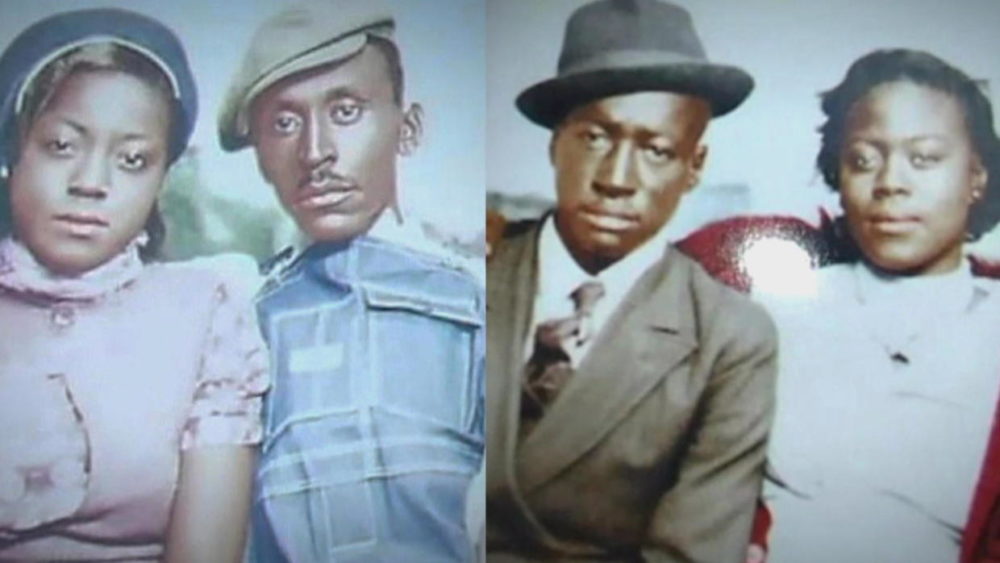
Inside were George W. Dorsey, a World War II veteran who had served in North Africa and the Pacific; his friend Roger Malcom; and their wives, Mae Murray Dorsey and Dorothy Malcom.
The couples worked as sharecroppers for J. Loy Harrison, a white farmer who was driving them home after posting bond for Malcom. Malcom had been jailed for stabbing a white farmer during a fight.
The four were dragged from the car and shot repeatedly at close range. Harrison, who was unharmed, told authorities he could not identify the killers.
The murders shocked the nation. President Harry Truman ordered an FBI investigation, and the outrage led him to create the President’s Committee on Civil Rights.
By one account, the FBI interviewed 2,790 people, and 106 witnesses testified over 16 days before a federal grand jury in Athens, Ga., in December 1946. No one was charged.
According to research by the late historian Anthony Pitch, the FBI’s lead investigator told Hoover that many grand jurors were lying and that some were related to witnesses.
YEARS IN COURT
The transcripts were long thought lost, misplaced or destroyed in a 1972 flood in Athens. Pitch, author of The Last Lynching: How a Gruesome Mass Murder Rocked a Small Georgia Town, found them at the National Archives in Maryland in 2016.
Pitch had first petitioned a federal court in Georgia to unseal the grand jury records on Feb. 3, 2014. Bell, whom Pitch met on one of his Washington, D.C., history tours, signed on as his lawyer without charge.
U.S. District Judge Marc T. Treadwell ordered the transcripts released in 2017, citing their historical significance. A three-judge panel of the 11th U.S. Circuit Court of Appeals upheld that ruling 2-1 in February 2019.
Pitch died that June, at 80. At his family’s request, Bell kept fighting.
But in March 2020, after a rehearing before the full appeals court in Atlanta, the 11th Circuit reversed itself 8-4. The majority held that federal judges lack the power to release grand jury records for reasons not spelled out in federal rules. The court pointed to the cold case review board as a possible path to release, according to Calabrese.
Bell then asked the U.S. Supreme Court to take up the case, but was rebuffed.
The attorney has described his goal as “just a sliver of justice.”
The newly released records are available through a guide on the board’s website and in the National Archives Catalog.
Bell closed his letter to the attorney general with a line beneath his signature: “The passage of time does not diminish the public’s interest in the truth. It magnifies it.”
MORE ABOUT THE MOORE’S FORD CASE
Giving Tuesday · Dec. 1
You just read local news. Double it.
No paywall, no billionaire. Just neighbors who chip in. Through Dec. 1, a Morristown neighbor will match every gift dollar for dollar, up to $10,000.
Double your impact
A Morristown neighbor matches every gift, dollar for dollar, up to $10,000.
Secure checkout by PayPal. Pay with PayPal, Venmo or a debit or credit card. Monthly gifts can be cancelled anytime. Gifts through PayPal aren’t tax-deductible.