By Chris Larlee, Shayna Marchese, Jeffrey V. Moy, Cynthia Muszala, Leigh Whitworth, North Jersey History and Genealogy Center
Sinkholes and lengthy roadwork projects are modern remnants of Morris County’s industrial history that once produced the raw materials for American Independence, westward expansion, and the Union Army.
New Jersey’s mining history dates back to 17th century Dutch explorers who were seeking precious metals in the region. But iron was not actively mined here until British settlers ventured west from Newark to exploit deposits first discovered by the indigenous Lenape. During the early 1700s, mining became one of the area’s earliest industrial activities and by the 1800s, New Jersey ranked as one of America’s leading iron manufacturers.
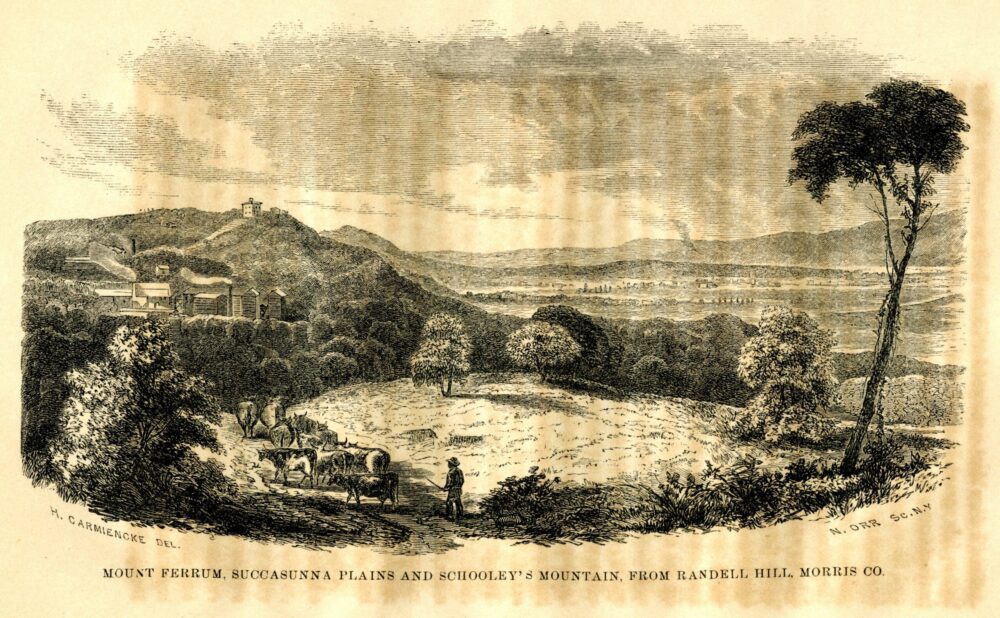
The Great Jugular, a one-hundred-foot tall outcrop of magnetite, was discovered in 1710 at Mount Hope, located in what is now Rockaway Township. This aboveground ore was broken apart with picks, rock hammers, and explosive black powder, then carted to nearby forges to be refined. Thus, work at one of the earliest iron mines in North America began.
ROCKS. WATER. FORESTS.
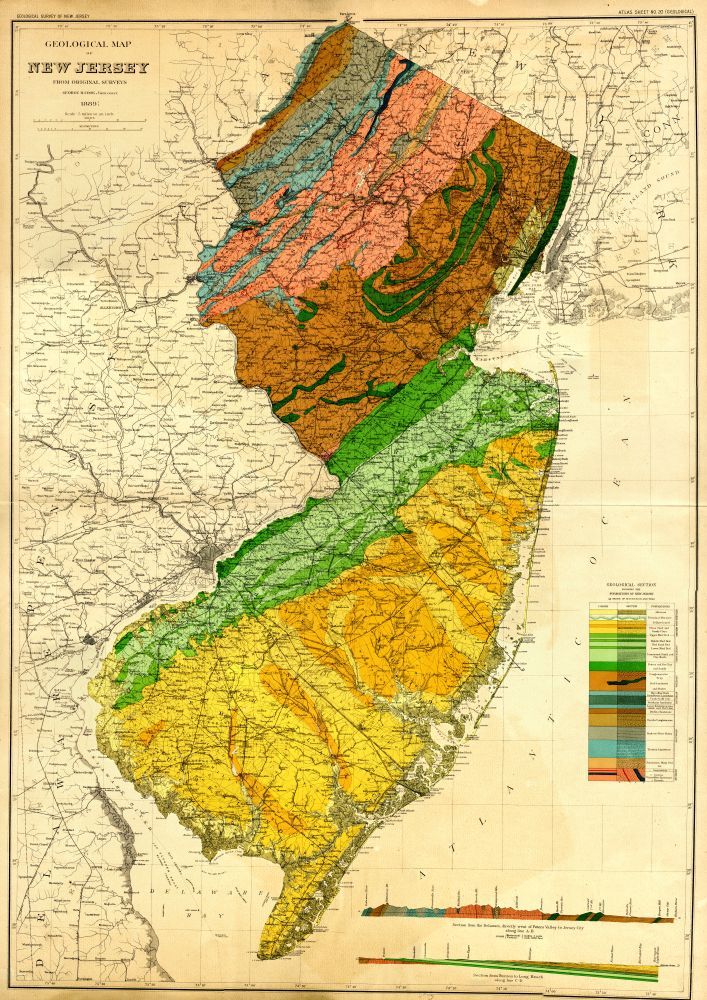
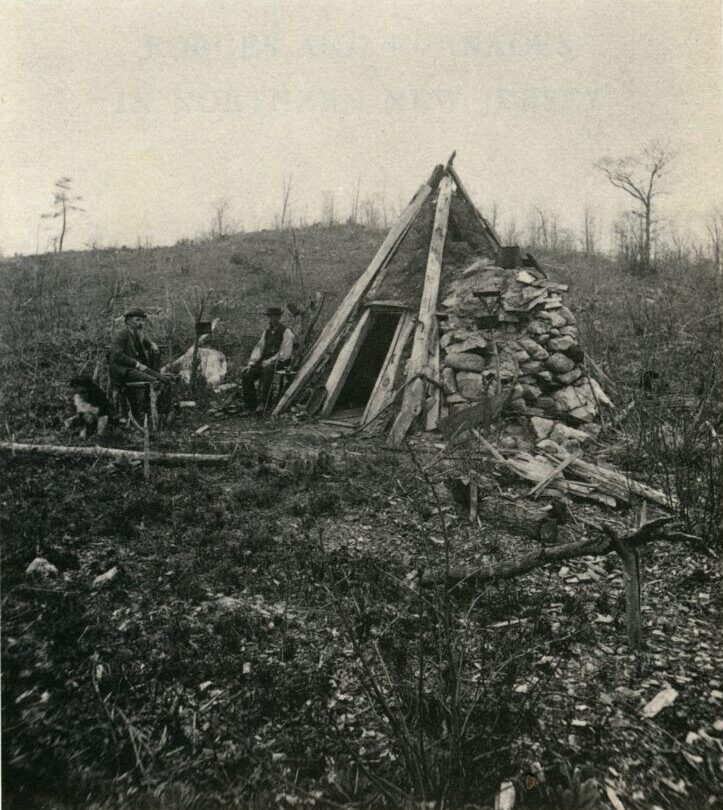
The early iron industry relied on an abundance of specific elements in close proximity to each other: Magnetite ore, limestone to supply flux, dense forests for making charcoal, and rivers that provided reliable waterpower for furnaces. Magnetite, valued for its high iron content, saturates the jagged ridges of the Highlands Region that stretches from Phillipsburg to Greenwood Lake in the northeast.
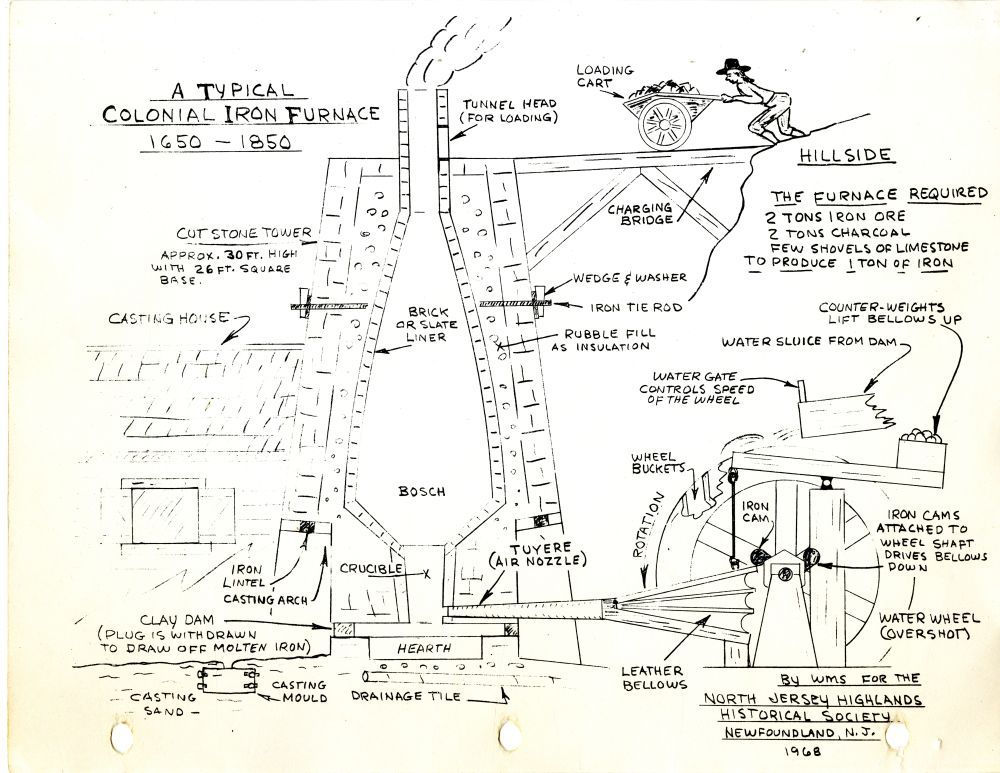
English investors recruited ironmasters skilled in the manufacturing process to supervise workers who extracted and processed colonial iron for export to Britain. Ironically, some of these ironworks enriched their managers with the means to became Patriots who supplied weapons and equipment to the War for Independence.
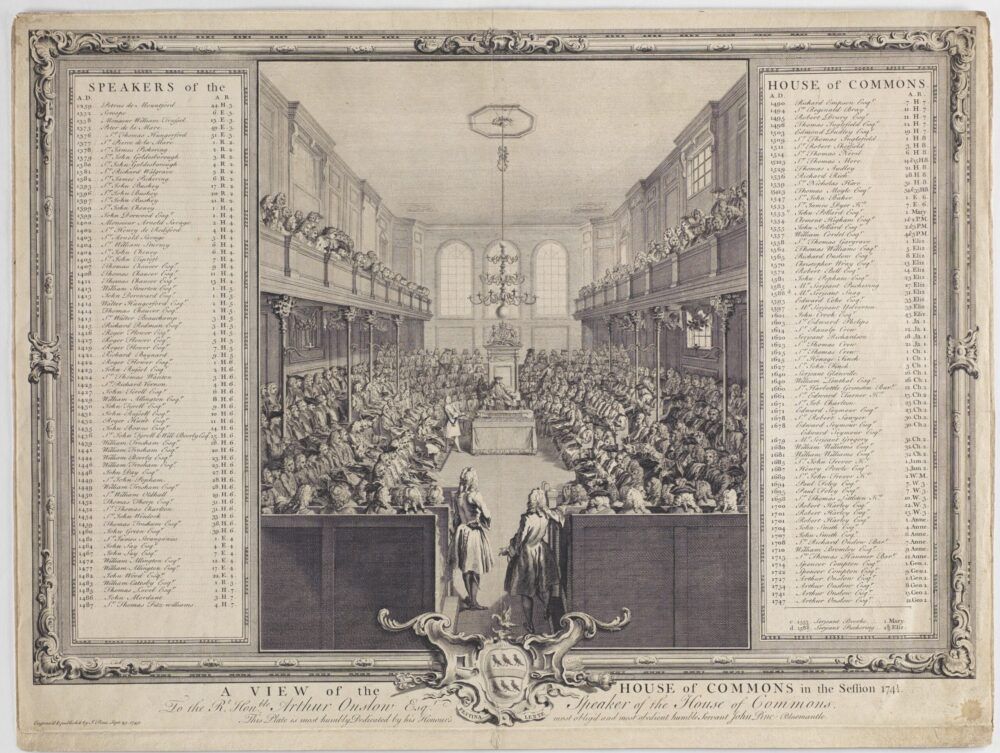
BRITISH COLONIAL IRONMAKING
By the mid-18th century, colonial iron manufacturers had captured the domestic market for hardware such as nails, anchors, and a multitude of tools and equipment. The English government found itself at a competitive disadvantage, and levied a series of import restrictions and tariffs on colonial goods, known as the Iron Act of 1750.
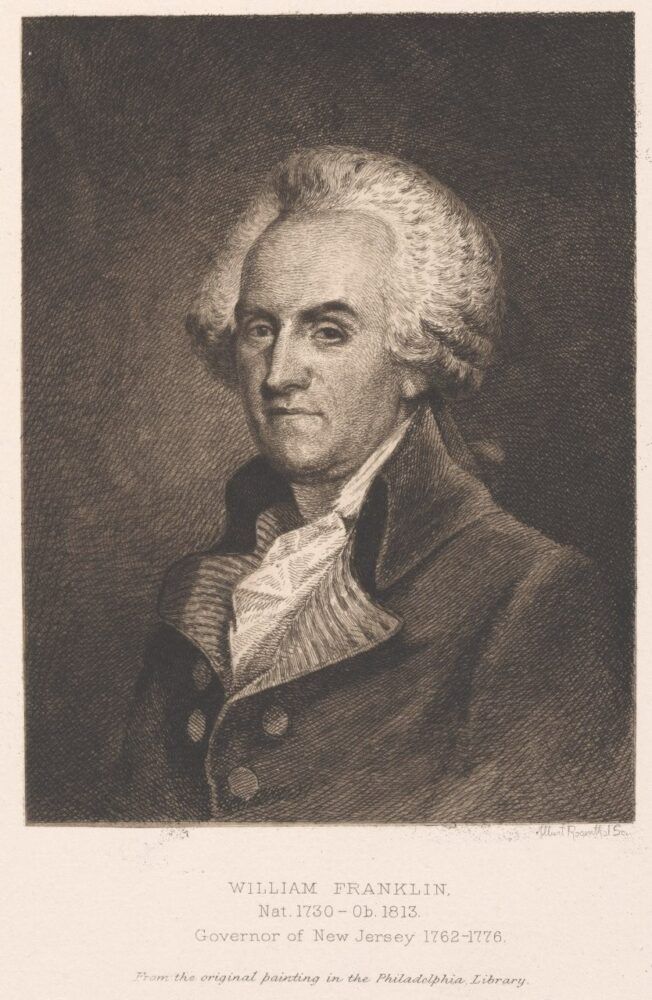
The 1750 Act attempted to establish a reliable supply of raw iron for British manufacturers while creating a captive market for their products in the American colonies. The law was controversial in England and widely hated by the colonists who paid additional taxes on vital tools and components that were unnecessarily delayed.
The policy was openly violated, and by the mid-1770s the colonies had become largely self-sufficient in the production of iron goods. Revolutionaries cited the Iron Act and other laws as evidence of incompatibility with the British Empire.
ORIGINS OF MINING AT MOUNT HOPE
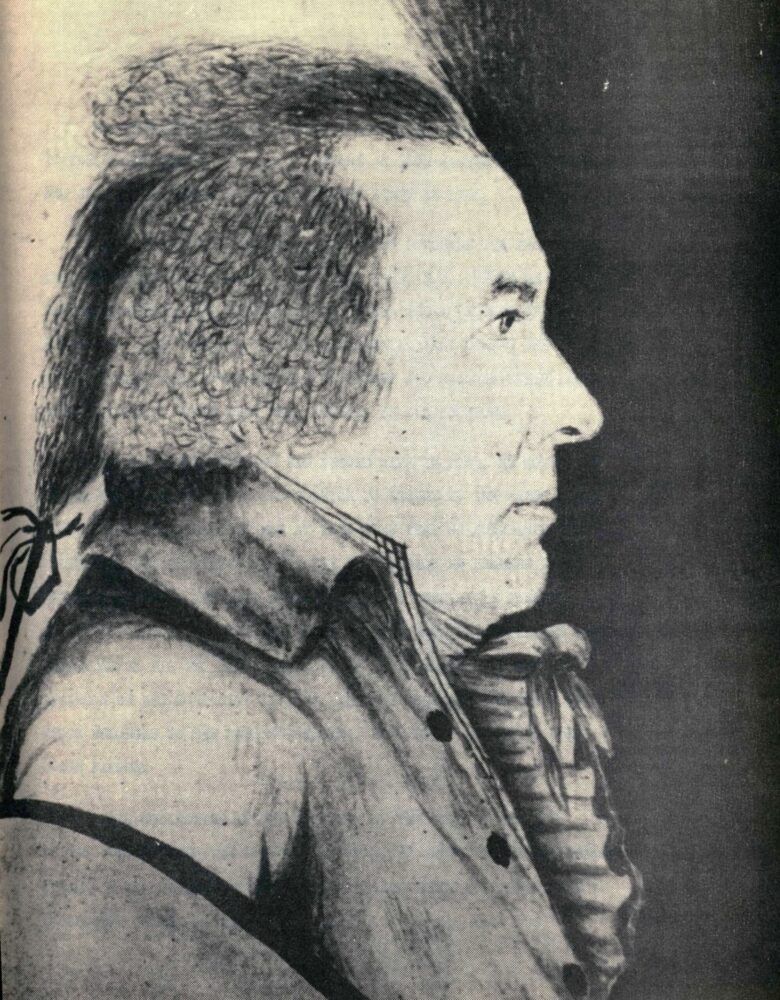
Swiss-German ironmaker, John Jacob Faesch (1729 – 1799) immigrated to New Jersey in 1764 to operate the Ringwood Mine. After working under the London Iron Company, Faesch was recruited in 1772 to become Mount Hope’s first ironmaster. He transformed the area into a fully-fledged iron plantation, complete with workers’ dwellings, a casting shop, and a furnace.
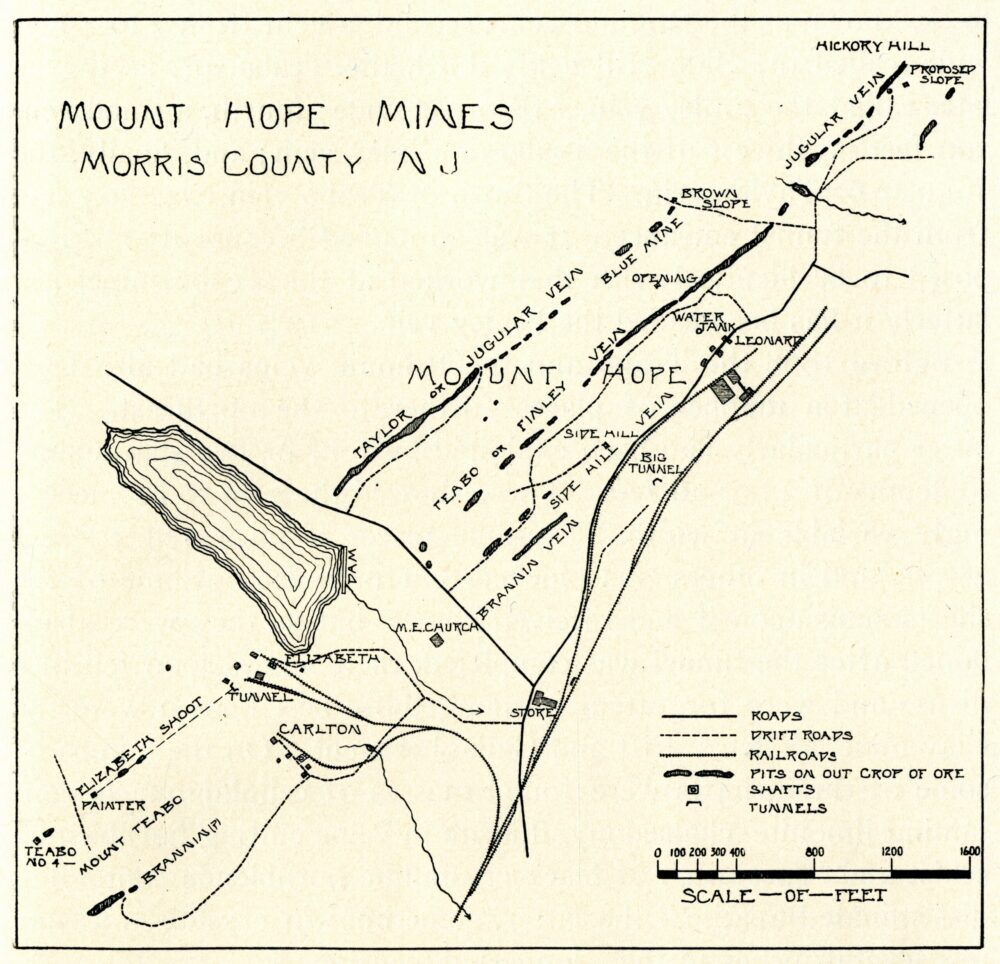
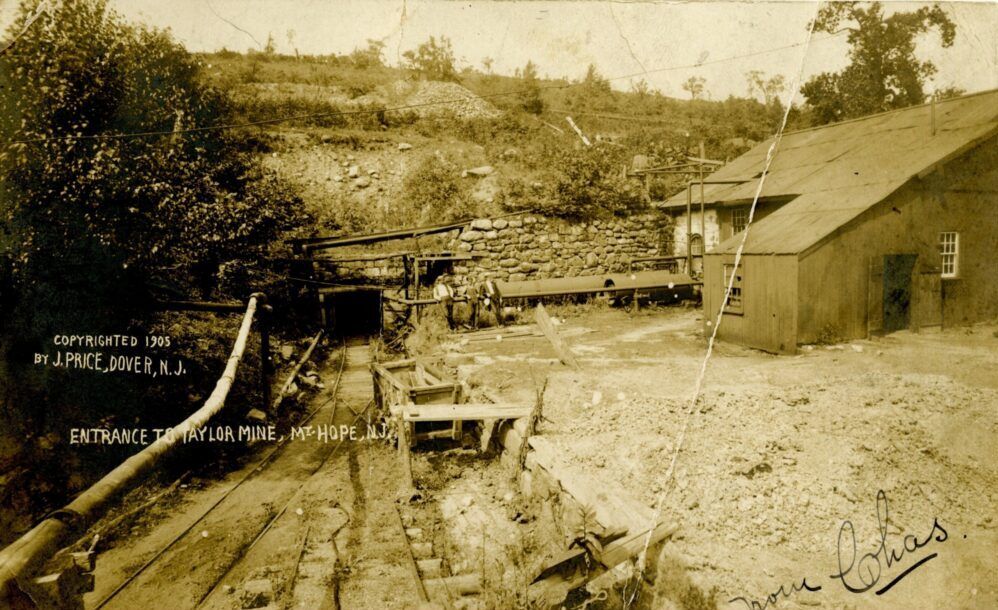
Draft animals transported ore and rock and fed on the land’s pasture, while the nearby forest and pond provided charcoal and waterpower to fuel the furnace. With operations at Mount Hope now in full swing, the supply of surface-level ore was soon depleted, and miners followed the Jugular Vein down into the earth.
IRON PRODUCTION DURING THE WAR FOR INDEPENDENCE
During the Revolutionary War, Mount Hope supplied the Continental Army with shot, shells, and wrought iron tools. To accommodate the increase in demand, Faesch oversaw the opening of two additional shafts along the Jugular Vein, as well as work on the nearby Teabo and Side Hill Veins.
He also acquired the adjacent Middle, Long Meadow, Mount Pleasant, and Brookland Forges, expanding the Mount Hope Mining Complex to over 6,000 acres of land, making John Jacob Faesch New Jersey’s leading ironmaster.
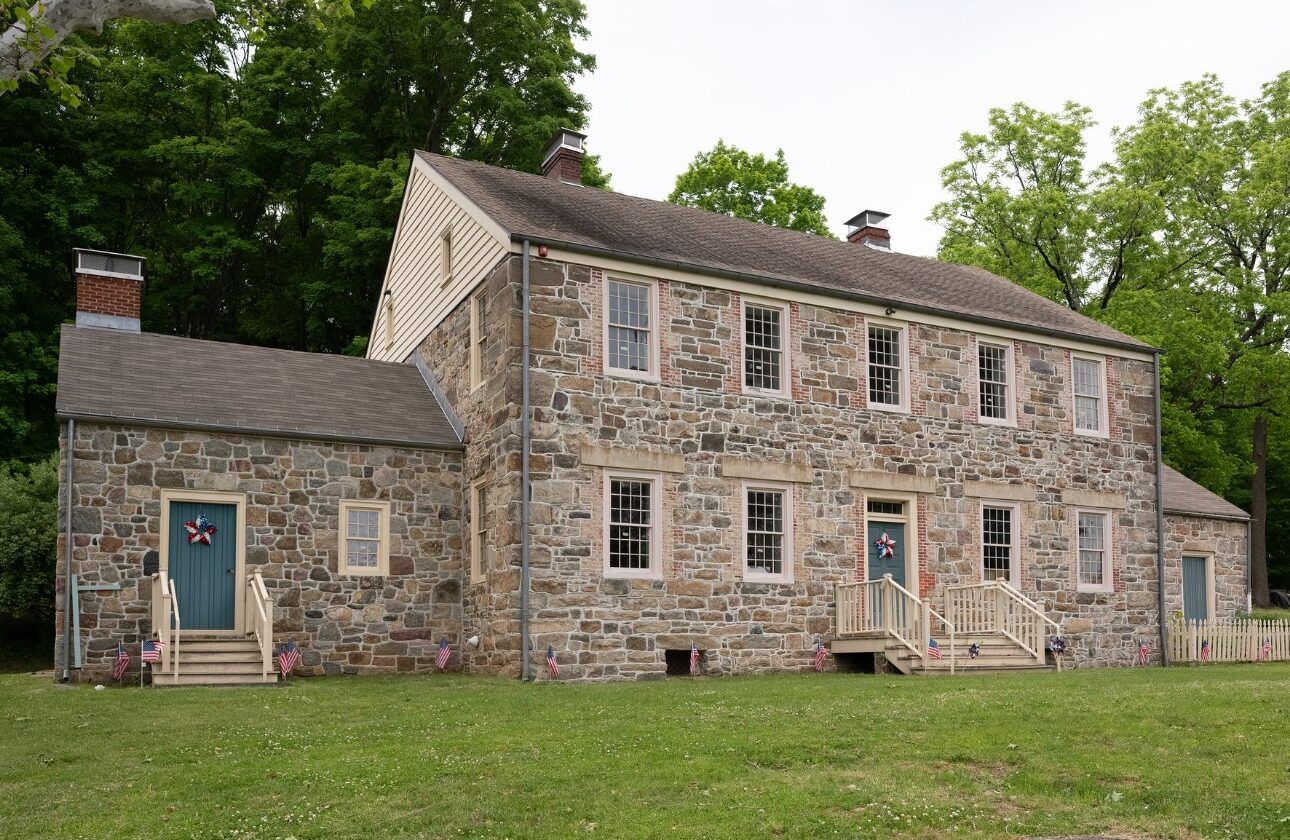
As hostilities escalated between the colonists and the British government, these ironmaking facilities became a vital resource for the Continental Army, and thus, a strategic target. General George Washington exempted 50 local men from military service to guard the site. He also granted John Faesch the use of 35 captured Hessian troops to work as carpenters, blacksmiths, and masons.
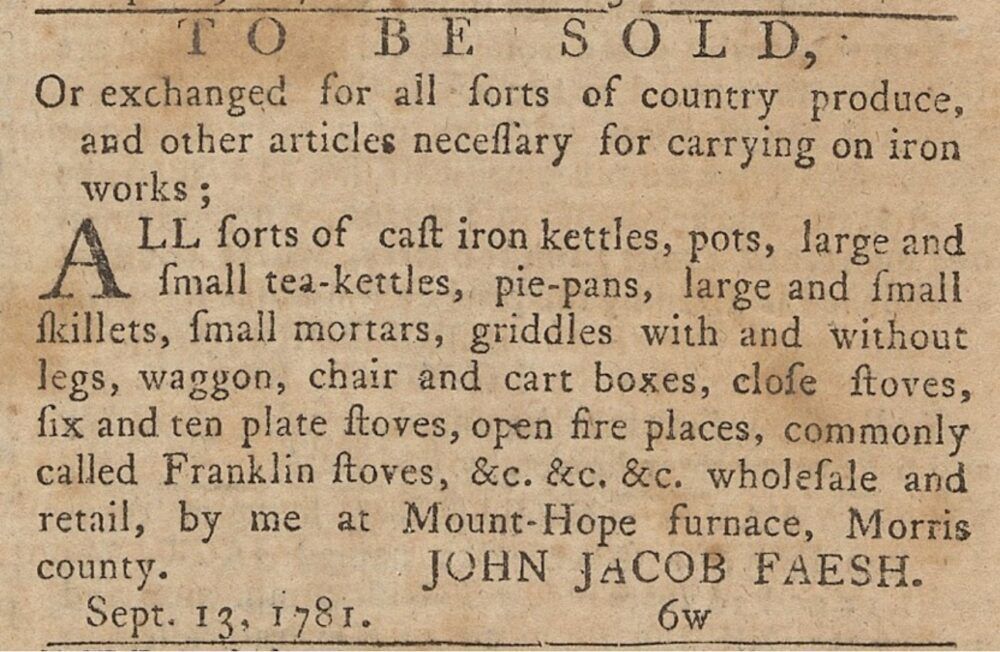
Once the Revolutionary War ended, ironmakers like John Faesch shifted production to civilian tools and supplies. Faesch eventually moved to Morristown with his wife, Elizabeth Brinckerhoff (1751-1788), and managed the Boonton Ironworks, as well as the White Meadow Forge, Hibernia Furnace, Mt. Pleasant, and Longwood Forges.
Faesch operated the Mt. Hope furnace until his death in 1799, and it continued producing pig iron until 1827 when the forges closed. The mine itself operated until it closed in 1978 after yielding nearly six million tons of ore. Mt Hope is one of New Jersey’s oldest active industrial sites, and today produces construction stone 315 years after first opening.
BUILDING CAPACITY AND WEALTH AFTER THE REVOLUTION
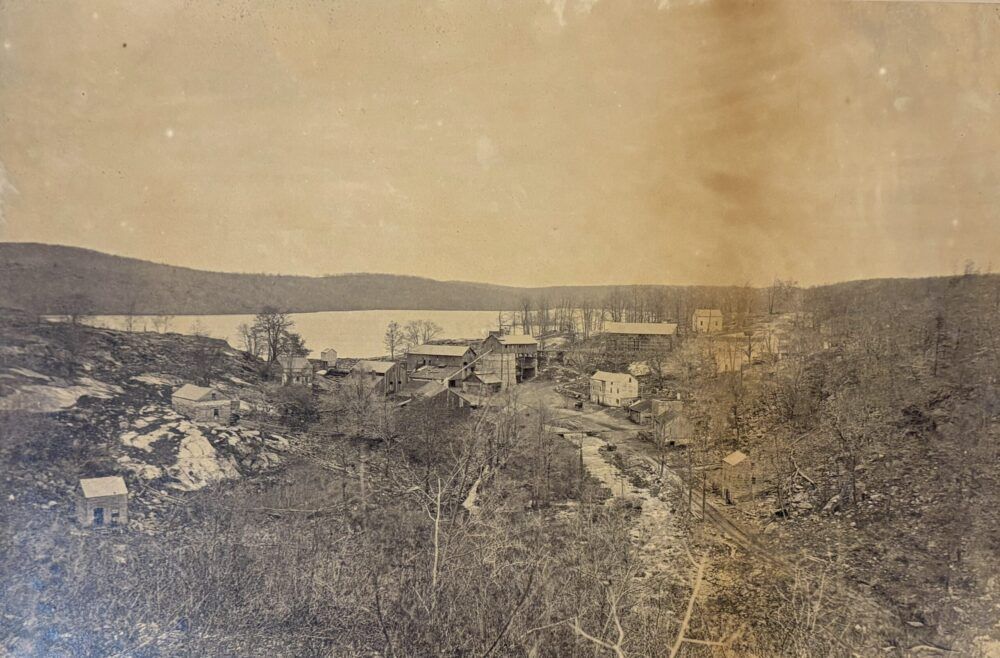
While colonial-era iron manufacturing was defined by numerous small forges designed to evade detection by the British, New Jersey’s postwar iron industry was free to grow unchecked. Lemuel B. Cobb (1762–1831) of Parsippany founded a successful iron mine located in what today is Rockaway Township, which his family operated for generations.
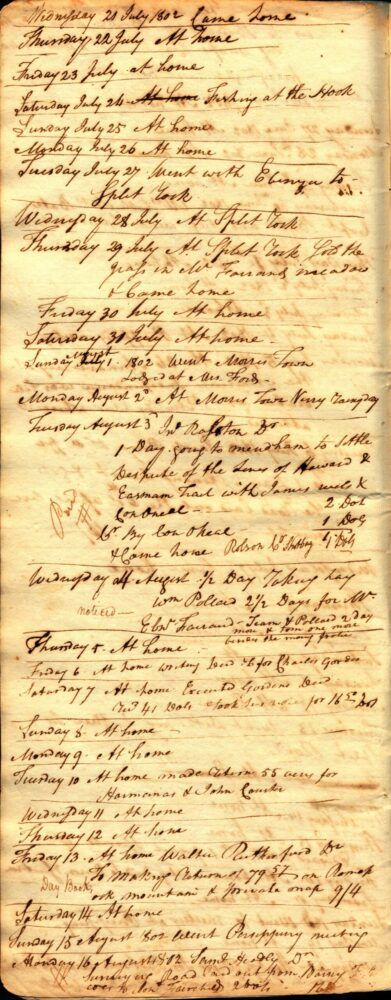
Lemuel Cobb’s diary offers a rare look into the day-to-day operation of an early New Jersey iron mine. From May 1802 onward, Cobb documented his purchase and management of the Split Rock Mine. During its most productive period, the mine generated 1,300 tons of high-grade magnetite per year, and it was ultimately excavated to a depth of 120 feet with a horizontal distance of 1,700 feet.
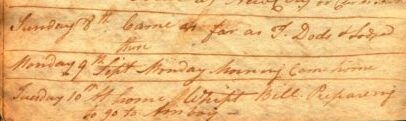
Over his lifetime, Lemuel also managed the family’s sizeable farm with the assistance of indentured, enslaved, and paid employees. Indentured servants from England, Ireland, and Germany provided some of the labor for his forges and furnaces, alongside members of the enslaved population, some of whom also worked as masons, blacksmiths, and farmers.
WITNESS TO EARLY CELEBRATIONS OF AMERICAN INDEPENDENCE
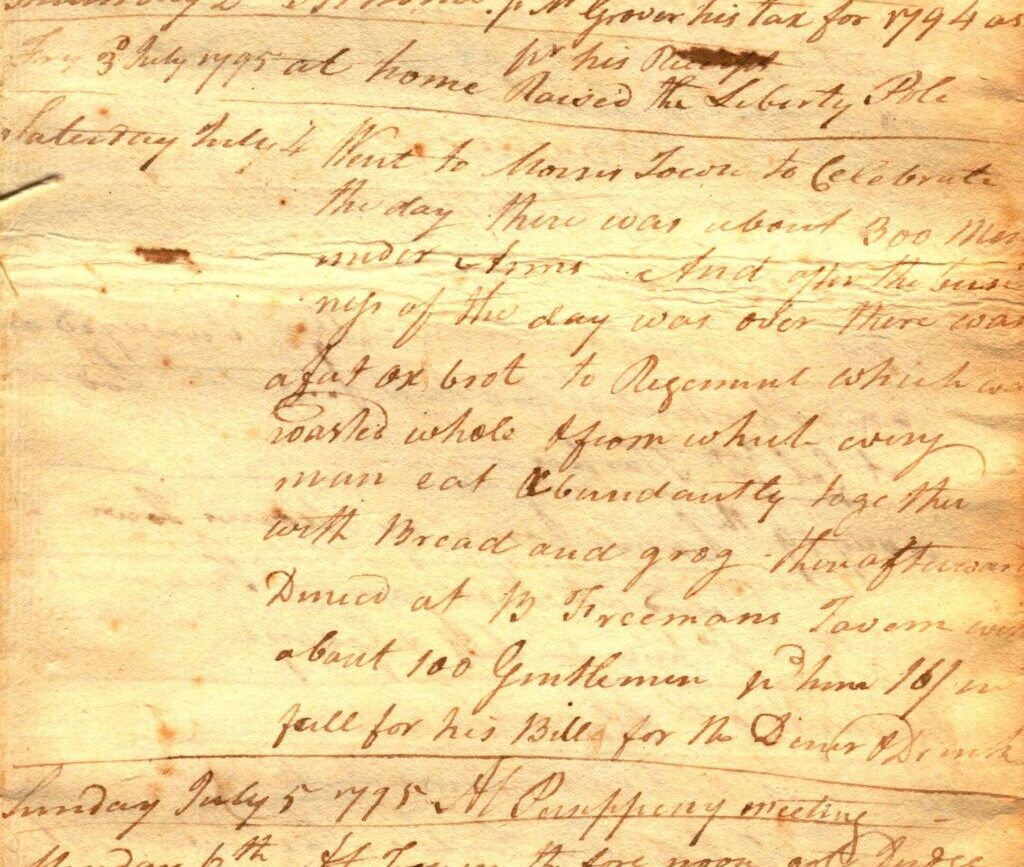
Lemuel Cobb enthusiastically participated in the 19th anniversary celebration of the Declaration of Independence, as recorded in this 1795 diary entry. In it, Lemuel describes raising the Liberty Pole on his property, as well as the Fourth of July activities that occurred in Morristown, which he described as follows:
Saturday July 4th Went to Morris Town to Celebrate the day. There was about 300 Men under Arms. And after the Business of the day was over there was a fat Ox brot to Regiment which was roasted whole & from which every man eat abundantly together with Bread and grog. Thereafterward Dined at Mr. Freeman’s Tavern with about 100 Gentlemen pd [paid] him 16s [shillings] in full for his Bill for the Dinner & Drink.
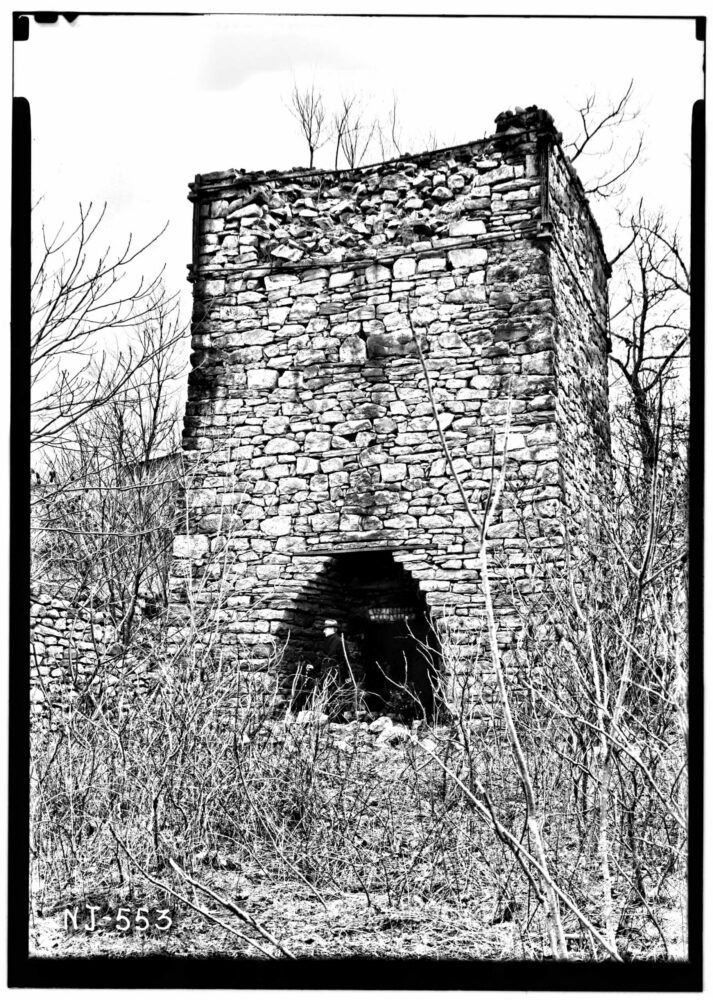
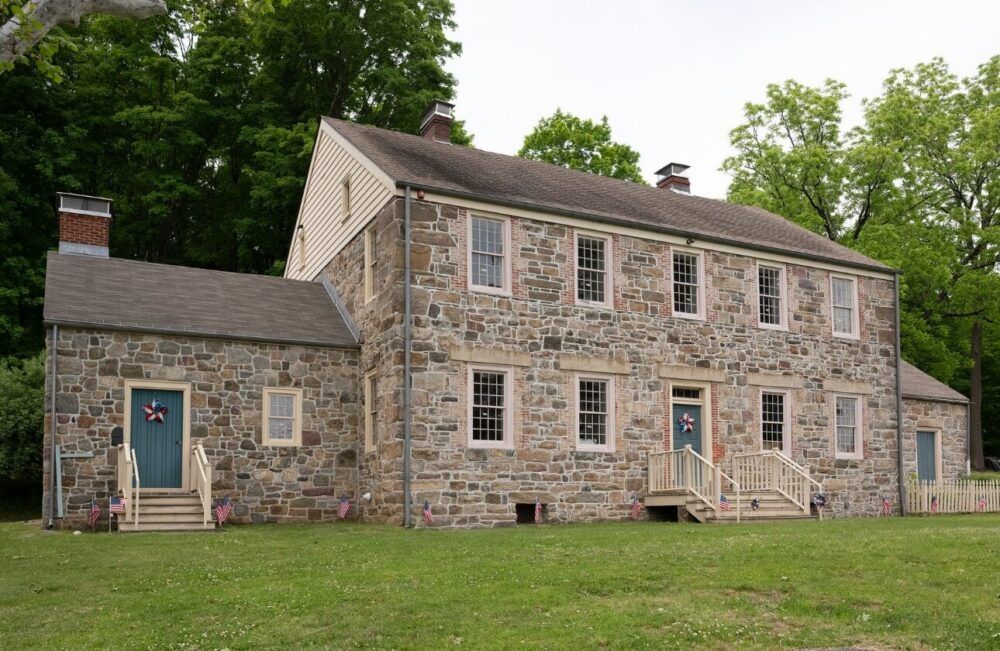
After Lemuel Cobb’s death in 1831, his son Andrew Bell Cobb (1804–1873) took over management of the Split Rock furnace. During the 1830s, Andrew expanded capacity by constructing a second forge, and in 1862 rebuilt the aging Split Rock Furnace whose stone and brick structure remains standing to this day.
Smaller ironmaking facilities like these manufactured products that were sold throughout the region. Some companies grew into massive ironworks over the following century as demand grew for New Jersey’s high-grade magnetite.
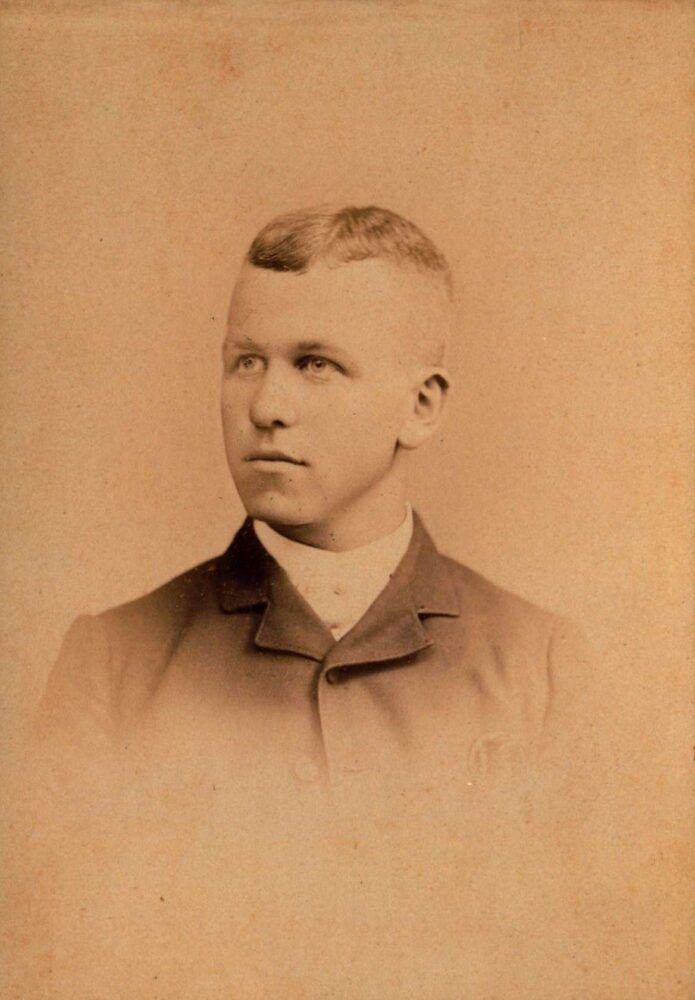
Andrew Lemuel Cobb (1867–1922) inherited the family’s dairy and horse farm, and became one of New Jersey’s leading agriculturalists. The prominent businessman was also appointed Director of the First National Bank of Morristown. By the late 19th century, discovery of the Mesabi Range’s vast iron deposits in the American Midwest greatly impacted New Jersey’s iron industry and led to the closure of Split Rock Mine in 1881.
OLD BOONTON’S IRONWORKS IN THE 19TH CENTURY
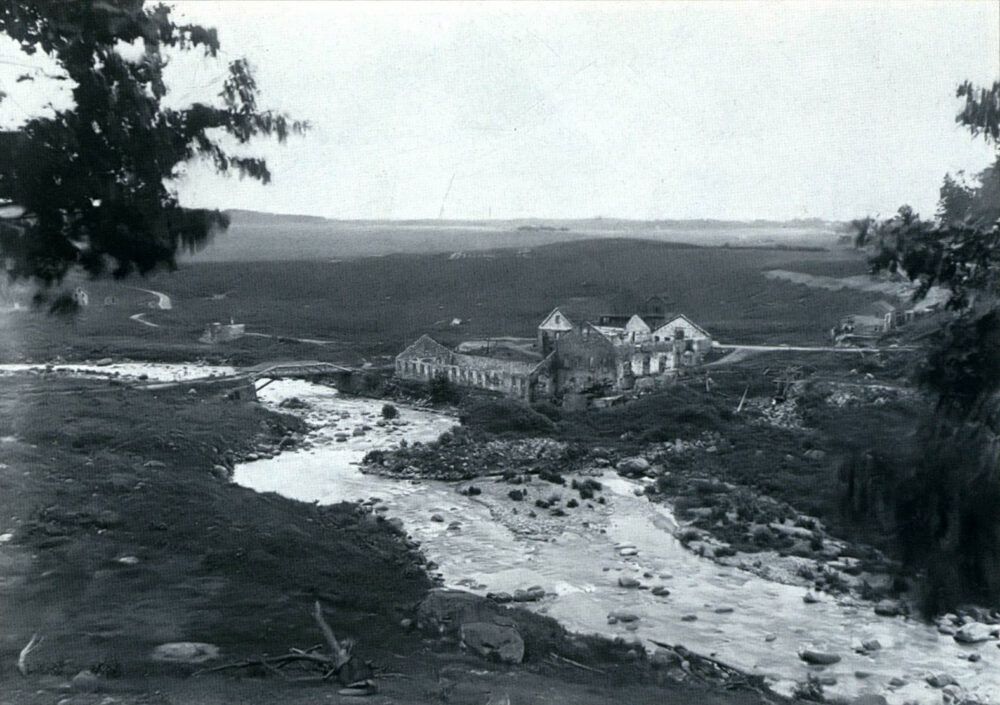
The Old Boonton Ironworks was operated by members of the Faesch family until 1820 and it was purchased by Israel Crane and William Scott at foreclosure in 1821. Operations at the site suffered due to unfavorable market conditions and frequent damage from the volatile Rockaway River.
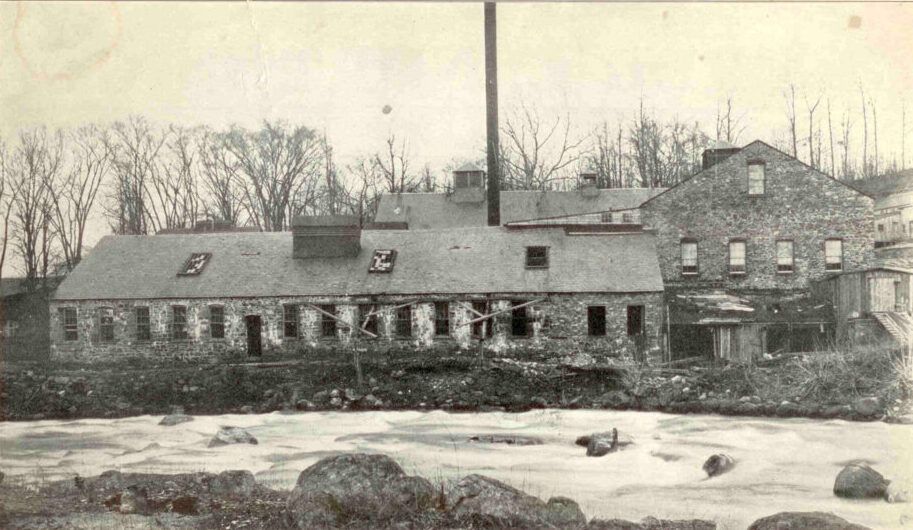
When the Morris Canal was constructed in 1829 to the north near Boonton Falls it bypassed Old Boonton completely, leading many residents to move uphill closer to opportunities brought by the new canal system. The old foundry fell into disrepair; afflicted by regular flooding and far from the mass transit of its day, Old Boonton’s industrial sector quickly declined as Boonton Falls’ fortunes rose.
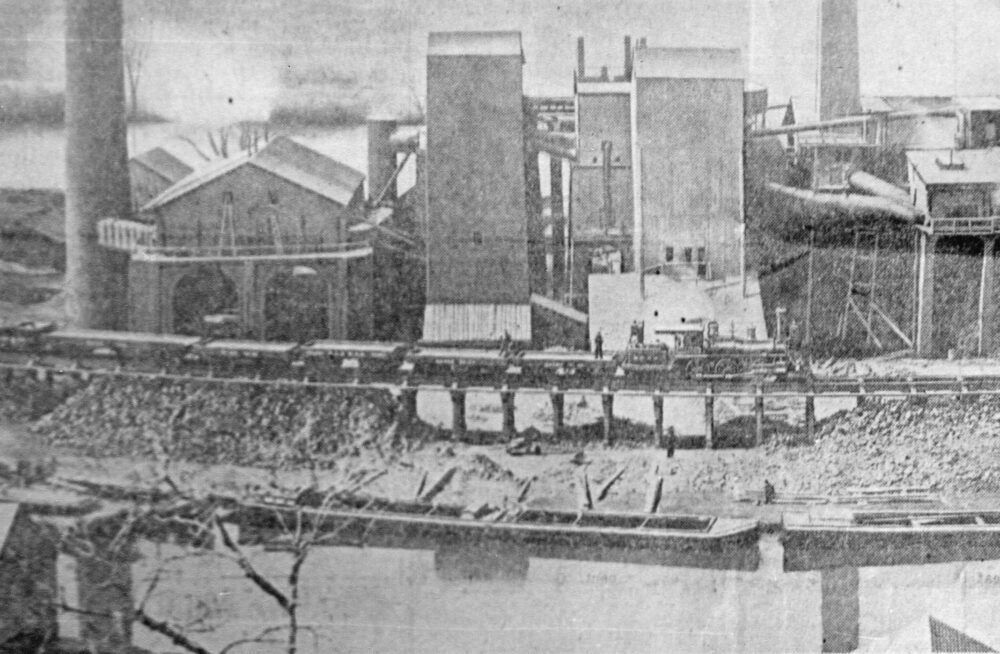
By 1830, the New Jersey Iron Company constructed an updated facility at Boonton Falls where an easier-to-control segment of the river provided a reliable source of water power. Company owners imported state-of-the-art equipment from England, and attracted a skilled workforce by offering generous wages, building homes for employees and schools for their children.
The nearby Morris Canal breathed new life into Boonton’s iron industry. Canal boats delivered anthracite coal from Pennsylvania’s fields to north Jersey’s iron furnaces and forges, which had suffered from a lack of charcoal due to deforestation. Processed iron ore then traveled along the canal to market, along with lumber, whisky, cider and the occasional passenger. Railroads soon appeared to compete but the Morris Canal remained in operation through the early 1920s.
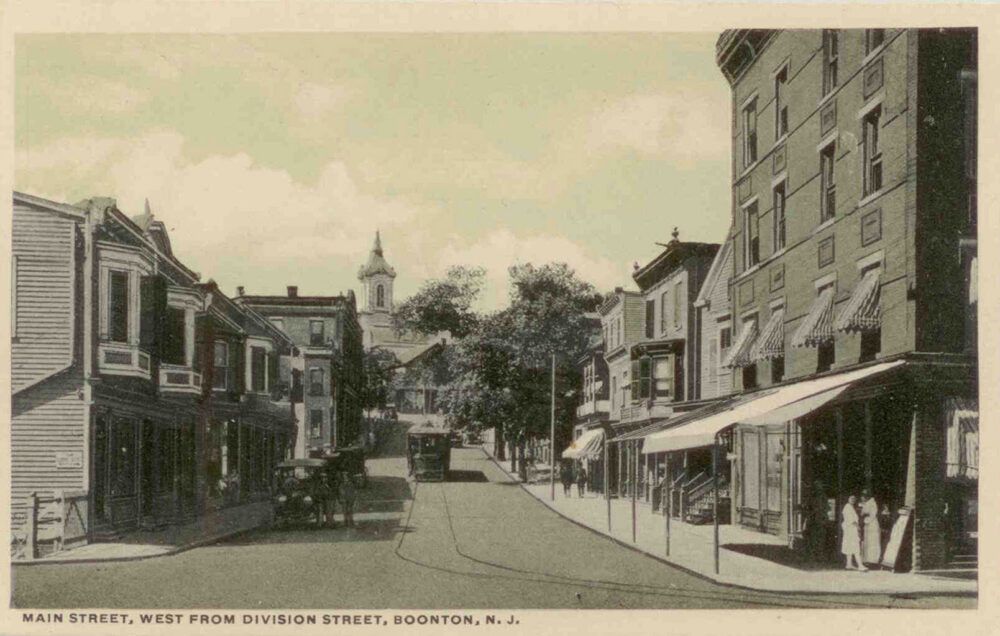
As the new ironworks drew workers uphill, Boonton’s Main Street flourished; managers built homes nearby, proprietors constructed hotels to accommodate a stream of business and recreational travelers, and residents enjoyed newly constructed stores, churches, and theaters. By 1860, the population of Boonton Falls had grown to 2,200.
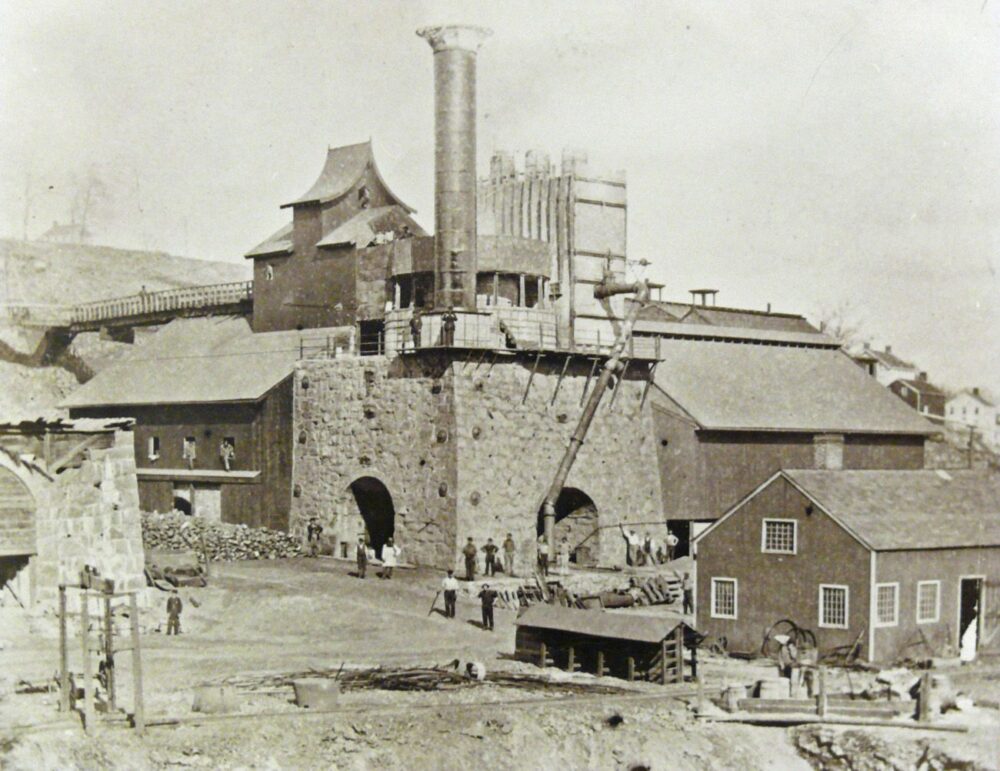
By the mid-19th century, Boonton’s new ironworks expanded its capacity to 320 tons per week. Among its products were cut nails, steel for the Union Army, and axles for the Camden and Amboy Railroad. Boonton Ironworks operated through the post-Civil War period until the Panic of 1873 and competition from iron fields in the Midwest contributed to its closure in 1876.
By late 1800s, Jersey City had chosen the town of Old Boonton and its meandering section of the Rockaway River as the ideal site for a reservoir. It acquired all properties nearby, including the former ironworks, demolished or relocated all buildings, and submerged the entire village underneath 60 feet of water.
MINE WORK IN THE 20TH CENTURY
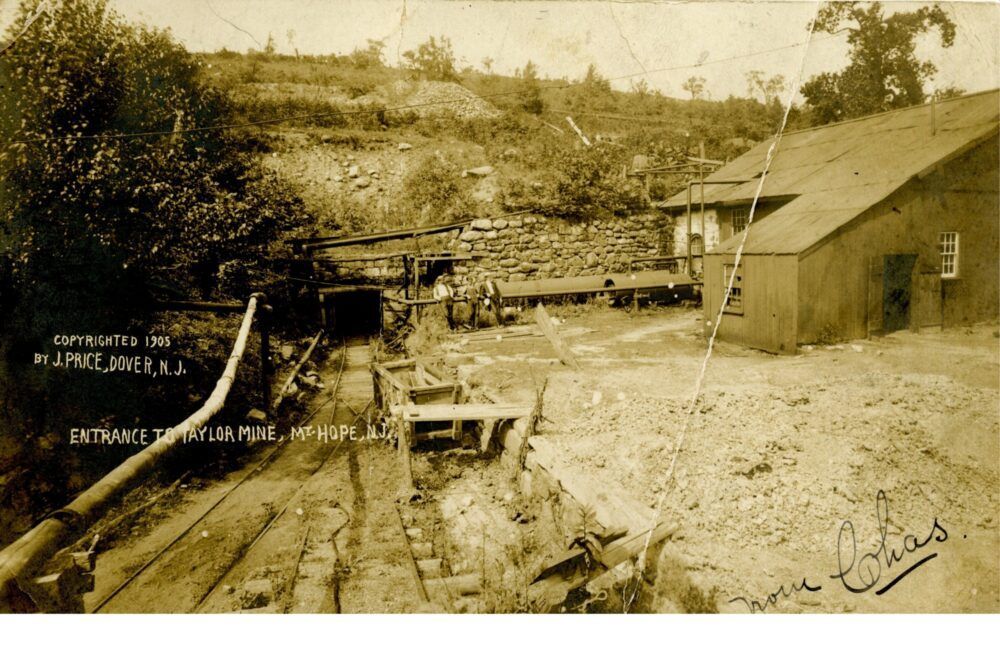
Underground mine work was dangerous and intense. Blasters carried heavy equipment into vertical shafts, drilled holes to place dynamite in the rock, and then lit fuses before rapidly moving away from the blast.
Blacksmiths, welders, and electricians all worked out of shops in underground tunnels to keep machinery functioning without transporting it to the surface. Several former miners recounted their experiences working at Mt Hope in a series of oral histories recorded by historian Stuart Lefkowitz.
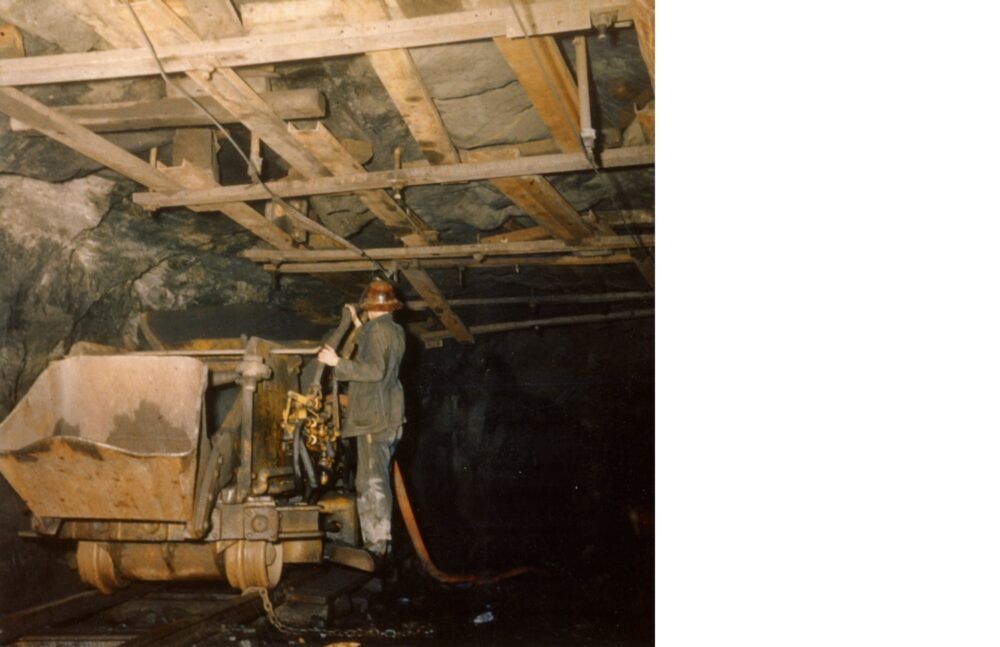
Mount Hope formed an agreement with the International Union of Mine, Mill, and Smelter Workers in 1947, extending membership to all non-supervisory workers. The union fought to acquire protective gear such as hard hats and respirators, and negotiated for higher pay when better equipment made for more efficient work.
Its seniority-based promotion system, however, left many miners frustrated and displeased. Nevertheless, throughout its long history, conditions at Mount Hope generally were viewed positively by those who worked there.
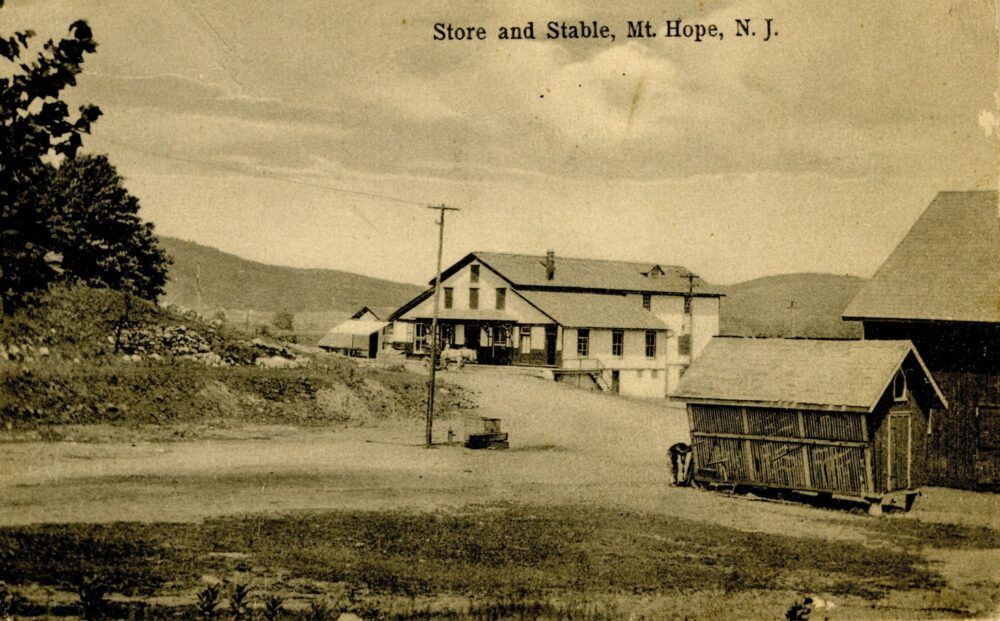
A 20th CENTURY MINING COMMUNITY
By the early 1900s, the workers’ village at Mount Hope housed approximately 500 residents, and maintained its own church, school, and store. Company-built housing was well-made and affordable for renters. Mining families valued resourcefulness and self-sufficiency, and many cared for their own livestock and vegetable gardens.
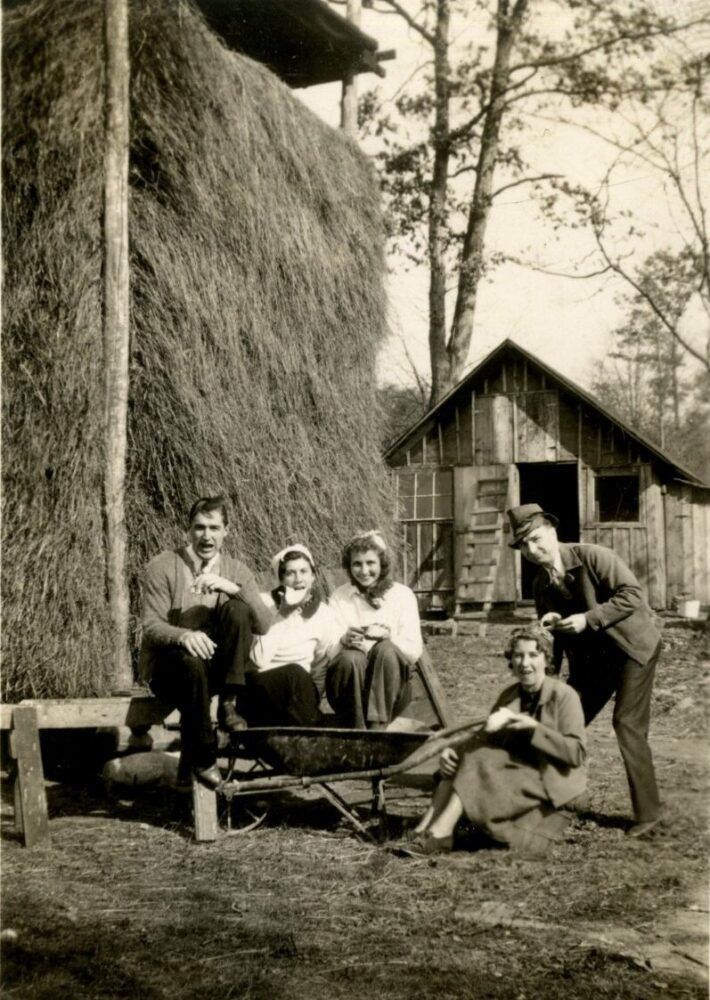
Nothing went to waste: Partially-burnt coals from the forges were reused in home fireplaces, and worn-out conveyor belts for processing ore were sewn into shoes. Yet, as Barbara Kovach Anderson recalled of her childhood home at Mount Hope: “When you came into the house there was this great big kitchen… and I remember them putting wainscoting on the bottom of it and beautiful wall paper around it. We thought we were millionaires.”
Company management hosted annual picnics for employees and their families, which gave above-ground and below ground workers a rare chance to socialize. Many workers were immigrants, and had come from a wide array of countries including Hungary, Russia, Italy, Germany, Spain, and Ukraine. Despite their differing backgrounds, Mount Hope possessed a strong sense of community, and neighbors pitched in to help those in need.
MINING’S LEGACY IN MORRIS COUNTY
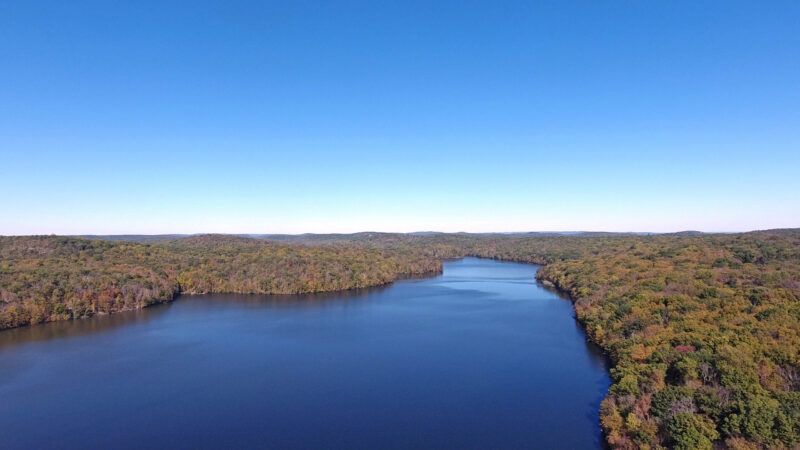
Echos of Morris County’s iron mining legacy remain with us today, as former mine properties exist amidst residential neighborhoods, businesses, parks, nature preserves, and highways. Nature and wildlife preserves occupy a large portion of former industrial land. Wildcat Ridge Wildlife Management Area in Rockaway Township covers over 6,000 acres and includes the former Hibernia, Beach Glen, and Oreland mines.
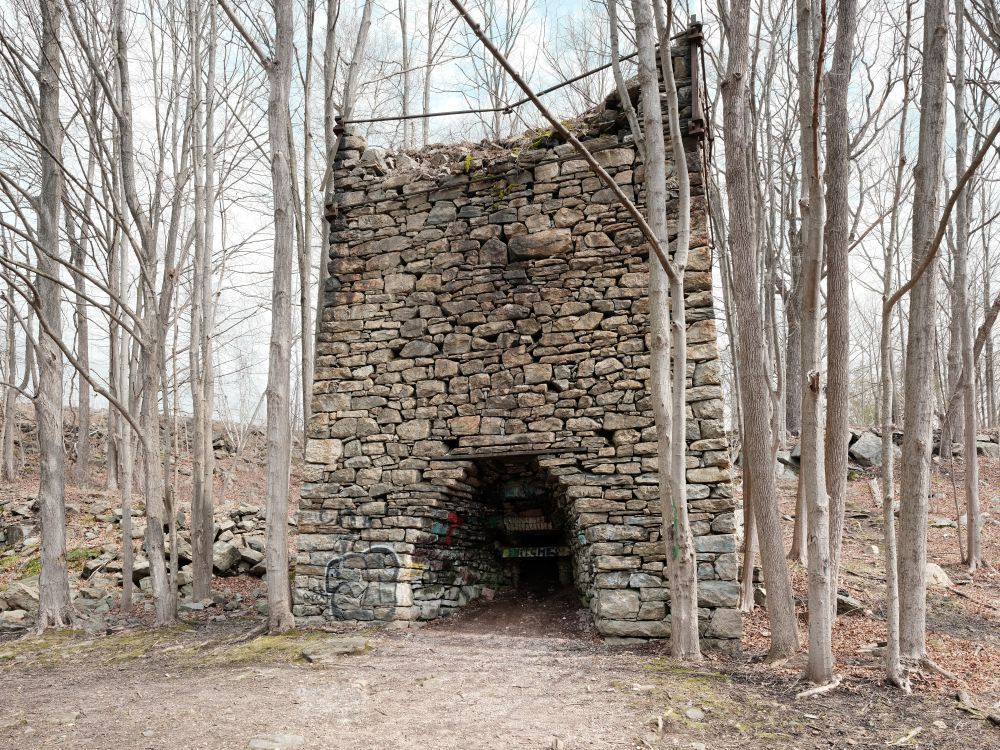
Split Rock Reservoir and the surrounding land are part of Wildcat Ridge and Farny State Park; the Split Rock Furnace is located a short distance from the Split Rock Reservoir dam. Ruins of the furnace and a lime-kiln can be seen along hiking trails in the park; the nearby stream bed is stained bright orange with iron.
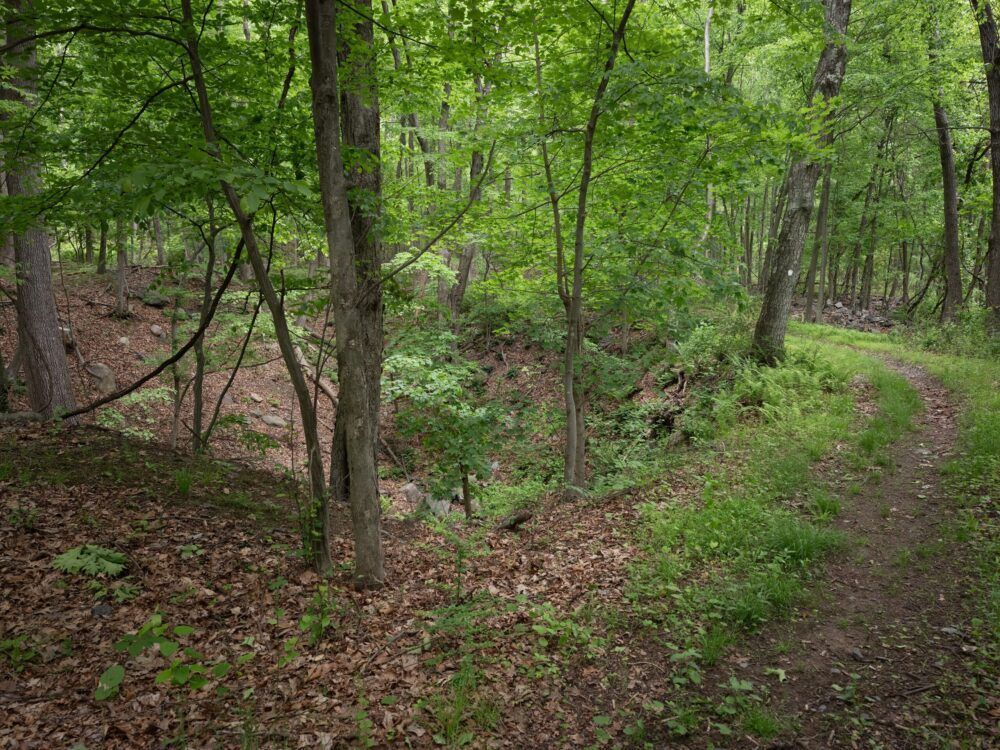
Many of Mount Hope’s former mines are now located within state and county parks. Mount Hope Pond Park in Rockaway Township encompasses the former Elizabeth Mine, and Mount Hope Historical Park is the site of the Richard, Teabo, and Allen Mines. Visitors to these parks often encounter mine subsidence pits, which are large, deep depressions where mines have collapsed or settled. The Dickerson Mine Preserve in Mine Hill also features a bright orange stream and many subsidence pits along its trails.
SINKHOLES
The most dramatic artifact of the region’s mining past are sinkholes, which form when an old shaft collapses and undermines the integrity of the land above it. While mine entrances usually were recorded, owners did not always map the network of tunnels that extended below. Subsequent property owners and developers may have been unaware of the risks underneath the surface.
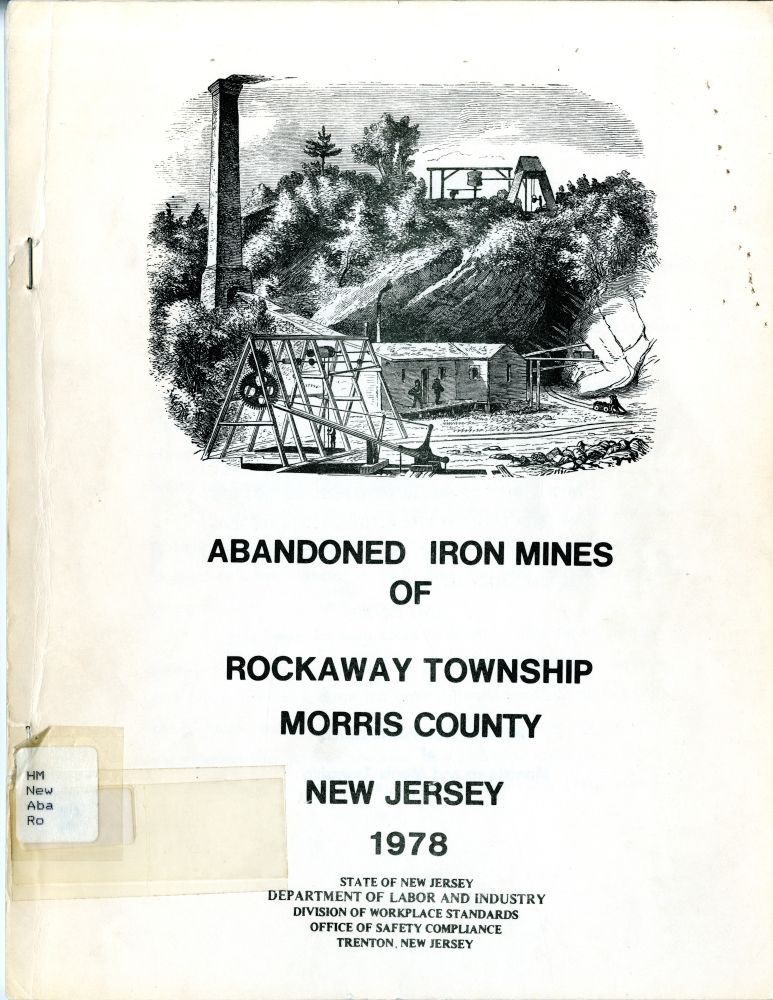
During the 1970s, the Mine Safety Section of the New Jersey Department of Labor and Industry published a series of reports documenting abandoned mines and the hazards that could impact the safe use of the land. By this time, much of the property around these abandoned sites had already been developed, and a number of collapses occurred.
In 1988, a 200-foot-deep sinkhole opened in the basement of a Mine Hill home near the former Brotherton Mine. In 1992, a 30-foot-wide sinkhole opened up in a condominium parking lot in Rockaway Township. A sinkhole appeared in 2000 next to an American Legion building in Wharton. And in 2009, a ramp from Route 80 to Route 15 in Wharton was rebuilt because of another sinkhole.
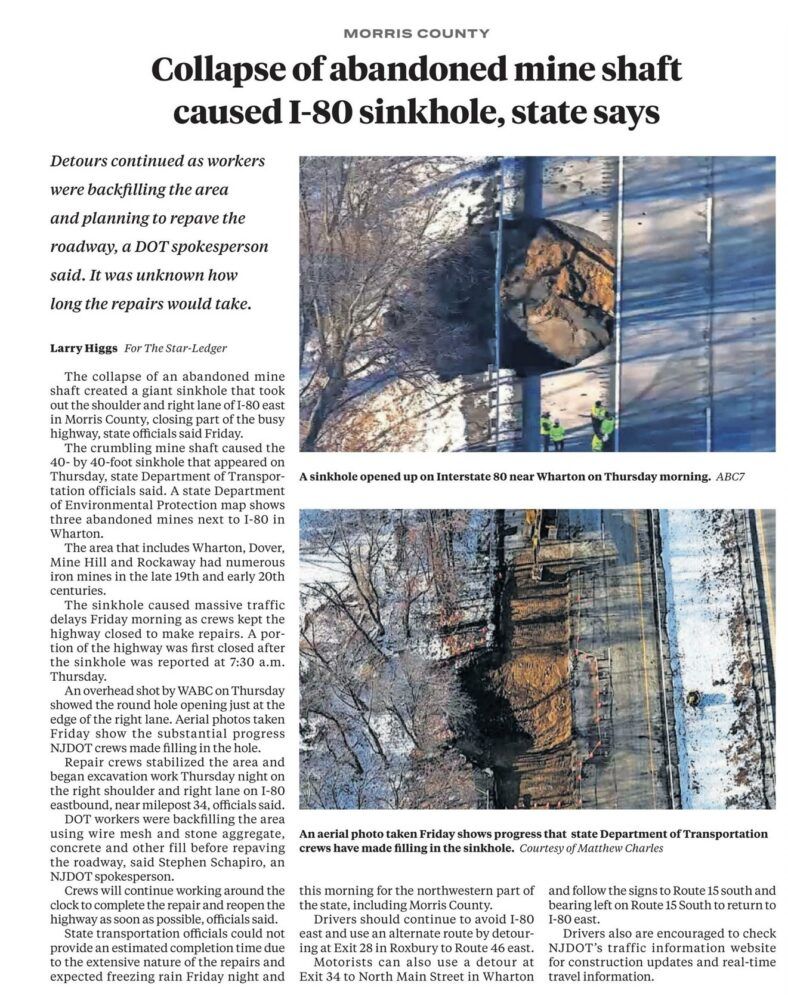
Most current residents are aware of the Dec. 27, 2024, sinkhole collapse on Route 80 near exit 34 in Wharton, which forced closure of the highway’s eastbound lanes. It was followed by two other collapses in February and March 2025. The sinkholes are believed to be related to the former Huff and Mount Pleasant mines. After a massive statewide response, all lanes were fully reopened by late June 2025.
MODERN LEGACY OF NEW JERSEY’S MINING PAST
New Jersey’s relationship to iron production is a thread that connects its colonial past to the early 20th century. Ironmaking generated wealth and raw materials for the British Empire, provided arms and equipment for American Patriots to secure independence from England, and was instrumental in the construction of transportation networks and technologies vital to westward expansion and the country’s rapid industrialization.
The massive 19th century refineries and factories are no longer present but their legacy includes many of today’s businesses, roads, towns and cities, and the countless descendants of those who worked in or owned Morris County’s mines and forges.
This article is based on the Morristown & Morris Township Library’s current exhibition, “Forging a New Nation: Morris County’s Iron Industry”, which is on view through 2026 in the second floor F.M. Kirby Gallery.
For a behind the scenes look at our collections and additional information on New Jersey history, follow us at BlueSky, on Facebook, and Instagram; and read our other MorristownGreen.com articles here.
Morristown has a long history of people stepping forward in pivotal moments.
When you chip in to Morristown Green, you’re helping your neighbors stay informed, strengthening our civic backbone, and carrying on the spirit that’s defined this town since its earliest days.
Rally for local news.