By Cathy Wilson
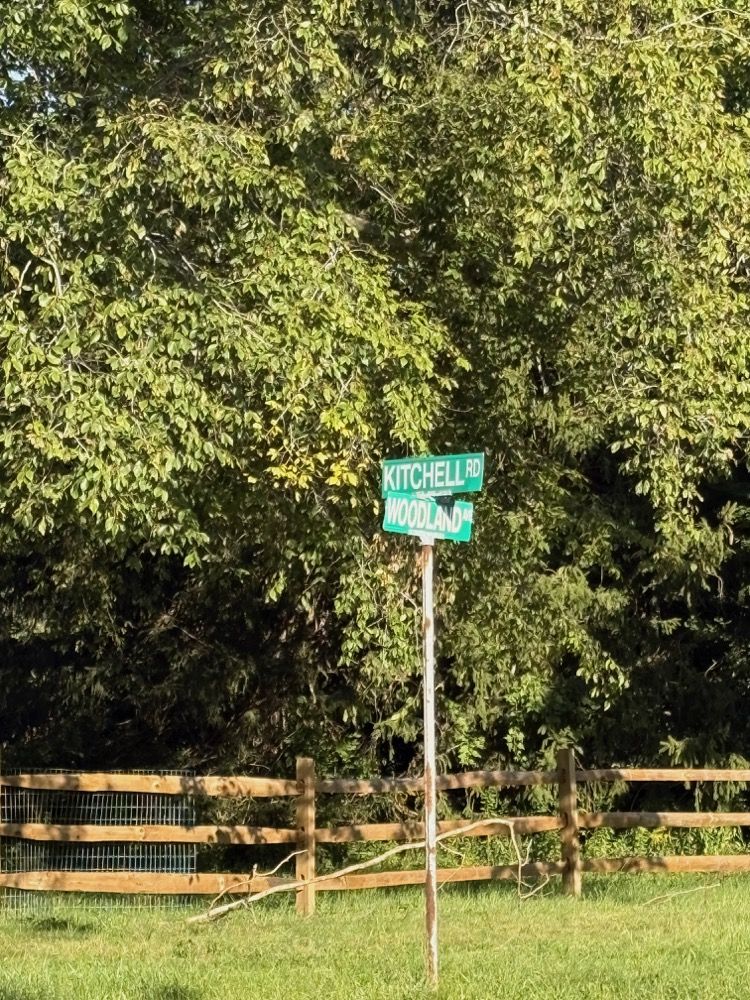
A battle is brewing in Morris Township over Harding’s plan to build 54 affordable housing units on a seven-acre parcel of wetland-filled land that sits on Harding’s border with Morris Township at the corner of Woodland Avenue and Kitchell Road.
This “Kitchell” project is the centerpiece of a lawsuit that a developer – GHK Realty LLC (GHK) – has filed against Harding. I encourage you to read it. It’s an eye opener!
Never in a million years did I expect to find myself celebrating a builder’s remedy lawsuit.

I abhor the notion of giving developers the power to strongarm municipalities into complying with every maddening detail and every time-crunched mandate of New Jersey’s affordable housing law.
But this law makes for strange bedfellows. And this builder’s remedy lawsuit is one such example for me.
This Kitchell site is also of great interest to Morris Township’s many residents who live nearby – especially in the Moore Estate and along Kitchell Road.
A group of them are preparing to show up at next week’s (Oct. 21, 2026) Township Committee meeting, pitchforks in hand, asking why their elected officials signed a sewer agreement with Harding before Harding had the decency to provide even a shred of information about this project to all the Morris Township residents who live immediately nearby.
I think they raise a good point…
THE BACKSTORY
Here’s the backstory on what’s going on:
This Kitchell project is super important to Harding. It’s the centerpiece of its Fourth Round Affordable Housing Plan.
Like every town in New Jersey, Harding was under the gun to get every detail of its Fourth Round plan in order in time to meet the compliance deadline of March 15, 2026.
Like many towns, Harding did not finalize all of its plan-approval requirements until just a few days before the March 15th compliance deadline.
Just like Morris Township, Harding chose March 9th as the date to hold its public hearing and final vote on all the zoning ordinances that had to be passed to meet this deadline.

As Harding knows well, the stakes of complying with these requirements within this time frame are HUGE: Complete and timely compliance is the ticket to earning the reward that every town in Jersey will walk on broken glass to accomplish: Immunity from builder’s remedy lawsuits.
Likewise, failure to comply with these requirements and deadline leads to a consequence that every town dreads: Developers get the chance — via a builder’s remedy lawsuit — to bring forth an alternative proposal of their own that will correct your town’s shortcomings for you.
Enter GHK and the builder’s remedy lawsuit it’s filed against Harding.
GHK makes an alternative proposal that it believes is better suited than the Kitchell project to help meet Harding’s Fourth Round obligation:
In lieu of squeezing 54 affordable housing units on to the seven-acre Kitchell site — only 2 acres of which are buildable — GHK proposes to build 134 units, including 28 affordable units, on an expansive 34-acre property that sits in the heart of one of Harding’s most iconic and exclusive neighborhoods along Spring Valley Road.
Hummm… as you can imagine, Harding is not keen on this idea.
A HUGE AND GLARING ERROR
Given its aversion to GHK’s “Spring Valley” proposal, which Harding has been fighting for more than two years, you would think Harding might have been more careful to adhere to every legal requirement it was obliged to follow when it passed the ordinance to re-zone the Kitchell site.
Harding officials made a huge and glaring error when they passed this ordinance at their March 9 meeting: In clear violation of the state’s Municipal Land Use Law (MLUL), they failed to notify Morris Township residents of their plans for the Kitchell site.
How is it okay for Harding to propose a project of this size and scope while providing literally NO NOTIFICATION to all the Morris Township residents who live nearby — and who, incidentally, will experience the greatest impact from it?
By any reasonable standard of decency, this action on Harding’s part was egregiously offensive. And it doesn’t take a law degree to know that it was blatantly illegal as well.
Whenever any town – including Harding – decides to enact new zoning standards for any property within its jurisdiction, the MLUL clearly requires that town to send a certified letter to all residents who live within 200 feet of that property — and to do so at least 10 days prior to the public hearing and final vote on the zoning change the town is proposing.
Harding completely ignored this requirement. As a result, the zoning ordinance for the Kitchell site that Harding passed at its March 9 public hearing was NOT legally enacted in time to meet the March 15th compliance deadline.
I don’t see how it’s possible to dispute that conclusion. I think GHK makes a persuasive case that Harding should lose its immunity to builder’s remedy lawsuits as a result.
As a long-term critic of MLUL’s notification requirements (they’re clearly inadequate and need to be changed), I see this situation as a wakeup call on the important purpose these notification requirements DO serve — a purpose that only has become clear to me from experiencing what happens when they’re completely ignored:
I can tell you with certainty there’s a night and day difference between knowing that a land use project is coming and knowing nothing about the fact that it’s even been proposed.
I’m not sure what happened at Harding’s end, but apparently officials woke up to the fact that the zoning ordinance they had passed for the Kitchell site back on March 9 was not legally valid.
In August 2026, they initiated a complete legal “do over” of this ordinance: On Aug. 10, they formally introduced it at a meeting of their governing body; on Aug. 27, they sent a certified letter to all Morris Township residents within 200 feet of the Kitchell site; on Sept. 14, they held a public hearing and final vote.
Finally – as of Sept. 14 – this site was legally re-zoned to allow affordable housing.
A SHOCKING SEWER SIGN-OFF
But a lot happened in that six-month period that would have been different had Morris Township residents (including me) known about Harding’s plan to put 54 affordable housing units on that site.
Notably, on July 28, Morris Township officials signed off on an agreement to provide Harding with the sewer service from us that’s essential for the Kitchell project to proceed.
Had I known about Harding’s intention to include the Kitchell site in its Fourth Round affordable housing plan, I would have done a lot more to remind our current elected officials of all the hardball tactics Harding used the last time it needed a sewer agreement from us (for yet another affordable housing project on the farthest outer reach of their municipality).
That 2020 project involved Harding’s plan to put 96 units (including 16 affordable units) on a pristine 15-acre parcel that sits at the bottom of the Mt. Kemble office complex. (Notably, that site is completely landlocked by Morris Township.)
You can read about that situation here.
When I found out late in September that Morris Township already had signed off on the sewer agreement with Harding, I was shocked. I had only found out about Harding’s plan for the Kitchell site about two weeks earlier.
As I read the 59-page Sewer Agreement (which is difficult to obtain electronically), I was struck by the rich irony of Harding’s reminder that “time is of the essence” (to them) in obtaining Morris Township’s sign-off on this agreement. (Because the Kitchell project is 100% affordable, the developer is under a strict timeline for meeting funding application deadlines.)
Hummm… there’s a double standard at play here that I find disturbing and infuriating.
How is it okay for Harding officials to completely ignore their its obligations to Morris Township residents while Morris Township officials must rush to fulfill our legal obligations to Harding?
This situation is not right.
‘TECHNICALITIES’
The Kitchell site’s status as an affordable housing project was the only reason Morris Township officials signed the sewer agreement for it in July.
If this wasn’t an affordable housing project, Morris Township officials would not have signed a sewer agreement allowing 54 units to be built there — at least not so quickly and with so little regard for the impact on their own residents.
Since Harding did not do its part to ensure this site’s legal status as an affordable housing project until Sept. 14, the Kitchell site did not meet this requirement when Morris Township officials signed the sewer agreement for it in July.
I think this is a very important consideration. New Jersey’s affordable housing law is strict and demanding. It doesn’t mess around.
I reject the notion of dismissing Harding’s failure back in March to notify Morris Township residents of its plan to re-zone the Kitchell site as a mere “technicality.”
Don’t forget: Unlike officials who knew what was coming, Morris Township residents knew nothing about this plan until late August — after their own representatives already had signed the sewer agreement granting Harding the essential approval it needed to proceed.
As someone with experience on both sides of the dais, this situation has been a real eye opener for me on the difference between knowing that a project is coming (even if you can’t do anything to change it) and literally knowing nothing about the fact that it’s even been proposed.
Since Harding was six months late in fulfilling its legal obligations to Morris Township residents, I think a fair next step would be for Morris Township to put a six-month moratorium on its sewer agreement with Harding. NOT a reversal. Just a temporary delay.
I think this would be a very just, measured, and appropriate way for Morris Township officials to show the respect for their own residents that Harding so clearly chose to ignore.
If this moratorium jeopardizes the developer’s ability to obtain necessary funding for the Kitchell site (at least for now), perhaps Morris Township should frame this delay as nothing more than a “technicality” on our part.
This Kitchell story is rich with examples that actions have consequences — particularly when it comes to complying with all those maddening details and time-crunched deadlines of New Jersey’s affordable housing law.
Yes — this law makes for strange bedfellows indeed.
Cathy Wilson is a former Morris Township committeewoman and mayor, and a retired educator.
Opinions expressed in commentaries are the authors’, and do not necessarily reflect those of this publication.
Morristown has a long history of people stepping forward in pivotal moments.
When you chip in to Morristown Green, you’re helping your neighbors stay informed, strengthening our civic backbone, and carrying on the spirit that’s defined this town since its earliest days.
Rally for local news.