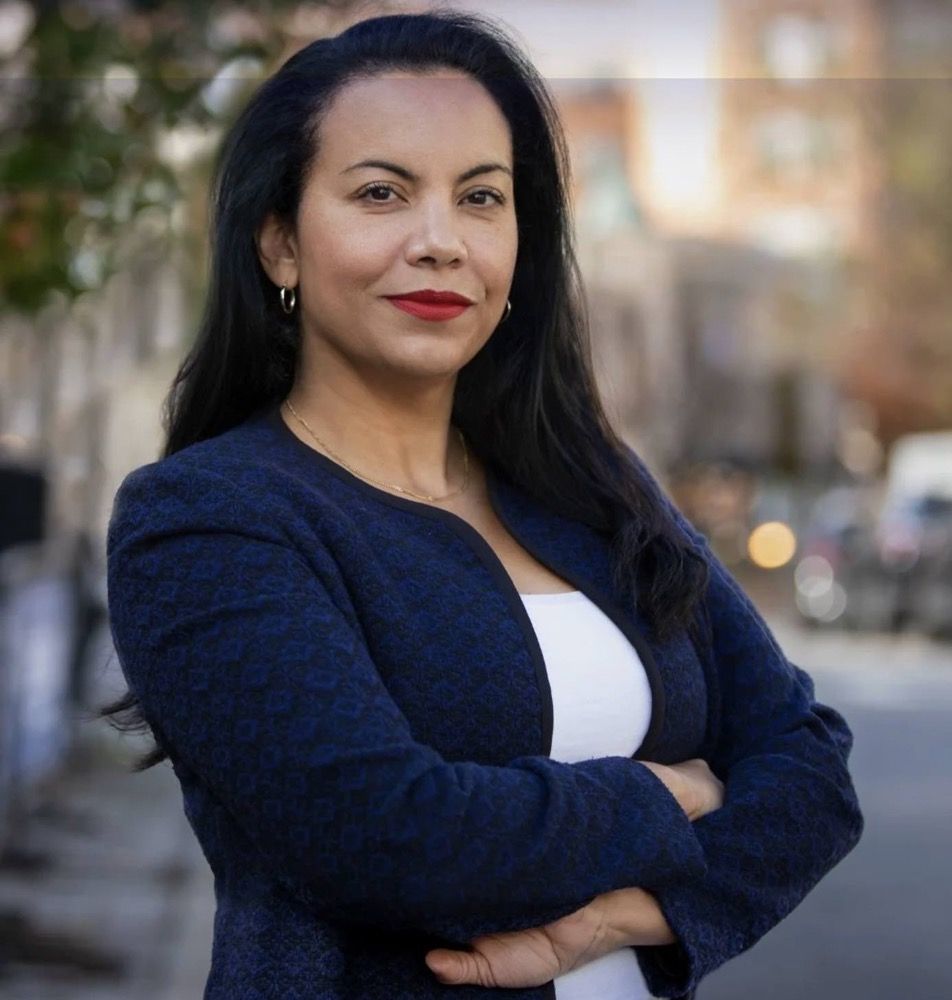
By Sophia Ricciardelli
The transition from organizer to congresswoman was never going to be simple.
For Analilia Mejia, it has been nonstop: Learning the ways of Washington, another election already approaching back home, and proving that her grassroots progressive politics can resonate in a politically moderate district and a closely divided Congress.
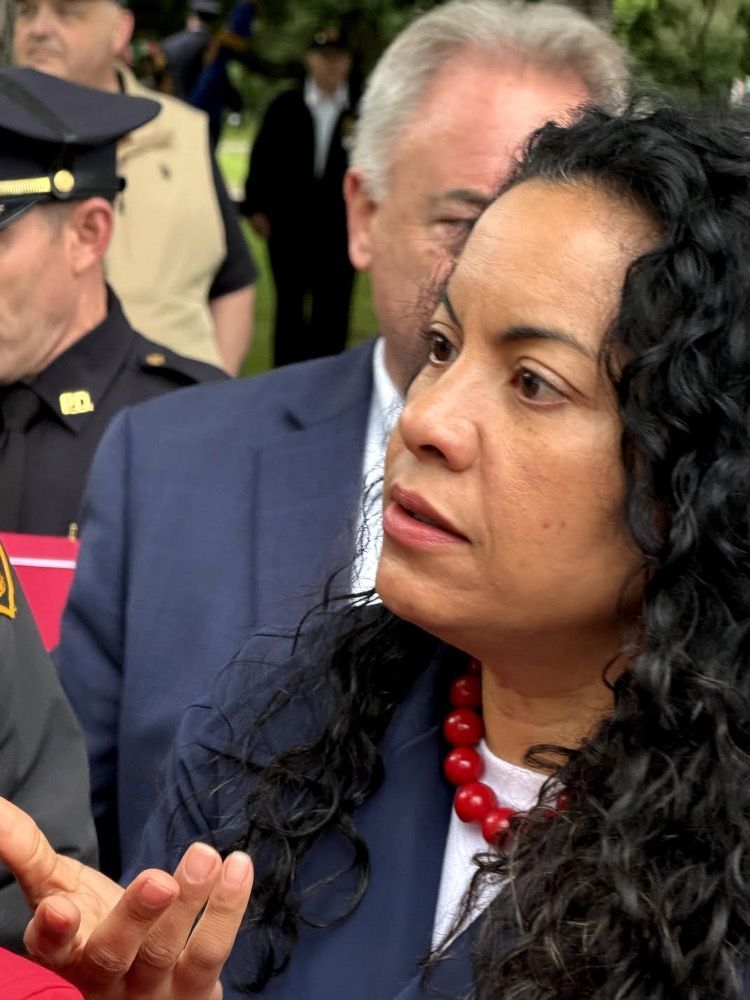
The daughter of Colombian and Dominican immigrants, Mejia won an April special election to fill Gov. Mikie Sherrill’s vacated seat in New Jersey’s 11th District, which spans parts of Morris, Essex and Passaic counties. That followed a cliffhanger victory over former congressman and moderate Tom Malinowski in a special Democratic primary.
On Tuesday, June 2, 2026, she reappears on the ballot — this time in a primary seeking the nomination to run for a full term.
Mejia says her focus has remained the same as it was before she entered Congress a few short weeks ago: Staying connected to the people she represents.
“I think what most politicians are missing is a true connection to community,” Mejia told Morristown Green after attending a protest at the Delaney Hall ICE detention center in Newark.
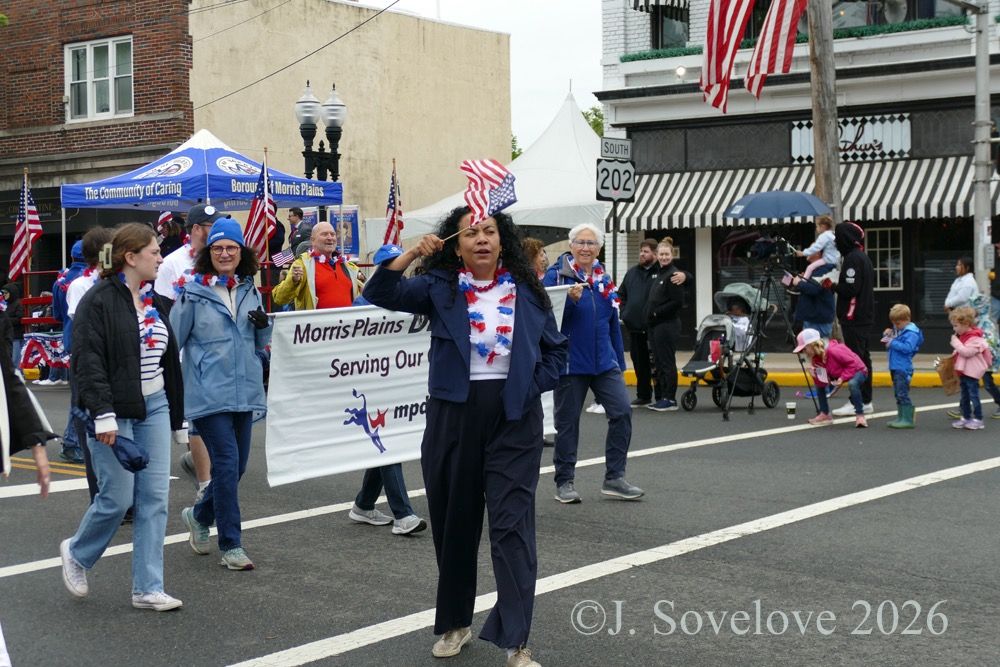
Since her election, she has spent much of her time back in the district at town halls, protests, parades, and other community events. She says people are often surprised to see their representative knocking on doors and asking voters questions directly.
“Before you can ask people to vote for you,” she said, “you need to start from, ‘What’s keeping you up at night?’”
For many voters, it’s money.
Like politicians across the spectrum, Mejia talks frequently about rising costs and affordability. But where more moderate Democrats often frame the issue around infrastructure investment, targeted tax relief, and controlling inflation, Mejia casts it as part of a larger structural problem.
“I’ve spent 25 years behind the scenes watching the sausage get made,” she said. “Both sides of the aisle are increasingly beholden to special interests and big money.”
‘HOUSE-RICH, CASH-POOR’
Before entering office, Mejia worked as a labor organizer with unions including SEIU and UNITE HERE. As executive director of the New Jersey Working Families Alliance, she helped lead campaigns to raise New Jersey’s minimum wage to $15 an hour and establish paid sick leave protections. She later worked on Sen. Bernie Sanders’ presidential campaign and served in the Department of Labor under President Biden.
To solve the affordability issue, Mejia argues we must move away from a system where “only a select few have the ability to thrive,” away from the “tech bros and billionaires.” A proponent higher taxes on the wealthy and Medicare for All, she says her goal is building an economy where all can thrive.
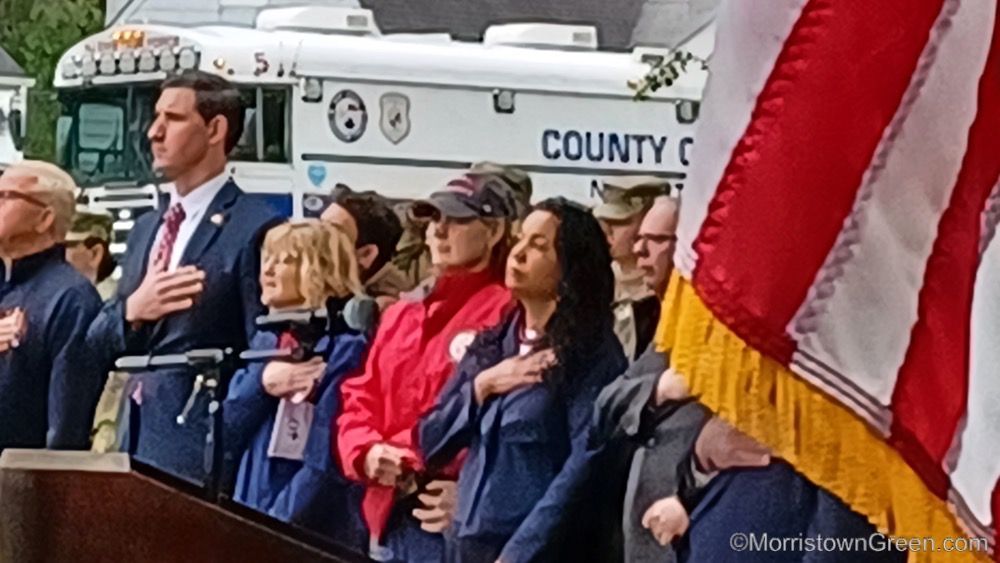
Mejia has faced criticism for being too progressive and ideological for the district. During the special election, her Republican opponent, Joe Hathaway, who is running again this fall, positioned himself as the “common sense” alternative. National conservative voices portrayed Mejia as a radical socialist.
NJ-11 has trended Democratic in recent years, and Mejia’s overwhelming election — by nearly 20 points — reflects a continued shift away from the district’s long history as a GOP bastion. Redrawn lines prior to the 2022 election helped the Democrats. Independents, who now outnumber registered Republicans in the district, are coveted by both parties.
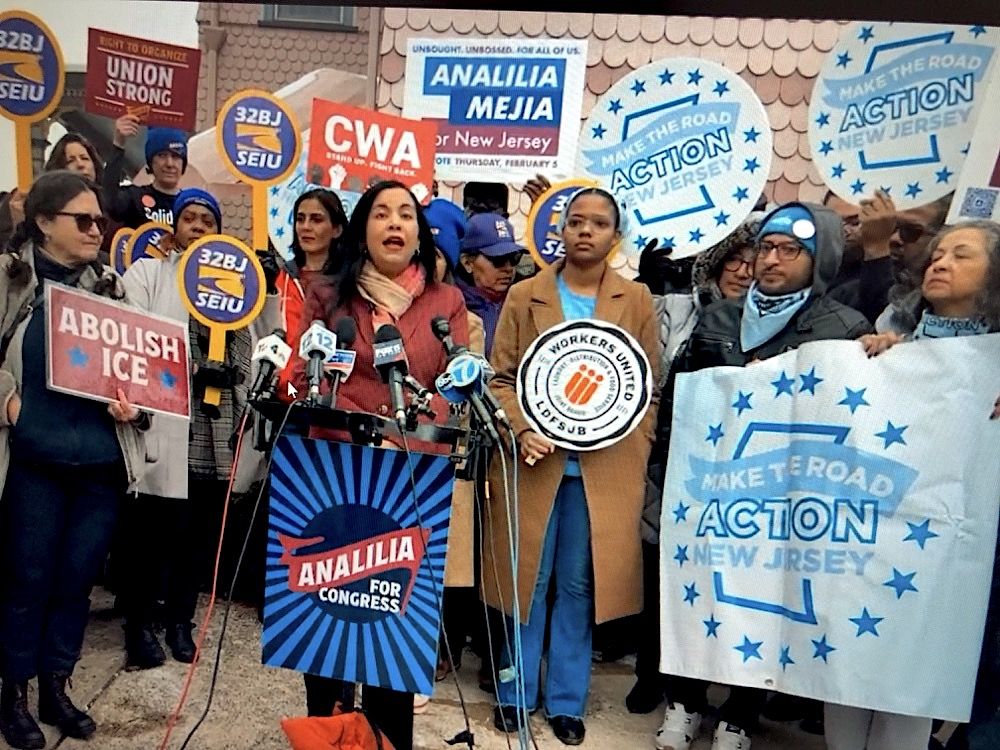
In February’s crowded special primary, Mejia narrowly defeated Malinowski, who was targeted with roughly $2 million of attack ads by AIPAC, a pro-Israel committee, even though his stance on Israel was warmer than Mejia’s.
In April’s low-turnout special general election, Mejia outperformed expectations across much of the district. One exception was Jewish communities, where some voters crossed party lines amid disagreements with Mejia, who has heavily criticized the Israeli government’s actions in Gaza.

Now, she faces three moderate Democrats—former Morristown Mayor Donald Cresitello, Chatham Councilman Justin Strickland, and tech engineer Joseph B. Lewis II—whose challenges so soon after her recent victories underscore lingering divisions within the party.
Mejia insists her approach is for everyone. “It’s not about left or right for me. It’s about right and wrong,” she said, echoing her campaign mantra.
Characterizing herself as “a regular everyday soccer mom,” Mejia says many of the economic struggles she talks about are things she hears from neighbors and experiences herself.
“I know that my neighbors are house-rich and cash-poor,” she said. “I know that my neighbors are drowning in credit card debt.”
Mejia said she only had about five percent name recognition when she set her sights on Congress. Yet she managed to build a coalition strong enough to win several towns that Democratic presidential candidate Kamala Harris lost in 2024.
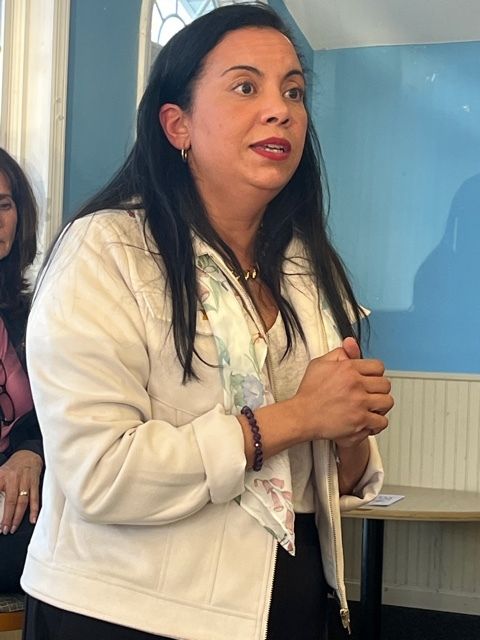
Her campaign slogan, “unbought and unbossed,” reflects another part of her political identity: A reliance on grassroots fundraising rather than large donor networks.
“The moment I start dancing for those dollars, I have failed my constituents,” she said.
That approach comes with challenges. Congressional campaigns are increasingly influenced by super PACs and outside spending. Mejia acknowledged “it is infinitely harder to convince 7,000 people to give you $50 than it is to call, maybe 20 people to write you a big double max check.” But she says it is necessary if elected officials want to remain accountable to voters instead of to political interests.
In the past six months, she has raised more than $1.5 million; each of her three opponents has raised roughly $100,000.
Much of Mejia’s support does come from individual donors, but some larger contributions are connected to progressive PACs and fundraising networks. These include ActBlue, which processes small-dollar donations for grassroots candidates; leadership PACs like Purpose PAC, headed by Sen. Cory Booker (D-NJ); and Courage to Change, led by New York Congresswoman Alexandria-Ocasio Cortez.
Her campaign also has received support from issue-focused groups like Medicare For All, the Jobs, Education and Families First PAC, the Latino Victory Fund, and End Citizens United.
Now in Congress, Mejia is beginning to test whether that organizer-driven political style can translate into governing.
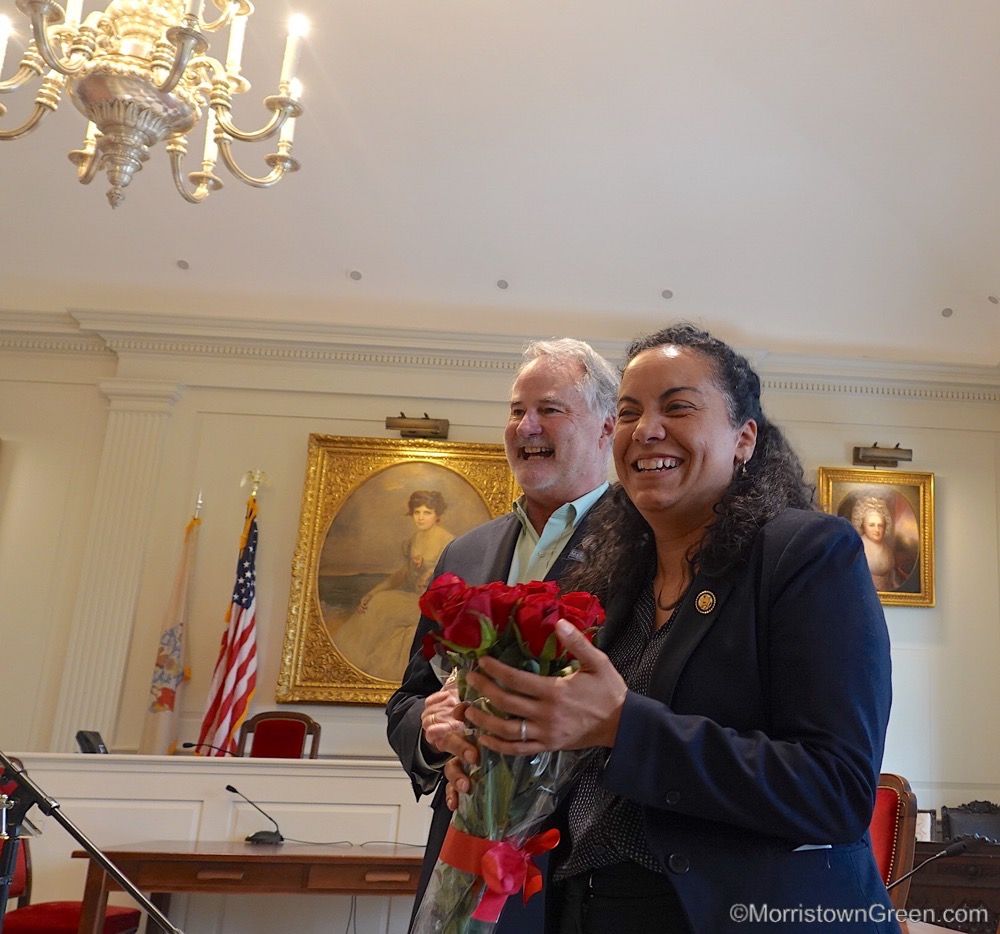
She recently was assigned to the House Homeland Security Committee, where responsibilities include immigration enforcement as well as FEMA and flood mitigation — issues with particular relevance to parts of northern New Jersey that have faced repeated flooding in recent years.
Her first major legislative proposal called for a $25 federal minimum wage, an ambitious measure unlikely to advance easily in a sharply divided Congress.
When asked what success would look like after a full term, Mejia described sweeping goals: Ethics reform, changes to the judicial system, and restoring the government oversight role of Congress — seriously weakened by President Trump, in her view.
“We need to hold this administration and leadership to account,” she said.
With an ambitious agenda, a district still evaluating her politics, and another election already underway, Mejia insists she is ready for the challenges ahead.
“Organizers,” she said, “are the most optimistic people on the planet.”
Early voting in the Dist. 11 primary is underway through Sunday, May 31, 2026. Find your Election Day polling place here. According to the Morris County Board of Elections: Unaffiliated voters may still vote in a Primary Election by voting in person during the Early Voting period or on Election Day for either the Democratic or Republican party. After an unaffiliated voter casts a vote in-person in the Democratic or Republican party Primary Election, the voter will be affiliated with that political party going forward.
Morristown has a long history of people stepping forward in pivotal moments.
When you chip in to Morristown Green, you’re helping your neighbors stay informed, strengthening our civic backbone, and carrying on the spirit that’s defined this town since its earliest days.
Rally for local news.